A Sidama Sanctuary Where Coffee History and Hospitality Meet
A visit to a family-run lodge near Yirgalem reveals bamboo huts, a wildlife preserve, and a coffee-farm heritage shaped by three generations of one family.
By Alex Williams4 min read
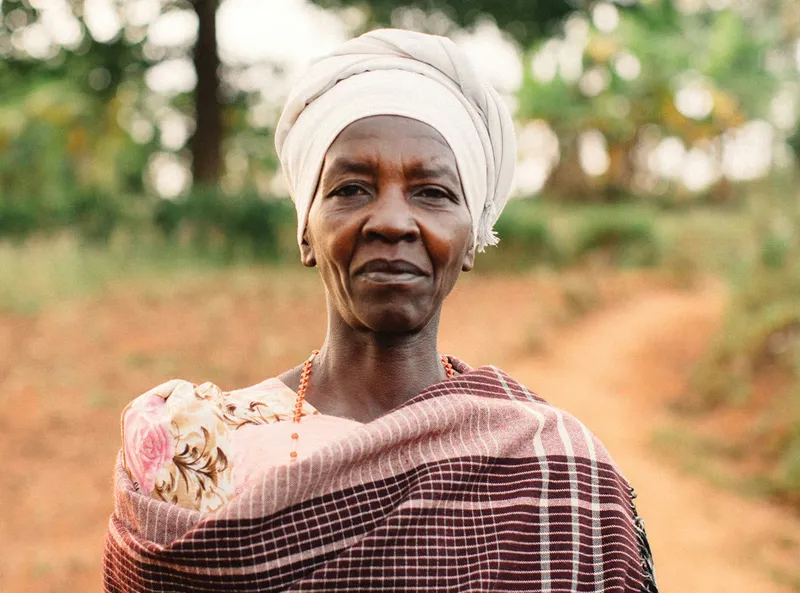
For anyone whose life revolves around coffee, the images are probably familiar: an Ethiopian woman in traditional dress pouring buna, flowers all around her, a faint enigmatic smile. Whether you have been there yourself or simply seen the photographs, that scene has become a signature of the Aregash Lodge.
South of Addis, once you leave Awassa behind, the route into the coffee lands deteriorates sharply. Heavy trucks soften the badly built surface until it gives way, and the road then re-forms as obstacles that cannot be avoided. Donkeys, oxen, and people cross without any concern for their own safety, and at a certain point the notion of asphalt is simply dropped. One dusty traveler's reward, just past Yirgalem—the historic capital of the Sidama Zone—is the green gate of the Aregash, which opens like a temple entrance for someone in search of something.
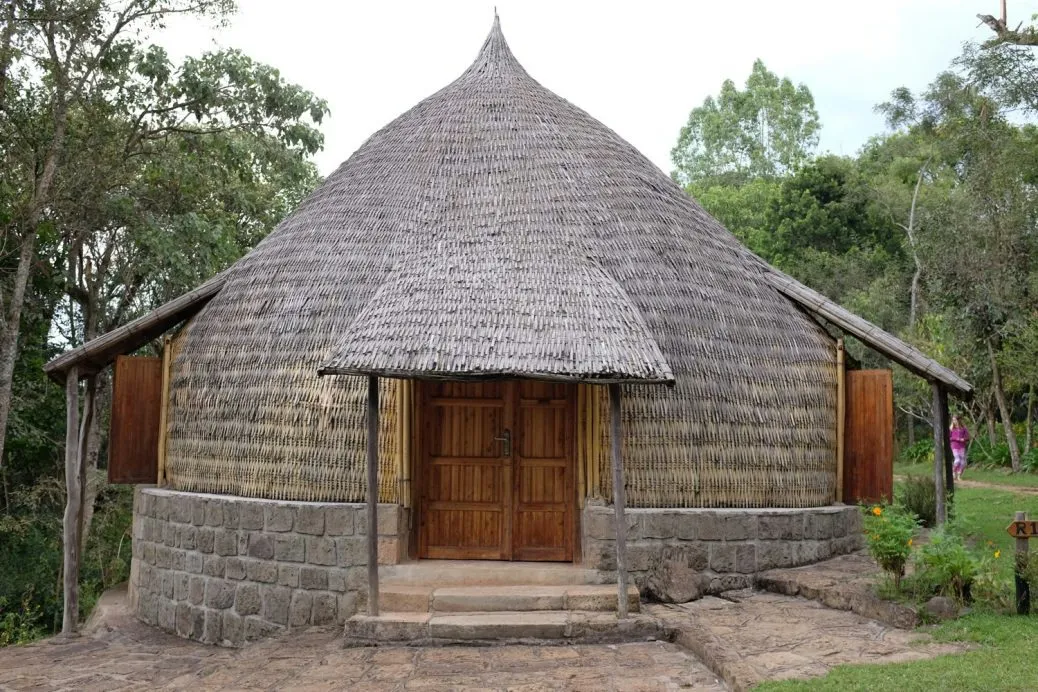
Staff members welcome arriving guests with a glass of fresh juice in season and then guide them down a stone path toward their rooms. These are bamboo Tukul huts in the traditional Sidama style, and each one was handmade over four months according to the vision of Gregory Missaelides, who greets every guest at dinner with the same smiling question: "You want more soup?"
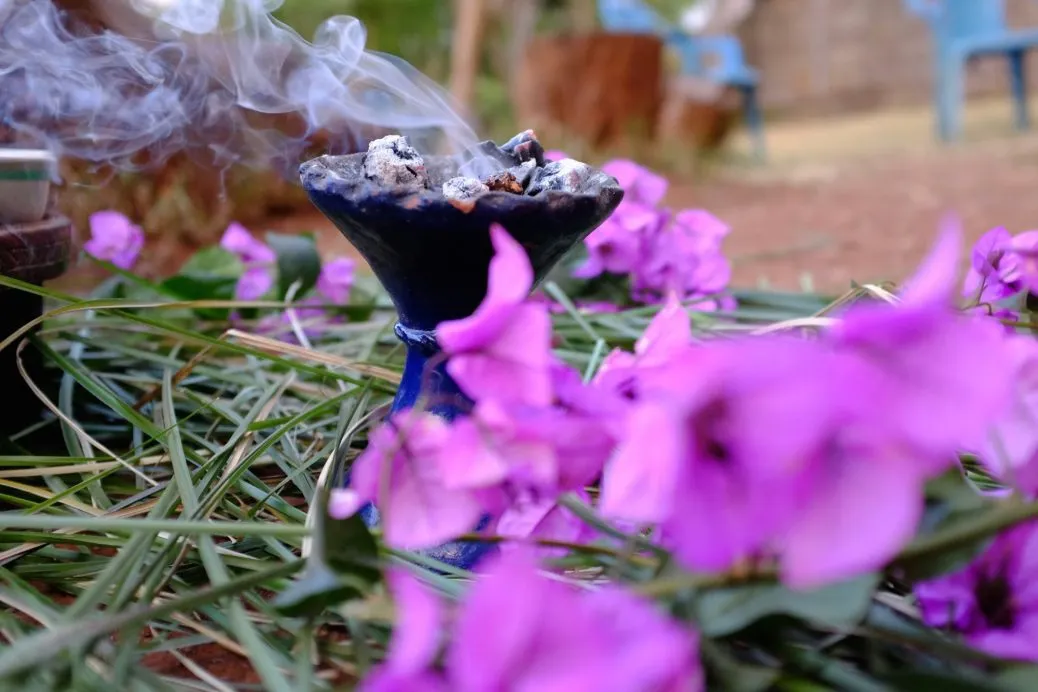
A Buna ceremony is performed.
The lodge stands on land that has belonged to the Missaelides family for three generations. Gregory's grandfather fought under Ras Desta, governor of Sidama, for Haile Selassie, the last Emperor of Ethiopia, against the Italian incursion in 1935; his weapons still hang on the office hut's walls at the Aregash. The Dirg's rise to power was a dark period for Ethiopians of royal blood. Princess Tenegnework, daughter of Emperor Haile Selassie, had married Ras Desta and was widowed when the Italians captured and killed him on the Somali border. Instead of handing the princess over to the Italian occupiers, the Missaelides family hid her deep on their land, in a cave near the river. She eventually reached political refuge in the UK, and Gregory was born soon after, in 1937.
"I grew up in the Sidama huts," he says in broken English (the family together speaks Amharic, Sidaama, Greek, Italian, and English), "and I would wake up too early to go out. My father would tell me to wait until it got warmer, and I would lay there and look up at the bamboo ceiling."
After his mother died, he brought his eleven siblings together at her funeral and persuaded them to turn the land—previously a full-time working coffee estate—toward building the huts and hospitality of the Aregash Lodge, which carries her name. "This is art," he says, gesturing toward the conical huts with their grey weathered bamboo roofs and golden wooden doors. "I have to do something for the world, and so I have done this." Across Sidama, as elsewhere in Ethiopia, corrugated iron is starting to displace traditional building materials. At the Aregash, at least, things continue as they were: graceful curving walls and shadows playing across the ceilings.
The Aregash is an eco-lodge, constructed in 2002, when the concept was still new. Power comes from a combination of solar energy and an unusual use of compost. Only endemic plants are grown; outside each cabin sit a small coffee plant and a small enset, or false banana, a nod to the agricultural and economic life of the area. Meals rely on the hillside garden near the chicken pen and on neighboring farmers—the family takes seriously its aim of making a positive impact on the community.
Much of the land serves as a wildlife refuge, according to Andreas Missaelides, Gregory's son. "For eight years now we have been creating a preserve for the indigenous Menelik bushback." Each night hyenas are fed at the foot of the hill; their shambling gait and unnerving laugh draw guests who gather around the fire for the traditional buna ceremony and popcorn, hoping also to glimpse the condors overhead, their wingspans easily five feet.
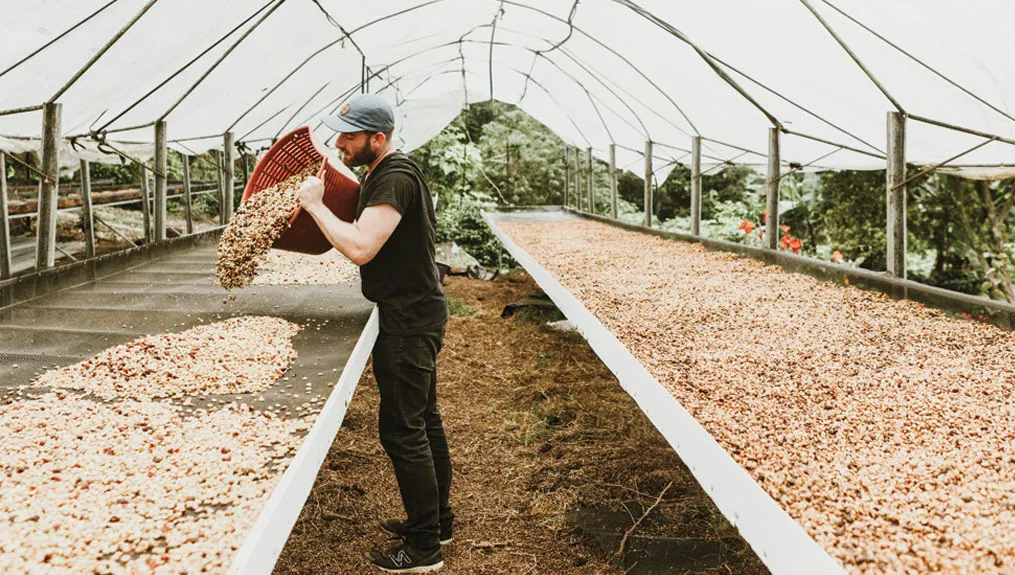
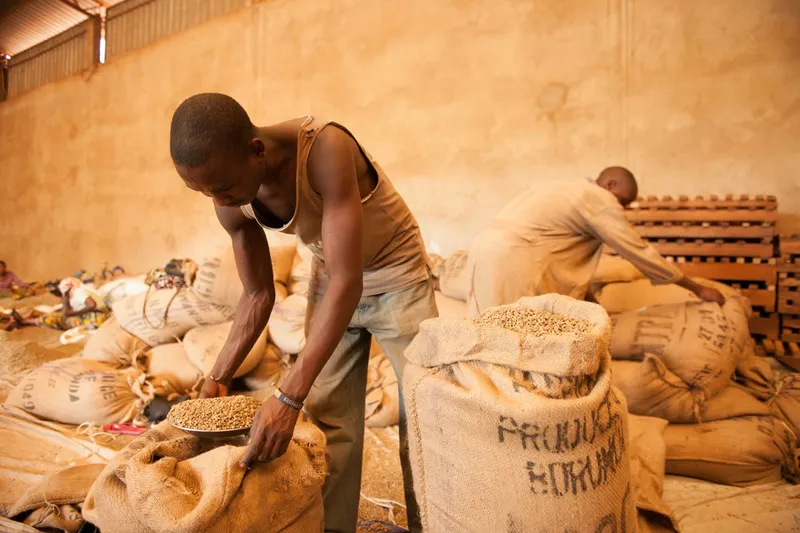
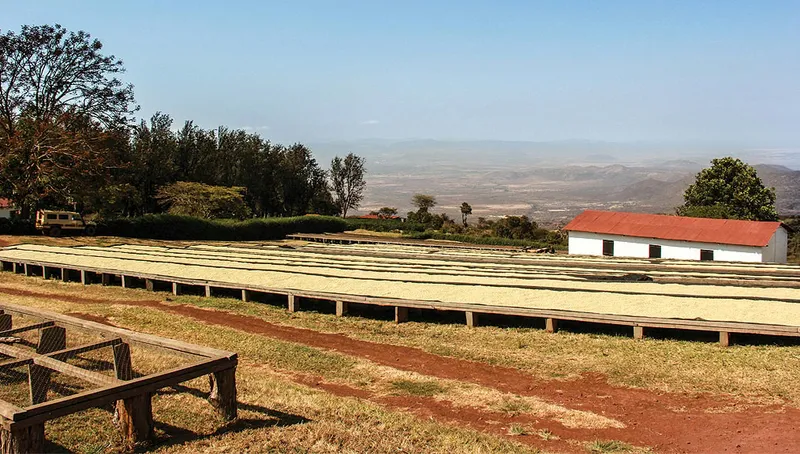
For foreigners picking their way through Ethiopia, eyeing salads and greens longingly but unsure where they came from, the Aregash Lodge is a gift. The kitchen staff lovingly turns out remarkable food at every meal: a crisp, simple salad in a restrained vinaigrette alongside traditional injera and shiro, with a leg of lamb that has clearly spent hours in a slow oven steeping in its own juices. Coffee is grown and processed on site—thirty to forty bags a year, depending on environmental conditions.
Since it was built, coffee professionals have used the Aregash as a base for exploration, as have tourists, philanthropists, and aid or research workers. Gregory holds a strong affection for people in coffee, never forgetting that the property began as a coffee farm. "Every year we have from all over the world coffee buyers and roasters come. My family are farmers. When we have all these people in the same line of work, that makes it possible for us to do this."
Many guests return year after year, such as Mike Stemm of Dominion Trading, who counts this year as his twentieth visit to the lodge. Asked what he treasures about the place, he pauses and smiles, years of memory moving across his face. "The relationship with Gregory. We're friends. And this place, it's like an oasis—a time to relax, refresh, enjoy the beauty of this very special place."