Tanzania's Coffee Renaissance: Growers Unite to Shine on the Global Stage
A group of farms in northern Tanzania is joining forces to raise the profile of the country's coffee, long eclipsed by its East African neighbors. Through shared learning and a focus on quality, they aim to put Tanzania firmly on the specialty coffee map.
By Cameron Evans7 min read
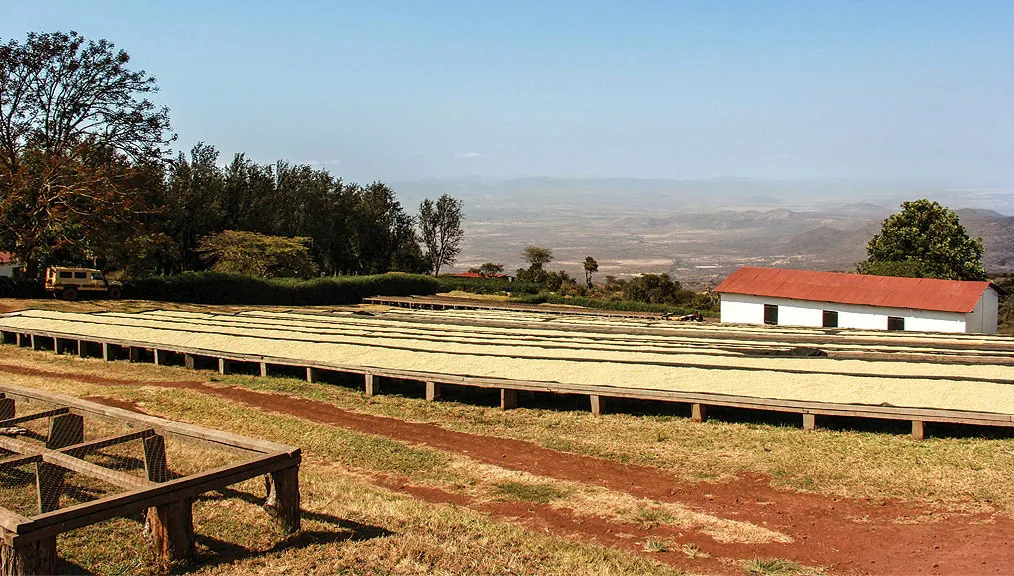
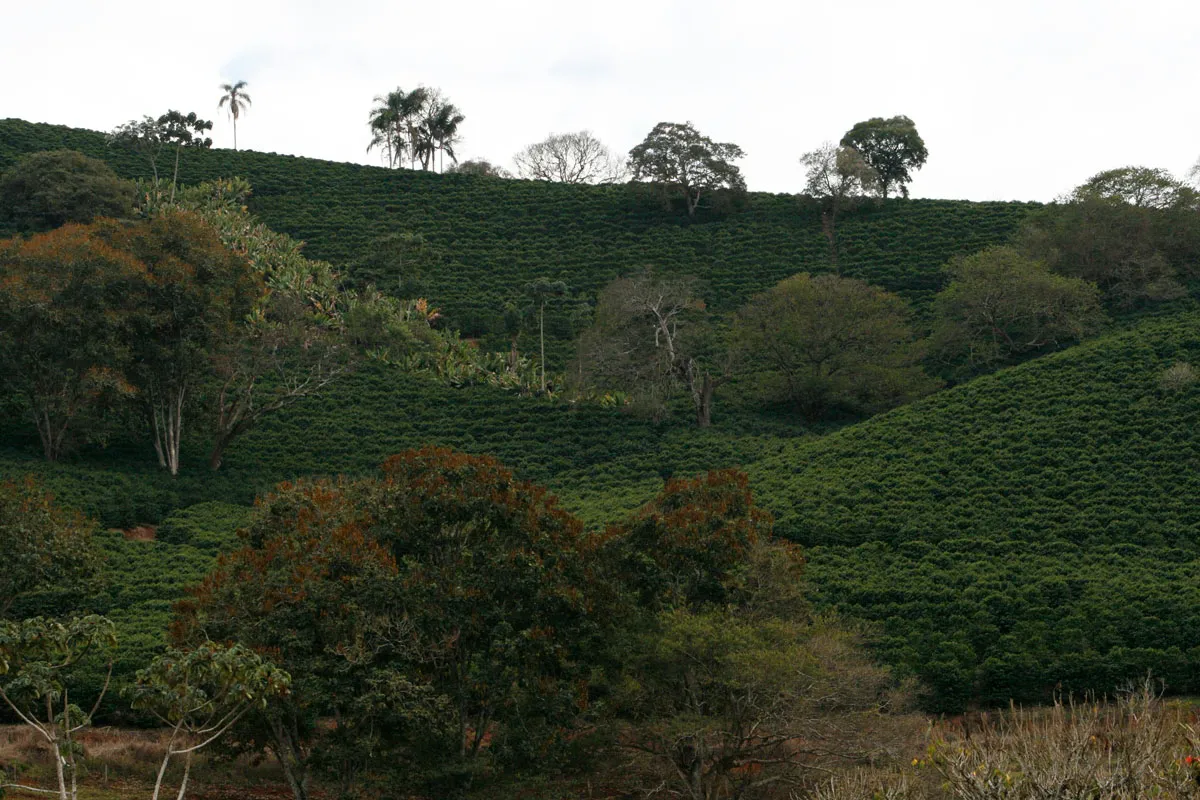
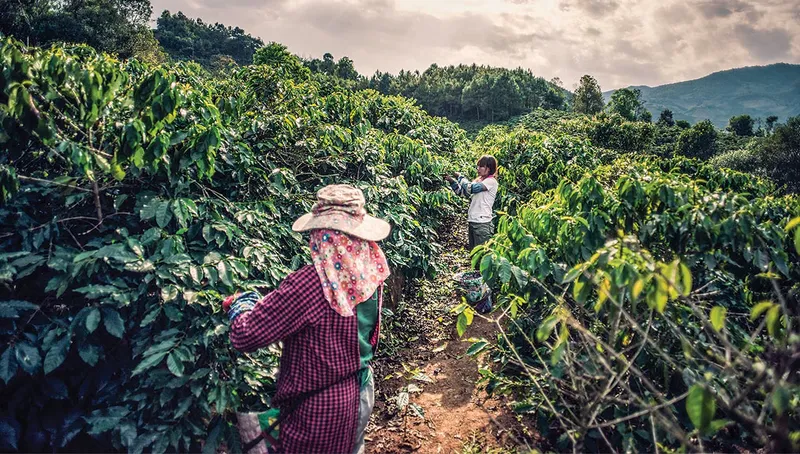
On a wall in the cupping lab at Portland Roasting hangs a large photograph: a cluster of coffee shrubs basking in the Tanzanian sun, sheltered by tall trees planted as windbreaks. During every tour I lead, someone inevitably asks where the picture was taken.
“That’s a farm in Tanzania owned and run by Mark Stell, who owns Portland Roasting.”
And without fail, the next question: “Have you been there?”
Until September, my answer was always no.
Cupping on the Crater Rim
In September, a small group of international coffee buyers and tasters convened on the rim of the Ngorongoro Crater Conservation Area in northern Tanzania. Their purpose: to evaluate the latest harvest from the four distinct farms that make up the emerging Ngorongoro Coffee Group.
The event, known as “The Cupping at the Crater,” is the flagship gathering of a trade association working to elevate the reputation of Tanzania’s northern coffee region. That region has long lived in the shadow of better-funded and more aggressively marketed neighbors, Rwanda and Burundi. By combining resources, exchanging knowledge, and widening market access, the Ngorongoro Coffee Group aims to secure Tanzania’s rightful place on the world coffee map.
This year, I was invited to attend. I was eager for the experience, but even more excited that my colleagues Jess Steffy, owner of Square One Coffee in Lancaster, Pennsylvania, and Jon Allen, owner of Onyx Coffee Lab in Fayetteville, Arkansas, would join me. Together with Mark Stell of Portland Roasting Coffee, we flew to Kilimanjaro, where we met Jacob Ibarra, director of coffee at Five Senses in Australia, and a group of friends and coffee purveyors from Denmark, including Niels Hestbech, owner of Kaffe Mekka in Hasselager.
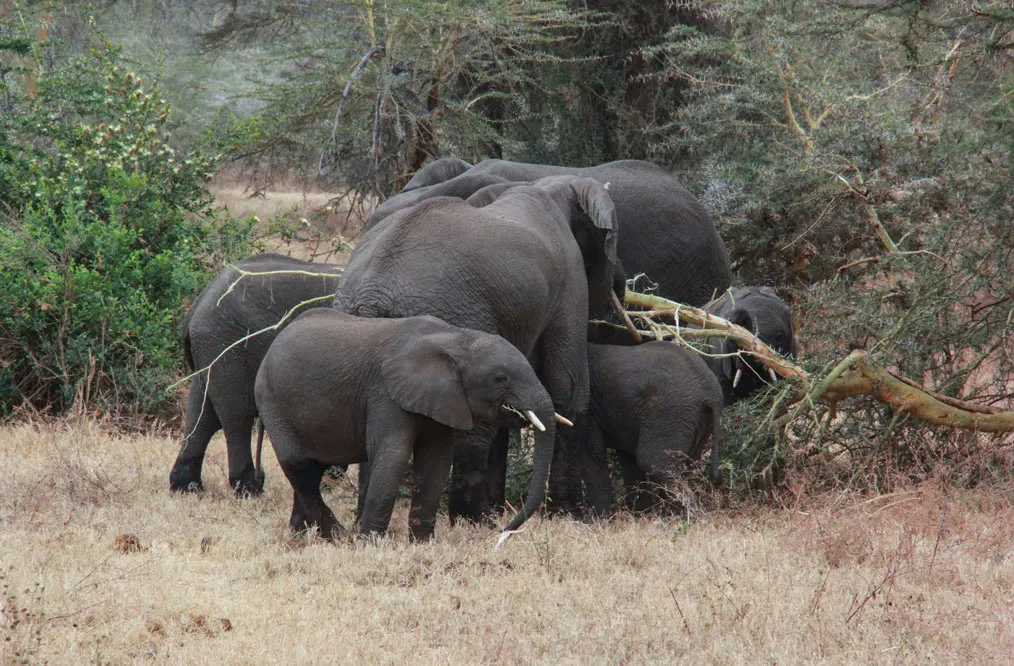
The stunning location is another draw of this annual event, reachable by a rough and decidedly bumpy jeep ride from the Ngorongoro Crater Conservation Area. The crater floor, home to thousands of large animals such as elephants and lions, also serves as a migratory route for wildlife heading northwest toward the Serengeti plains.
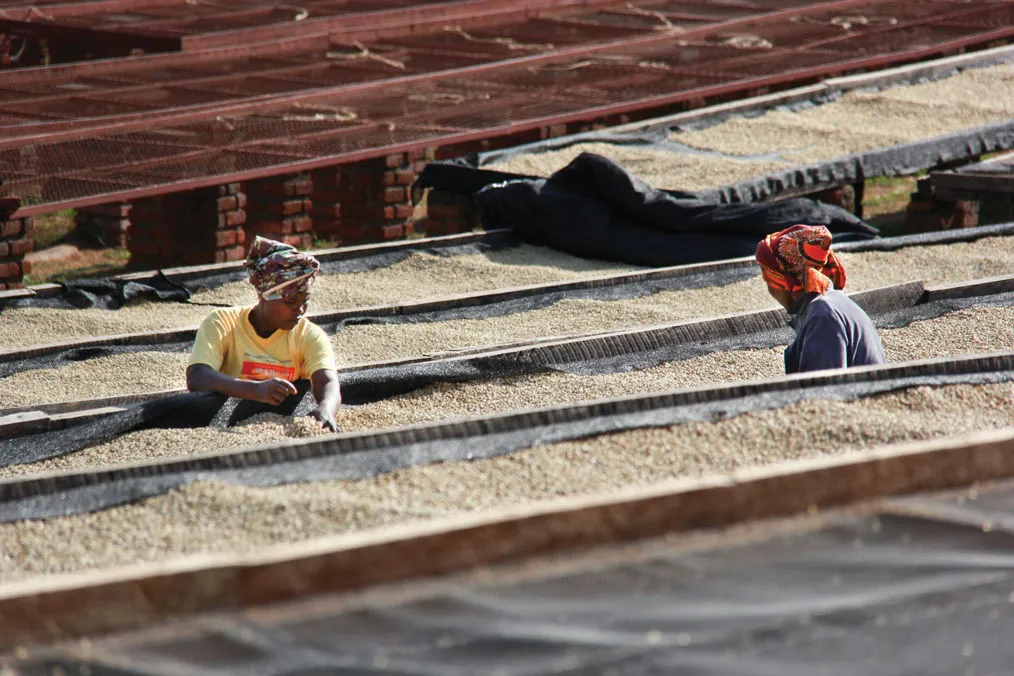
Yet the coffee, not the wildlife, was the main attraction. Our first stop after landing at Kilimanjaro Airport was Shangri-La Estate, owned by Christian Jebsen, a native of Copenhagen, Denmark, who began growing coffee in Tanzania more than twenty-five years ago. He has watched the Tanzanian coffee industry evolve, moving deliberately toward higher-quality crops guided by scientific farming methods and shaped by buyers from around the globe.
“A single farm can’t move anything,” he says. “No buyer is going to travel to a single farm—that’s not fun. We need to gather together as a group, demonstrate what the area produces and show off the stunning wildlife that lives in and around the Ngorongoro Crater National Park.”
What the area produces, it turns out, is genuinely exciting for coffee professionals and enthusiasts.
Making Room for Wildlife
Shangri-La Estate is strikingly beautiful. But like other farmers in the region, Christian has had to adapt his property to accommodate the needs and travel patterns of animals. Those adaptations include corridors that guide wildlife along migratory paths and water sources—ponds and troughs—that keep animals away from valuable irrigation systems.
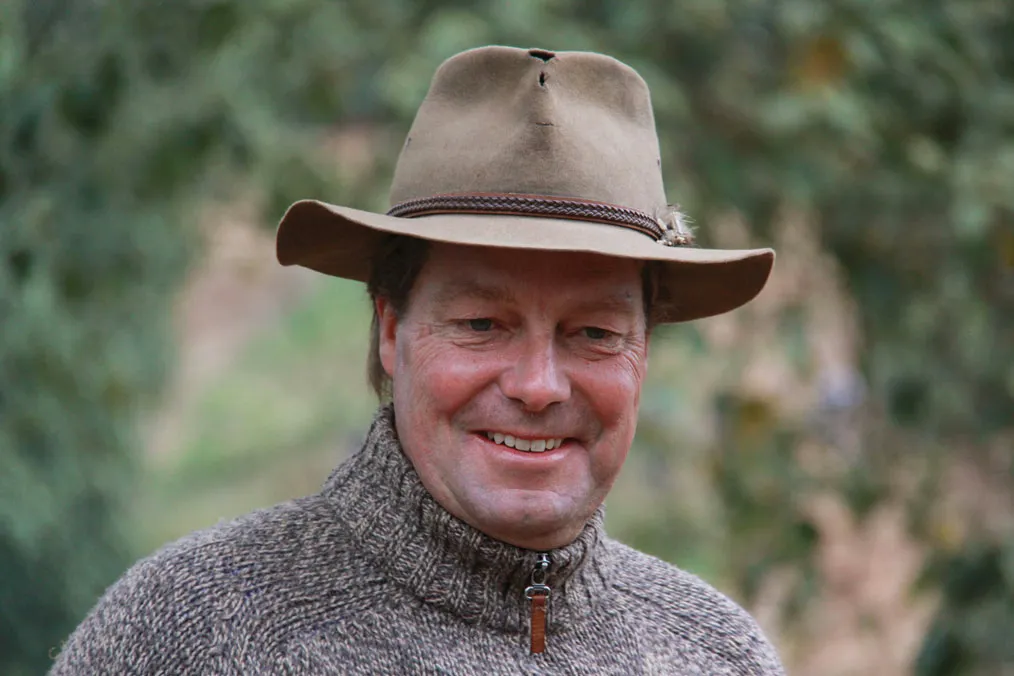
Shangri La’s Christian Jebsen.
“Our selling point is also one of our biggest challenges,” he said. “We get to watch grand elephants parade through our farms, yet we suffer the collateral damage when plants are trampled or irrigation systems upended.”
Our first day of tasting coffee untouched by elephants was eye-opening. We sampled coffees from two farms, Shangri La Estate and Ngila Estate, and experienced the range of potential on the table. Bourbon and Kent—two staple varieties in the country—were presented alongside both natural and washed-process lots. What surprised me was the uniqueness of the flavor profiles. There was no lemon and black tea as we associate with Ethiopia, nor the berries and cream we typically expect from Kenya. This was something different. Something Tanzanian.
Historically, northern Tanzania has mainly been home to those Bourbon and Kent varieties, which have been the backbone of exports here since the 1900s. As Mark and Christian considered how to develop their own farms in Tanzania, they looked at the coffee industries in other growing countries, seeing an embrace of a wider range of varieties. They wondered what those varieties would taste like coming from the soil around the crater. Would they be viable? Would they sell?
By combining resources, exchanging knowledge, and widening market access, the Ngorongoro Coffee Group aims to secure Tanzania’s rightful place on the world coffee map.
Tanzania is the second-largest economy in East Africa, yet its reliance on agricultural exports (like coffee) contributes to its economic instability. For the last thirty years, the Tanzanian coffee industry lagged as other regions surged ahead with more marketing dollars and efforts to promote their coffees—Rwanda and Burundi benefited from a boost by outside marketing dollars from PEARL (Partnerships for Enhancing Agriculture in Rwanda through Linkages), a project of the US Agency for International Development (USAID) that helped promote the development of coffee in these areas. Tanzania, unfortunately, did not have those same opportunities. As a result, Tanzania has not seen the surge in excitement and growth in export that Rwanda and Burundi have enjoyed in the last decade.
A Vision for Growth
Mark sees a real opportunity for the Ngorongoro Coffee Group to energize Tanzania’s coffee industry and show people what “that other country in Africa” can do. But how do you actually do that?
“Nothing has changed—coffee growers simply kept producing the same coffee despite a changing climate and a shifting market,” he says. “You have to adapt and respond to the market. We aren’t where we need to be and to get there, we need to experiment with varieties.”
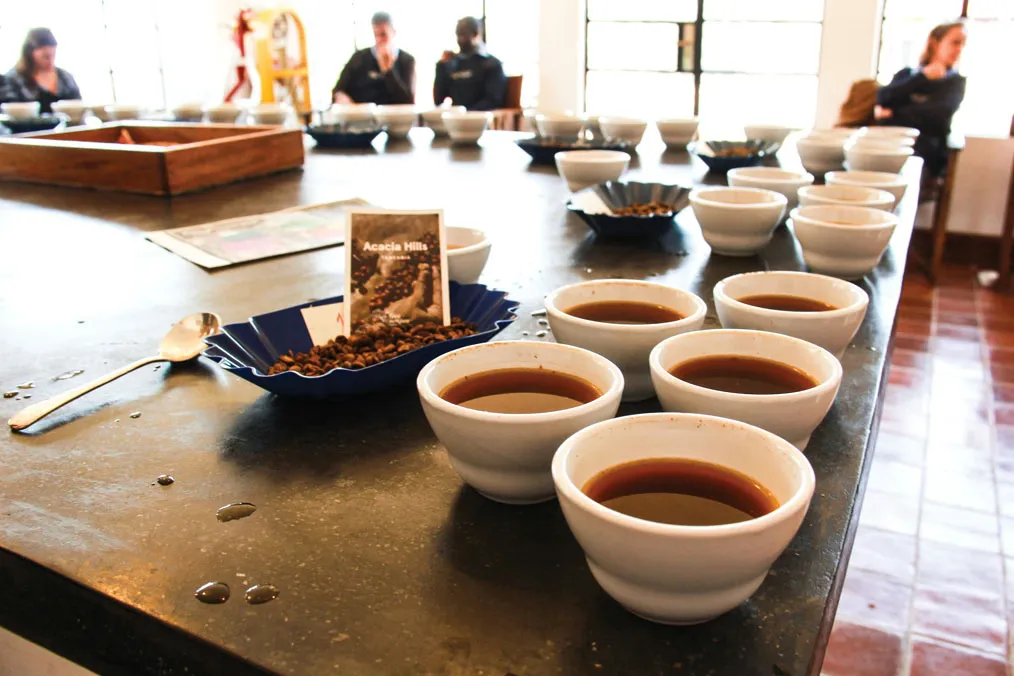
With a vision for expanding the varietals available from Tanzania, in 2013 a block of gesha seeds was planted on Mark’s farm, Acacia Hills. One year later, he planted a block of pacamara. A few days into our trip, we arrived at Mark’s farm and had the opportunity to cup those coffees.
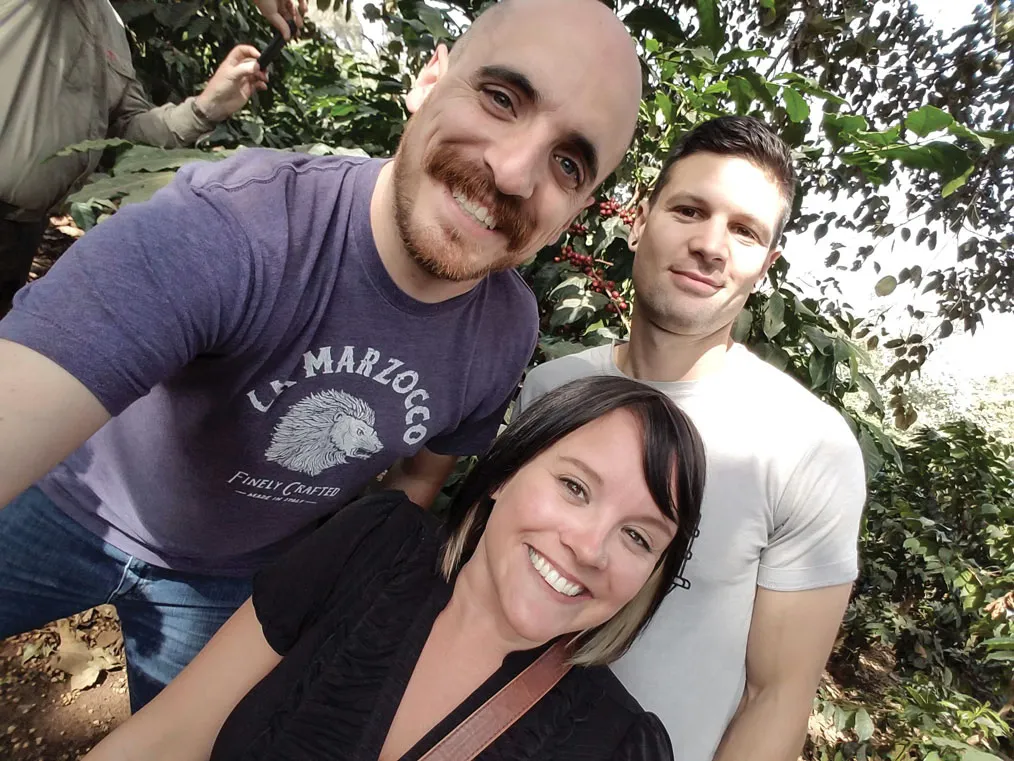
Clockwise from top left: Nathanael May, Jon Alle of Onyx Coffee Lab, and Jess Steffy of Square One Coffee.
For years, people in specialty coffee have been trying to convince the broader world that coffee is a lot like wine. There are different varieties! Those varieties impact the flavor of the cup! You can taste the difference!
On the cupping table at Acacia Hills’ lab was a pure and brilliant example of that message.
We cupped a kent, a pacamara, and a gesha right next to each other. All three coffees were grown within a few hundred meters of each other, and all three could not have tasted more different.
The gesha had the distinct notes we’ve come to expect in the industry: lime, floral characteristics, and bright, sweet fruit. The kent had surprising notes of almond, chocolate, and honeydew, while the pacamara came in so bright and sweet that we questioned whether it was actually a pacamara.
The success of these varieties resulted from a commitment to the coffee plant itself, and the source of its nutrients—the soil where the coffee takes root. Cupping at the Crater participant farms test their soil pre-season, feed their trees based on results, and closely monitor their growth, then test again post-season. The results are shared at the annual event, where farmers gather to cup micro-lots and farm managers share best practices and processes. The testing process is a key part of the event’s program and is a new approach to coffee farming for Tanzania, where farmers’ historical focus has been volume.
I was consistently impressed with the openness among members of the Ngorongoro Coffee Group. Yes, they competed to see who could grow the most delicious coffee (a competition I highly encourage!), but they also helped one another grow more delicious coffee.
Beyond Tanzania
Those high-scoring geshas and pacamaras from Acacia Hills will be growing on the slopes of Shangri-La Estate sooner rather than later. The sweet bourbons of Shangri-La will find their way to other farms in the group as well. All this sharing makes for stiffer competition internally, but also makes for better sales worldwide, and more awareness of Tanzania in specialty coffee.
In addition to sharing scientific methodology with farmer members, the coffee association provides marketing and sales support, and helps farmers network with international coffee buyers—plus membership includes access to global trade shows like the SCAA Expo.
All this sharing makes for stiffer competition internally, but also makes for better sales worldwide, and more awareness of Tanzania in specialty coffee.
Farmers want volume and buyers want quality, and the Ngorongoro Coffee Group wants to help Tanzania achieve both goals. At four farm members now, but with about thirty-five farms in the Northern Tanzania coffee area, the Ngorongoro Coffee Group has the potential to build a robust membership and make a legitimate difference for Tanzania.
The Nairobi-based Foreign Agriculture Service forecasts Tanzania’s coffee production will increase to a record 1.2 million sixty-kilogram bags this year because of improved husbandry practices and favorable weather. They foresee coffee exports increasing by about 20 percent over the next season. And the Tanzanian government is executing its coffee sector strategic plan with a key objective to double production by 2021.
Mark and Christian will—along with the members of their group—ride this momentum and hopefully increase awareness for a higher quality of coffee for years to come. Then, maybe, “that other country” in Africa will be higher on the list of places we love to drink coffee from.
It’s incredible. We just have to taste it.