Sahra Nguyen on Robusta: 'We’re Changing the Industry by Doing the Work'
Nguyen Coffee Supply’s founder explains how she leveraged storytelling and a long-term partnership with a Vietnamese farmer to challenge robusta’s reputation and bring it into specialty coffee.
By Riley Turner6 min read
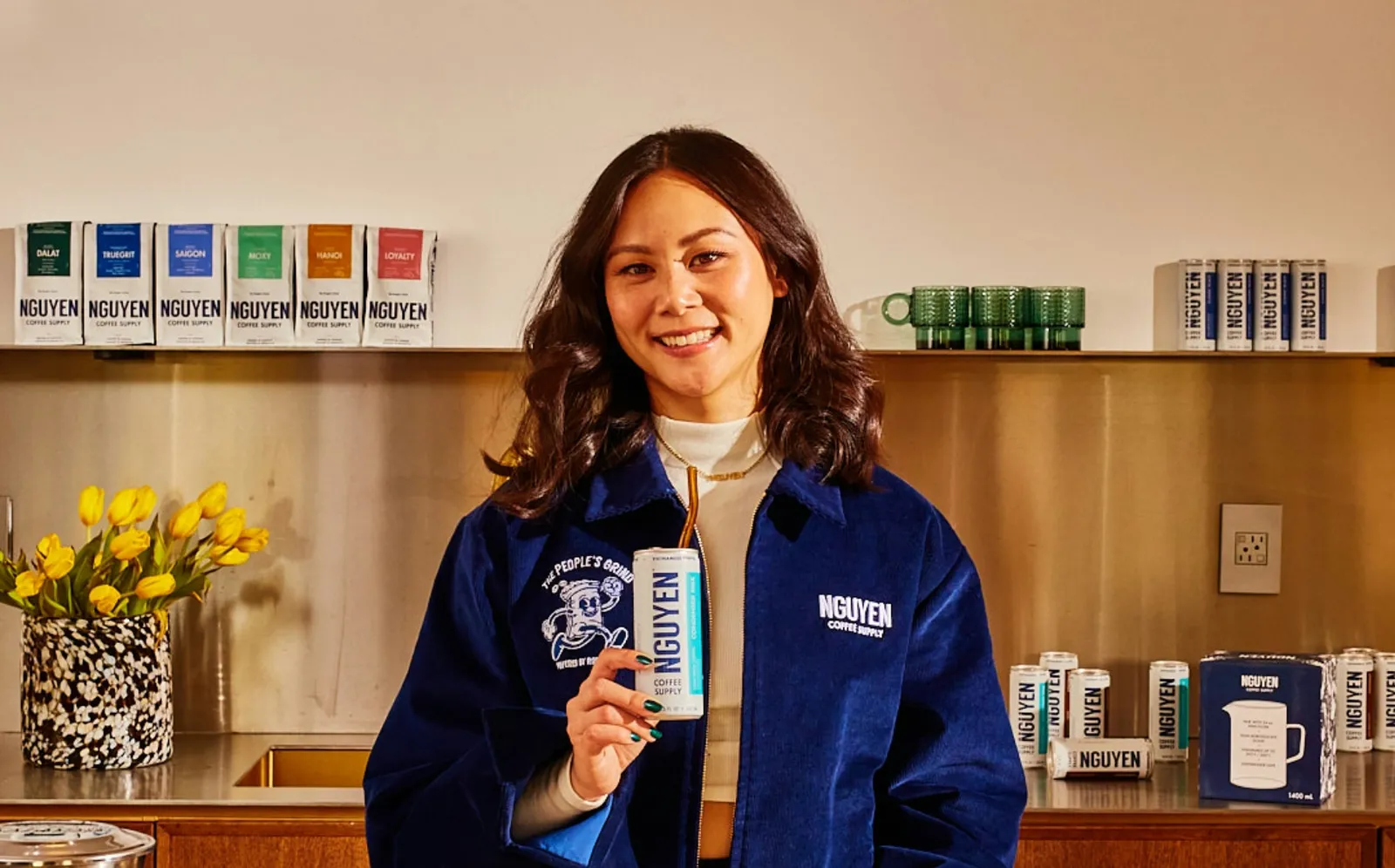
Sahra Nguyen, founder of Brooklyn-based Nguyen Coffee Supply, didn’t start out in coffee. She was an award-winning documentary filmmaker, but her passion for sharing Asian American stories led her to the coffee industry. Today, her company is a vehicle for introducing Vietnamese-grown coffee—particularly robusta—to a wider audience.
Nguyen’s storytelling background includes work on an NBC News documentary and involvement with the Coalition for Asian Pacific American Youth during high school. Coffee was a daily part of her life growing up, and she noticed that many specialty shops offered Vietnamese-style iced coffee but didn’t sell Vietnamese beans. She saw an opportunity to use her skills to change that.
Specialty coffee has traditionally favored arabica, known for its smoother, sweeter profile. Robusta, by contrast, has often been dismissed as bitter or too strong. Vietnam is the world’s second-largest coffee producer and the largest robusta producer, so promoting Vietnamese coffee meant confronting those perceptions head-on.
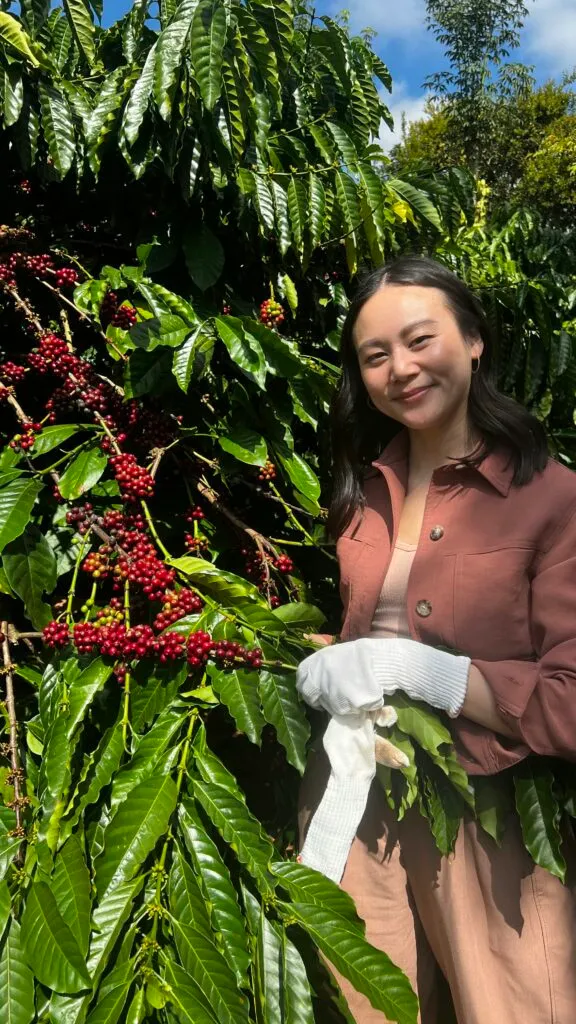
In 2016, Nguyen met Thien Ton, a fourth-generation coffee farmer. By 2018, coffee from Ton’s farm was in the first bags sold by Nguyen Coffee Supply. Today, the company’s beans and ready-to-drink beverages are available at Whole Foods and beyond. What began with conversations on a farm in Vietnam has grown into a nationwide business, with Nguyen continually pushing Vietnamese coffee and a species that has long been overlooked.
Your relationship with Thien Ton started in 2016. Can you describe how it has evolved?
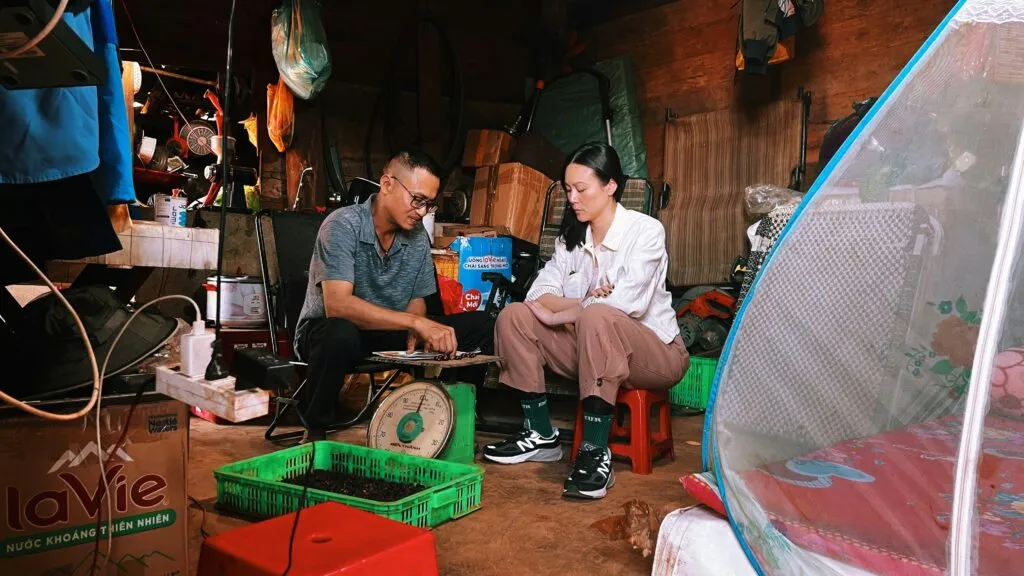
We’ve grown and learned together a lot. I saw him in January. We manage to see each other at least once a year. About two years ago, he bought a second farm. It’s a beautiful partnership—you can tell he’s passionate about coffee.
Before working with us, he had never exported to the US. We were his first partner. Since we bought our first container in 2018, the cost of our robusta has risen 275%. I kept asking him to do more—for example, hand-picking cherries when they’re ripe instead of stripping all the cherries at once. We really pushed for selective hand-picking. We’ve also pushed post-harvest and processing methods, and now he does an additional layer of hand-sorting the beans.
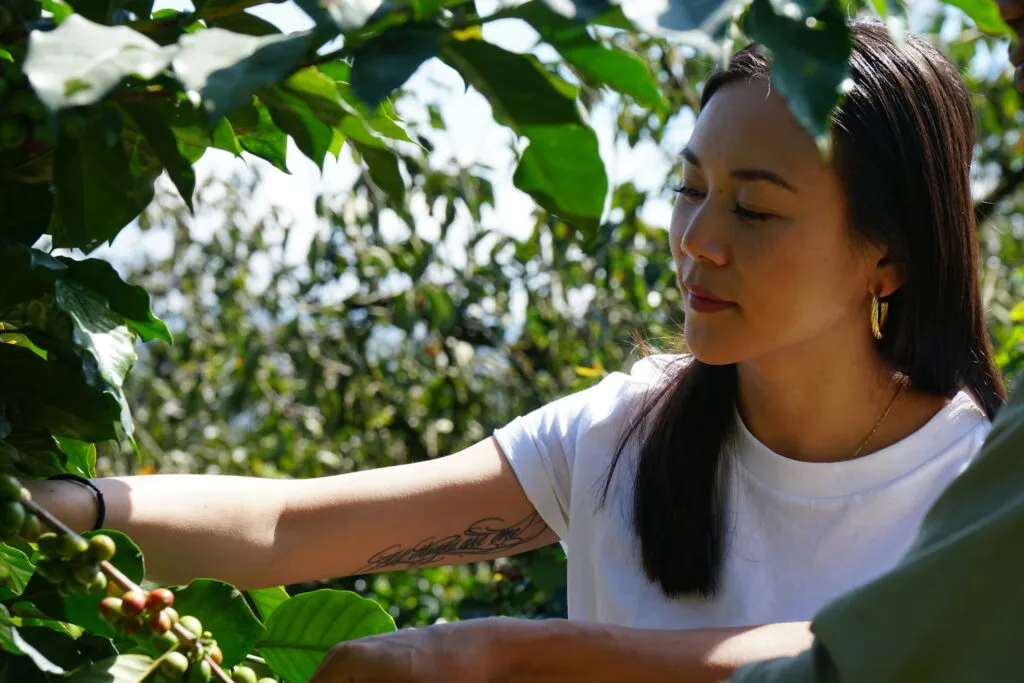
All these steps have changed over time. It’s the collaboration and the patience—this is the real long-term work that needs to happen. It’s taken more than five years, but this is how we change the industry—not just by talking, but by actually putting in the work.
How did you get into the coffee business?
Entering coffee was a big learning curve because I had no industry knowledge. Even as a coffee lover, I couldn’t tell you how many grams to use for a pour over. I felt intimidated because I knew I wasn’t a coffee expert, but I wanted to learn and enter the space properly, so I did a lot of self-education.
First, I had to learn about green coffee—growing, harvesting, and post-harvest processing—by talking to our producer. Then I researched how coffee is grown and the different tiers, from conventional to premium to specialty. After that, I started sourcing, which meant asking a lot of questions at origin and learning as I went.
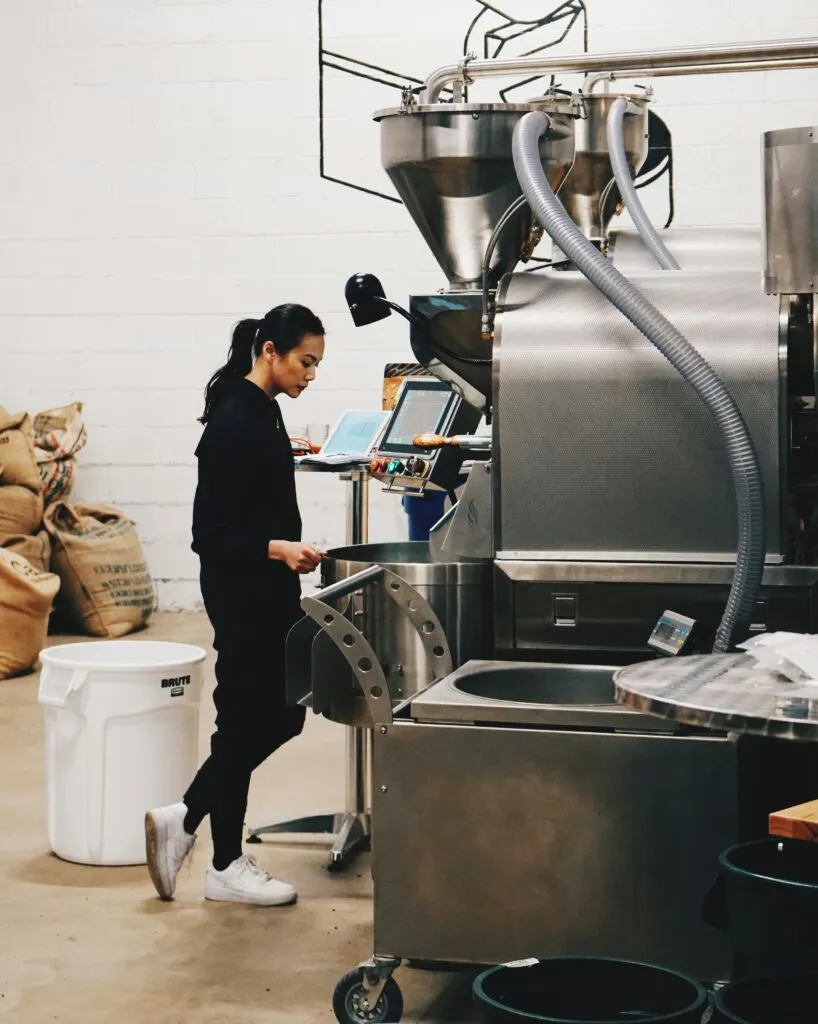
On the roasting side, I was fortunate to find a shared roasting facility in Brooklyn. To use it, you had to rent time on their Probat roaster and take a training course to become a member. So I took their four-week roasting course, and that was my first education in roasting and development. After that, I just kept developing my skills through roasting.
How did you feel when you first started roasting?
I felt intimidated because, first, I’m a woman; second, I’m a woman of color; and third, I had no background in roasting or coffee.
At that time, around 2017–2018, coffee was still very much entrenched in a kind of elitism: either you’re a coffee master or you’re not. On top of that, I wanted to roast Vietnamese coffee. When our first pallet of green coffee arrived, I remember the facility manager and even one of the roasters saying, “We’ve never even had a robusta in this warehouse.”
Some people were really nice and supportive. Some were polite, but you could tell they were raising an eyebrow at me. And some were just plain rude. One person said to me, “Oh, robusta tastes like my grandma’s socks.” I remember thinking that comment was so odd—like, “You know what your grandma’s socks taste like?” Some people were so fixated on that narrative.
Every week, I would go in there and just do my thing. I felt totally intimidated, but I just kept going.
Nguyen Coffee Supply has grown significantly in the past couple of years due to your ready-to-drink options. What made you decide to pivot in that direction?
There was a distinct moment in late 2021 and early 2022 when we noticed we had a high percentage of five-star reviews on our website for the beans—around 90% out of thousands of reviews. So we wanted to understand what resonated with our customers. We exported all our customer reviews and did a keyword analysis. The number one most popular word was flavor.
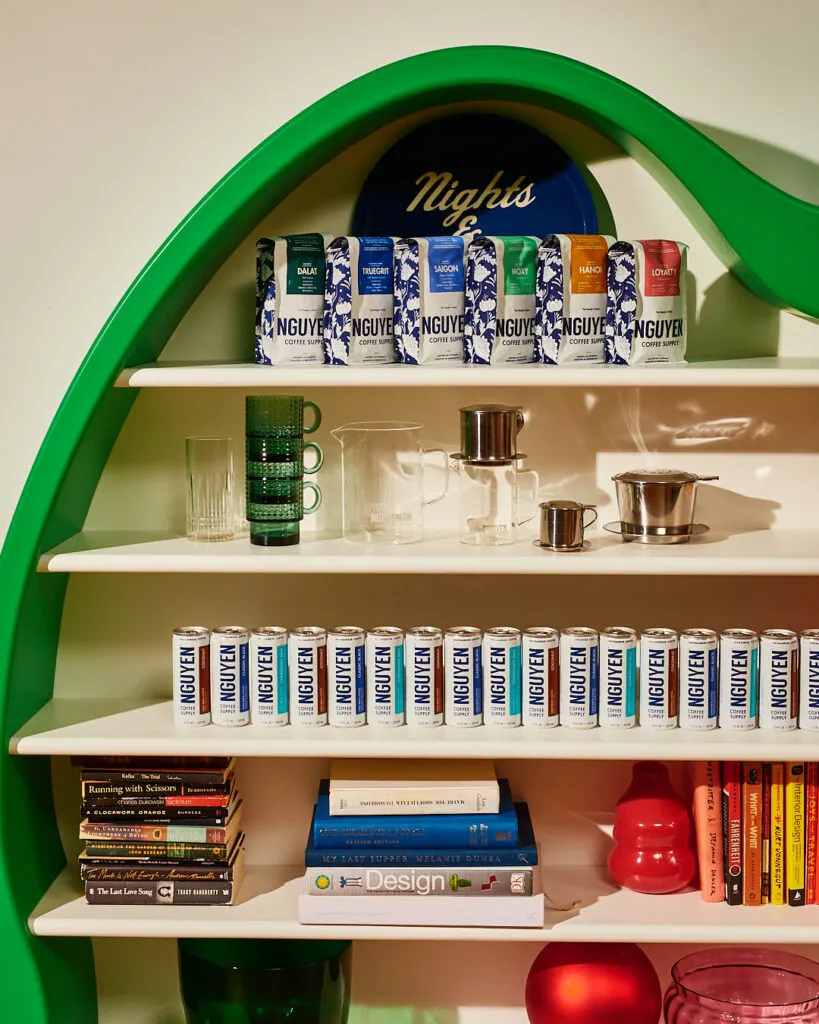
People love the flavor of our coffee because it’s so different from arabica, and I realized we needed to get people to experience that flavor quicker. I ran through a few ideas, but RTD beverages stood out because they were liquid to lips—a low barrier to access. Ultimately, it’s the flavor. Once people taste it, they can expand their perception of the robusta experience.
I was definitely nervous because RTDs are a very tough industry. But it felt like the right strategy for us at that moment. We launched our first RTD in late 2022, and two other SKUs have launched since then. All three landed at Whole Foods in January 2023.
How have you seen your business grow between selling beans and RTD beverages?
They thrive in different channels. Our beans thrive on our website, while RTDs have blazed a trail in wholesale distribution. I think this speaks to the categories consumers are interested in—a more accessible product to engage with.
The bag requires a very specific consumer who’s willing to go home and grind the beans and make the coffee. So they serve different channels, and each product category dominates its own channel, but as of today, it’s pretty balanced.
However, depending on how our retail strategy evolves, I could see RTDs outweighing the beans in the near future. But in the long term, I don’t necessarily imagine RTDs being the lion’s share of our business. I think they’ll be a significant part of the business to drive sales and awareness, but our roasted coffee will still be a big part of that.
Have you seen the discourse and attitudes toward robusta coffee change?
I would say the conversation has definitely changed. It’s really exciting to see—I feel like we’ve absolutely reached a turning point where every time we go to SCA Expo or CoffeeFest, there’s a widespread embrace of robusta.
There is real excitement right now in the industry around robusta. And I’m like, “Let’s have a conversation! Where do we begin? How are we evolving and expanding this experience? How will we work with producers? How are we elevating robusta?” It’s happening everywhere, which is so exciting.
I’m proud of our work and for being very vocal in the beginning. Robusta is not a small coffee species—it’s nearly 50% of all coffee production. I am proud that we have spent a lot of time, money, energy, and resources changing the narrative. You see us on social media, you see us in PR—it all costs time and money. But we do that because we are adamant about challenging the narrative to help shift minds, which helps shift systems.
We chose to take a really hard path. And I want to believe that we’ve contributed to a lot of the changes we’ve seen happen.
But folks have been innovating on robusta for decades, either at origin or through research. Our role has been to connect that work and shift the mainstream narrative and perception of robusta. So it takes a village.