Melbourne Coffee Expo Revisits Its Roots at New Downtown Venue
The Melbourne International Coffee Expo (MICE) moved to the Melbourne Convention and Exhibition Centre for its 2019 edition, drawing 11,978 attendees and over 140 exhibitors. Organizers aimed to recapture the event's original focus on community and networking.
By Sam Watson5 min read
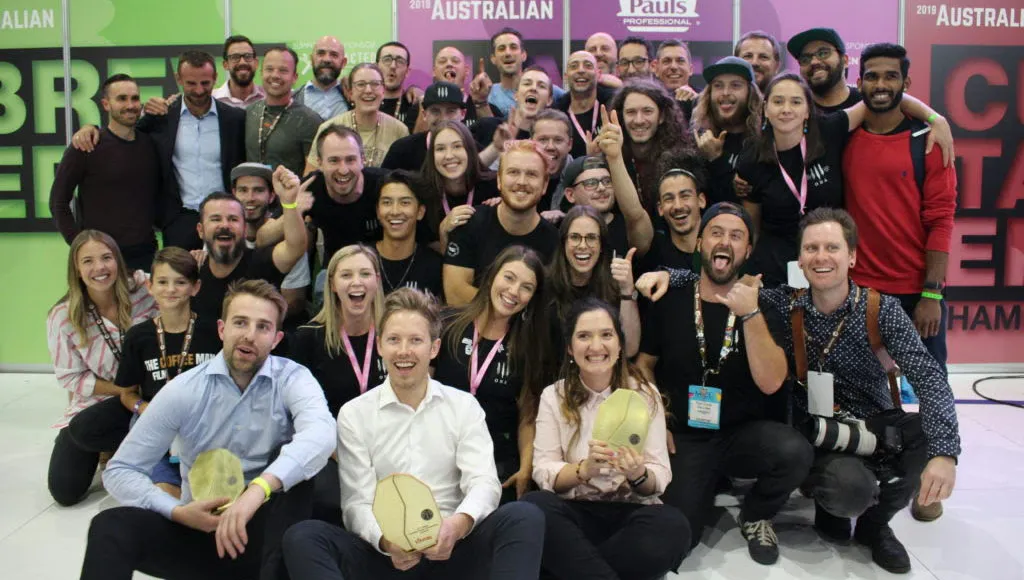
The Melbourne International Coffee Expo (MICE), Australia's sole trade show dedicated exclusively to coffee, took place for the first time at the Melbourne Convention and Exhibition Centre (MCEC) from Thursday, February 7, to Saturday, February 9. The event united more than 140 exhibitors from Australia and abroad for three days of networking, education, and celebration.
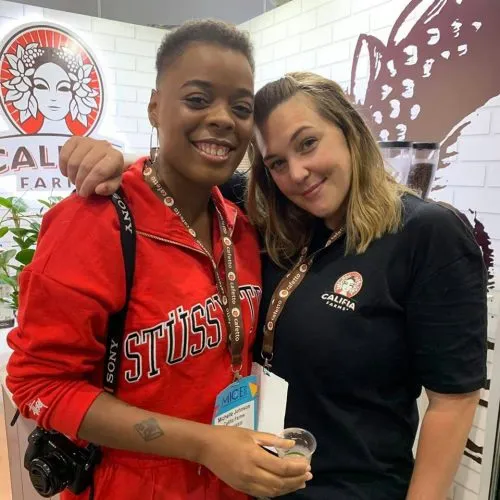
Michelle Johnson & Demelza Jones
This annual gathering—a reunion for producers, importers, equipment and brewing manufacturers, roasters, and baristas—recorded its highest number of pre-registrations to date. Total attendance for the year reached 11,978, nearly 1,000 above the previous year's record.
Simon Coburn, MICE show director, links the show's growth to new exhibitors such as Vertue Coffee Roasters and Cartel Coffee Roasters in the Roasters Alley area, as well as El Salvador, a new origin country. Another fresh addition was the Espresso Bar, which, according to Coburn, “opened up an opportunity for roasters that specialize in the espresso side rather than filter,” attracting new participants like Cottle Coffee and Merlo Coffee Roasters.
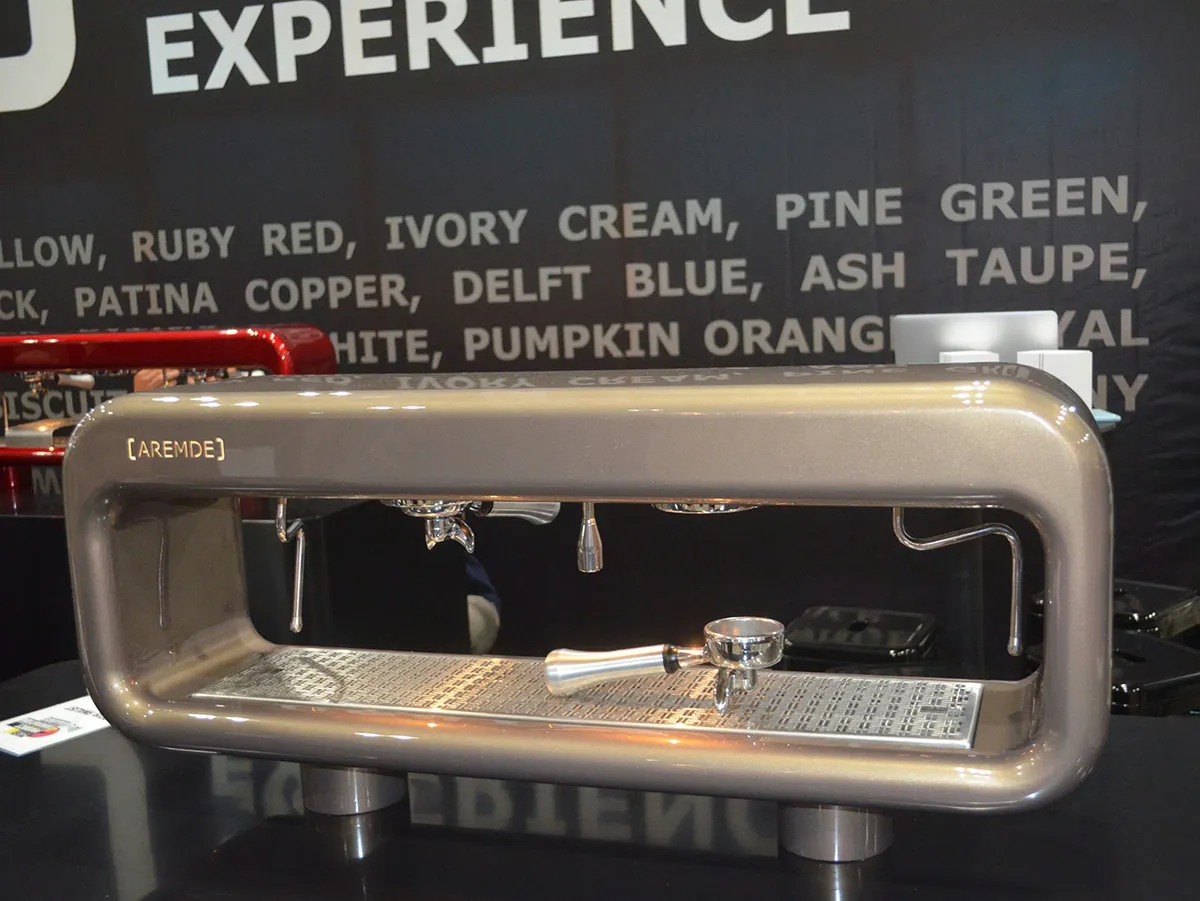
For 2019, the expo relocated from Melbourne Showgrounds to the city center, making the trade show “more accessible, and easier for the city café market to attend even if it’s for an hour or two,” Coburn says.
“When MICE was first conceived,” he continues, “it had to be accessible to a market that hadn’t had an event before, so cost was critical to get the show up and running and Showground was a really cost effective way of doing that.”
Coburn notes that both MICE and the coffee industry have evolved considerably.
“It’s now exceptionally professional, so we needed to shift to a more professional venue,” he says. “We are trying to present ourselves on the world stage as world leaders and we need a world-class venue to do that.”
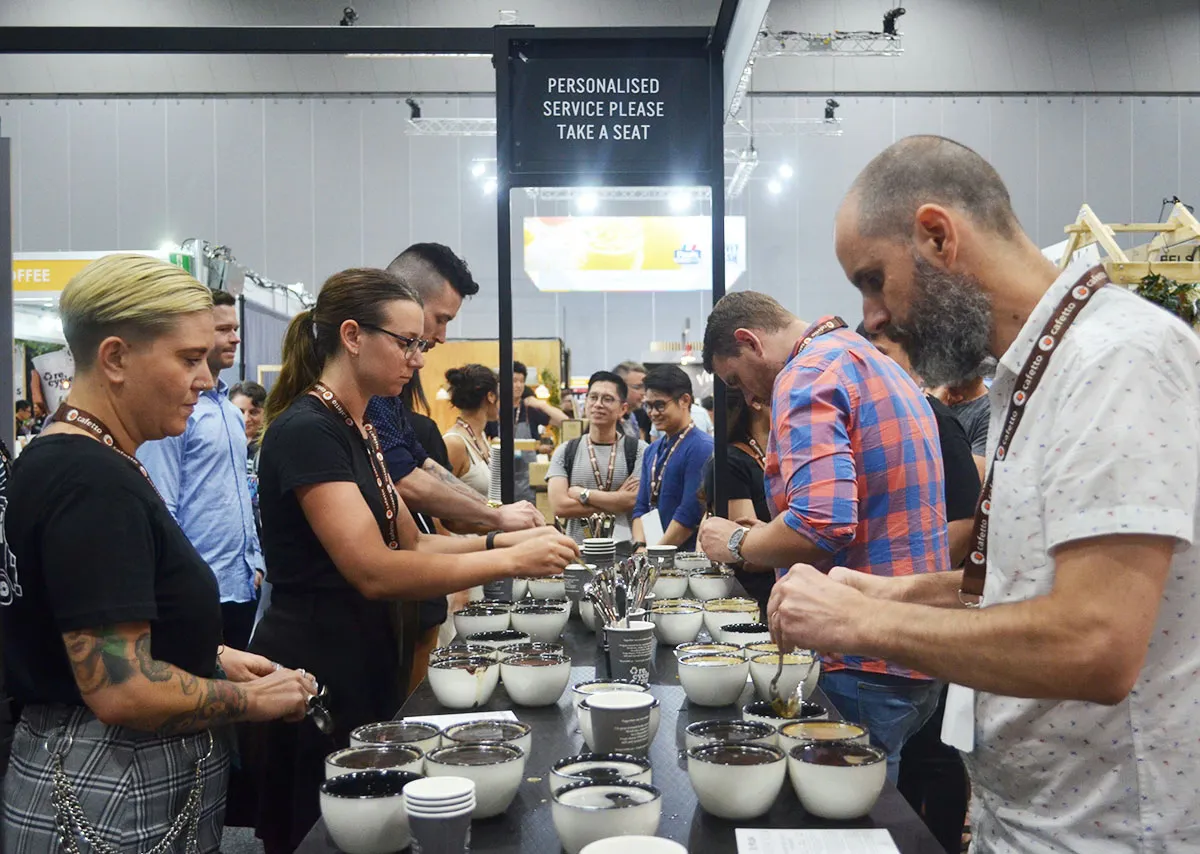
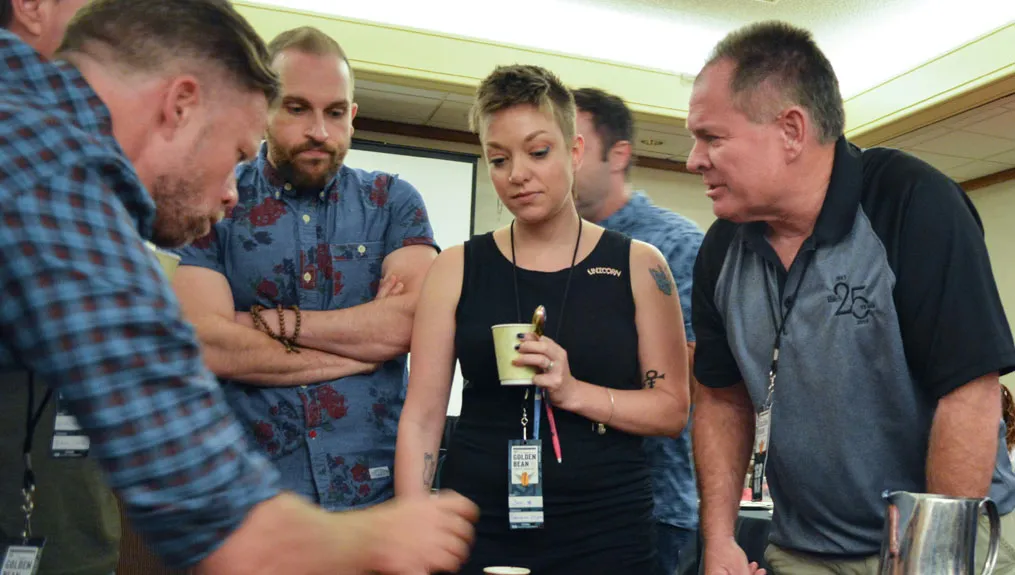
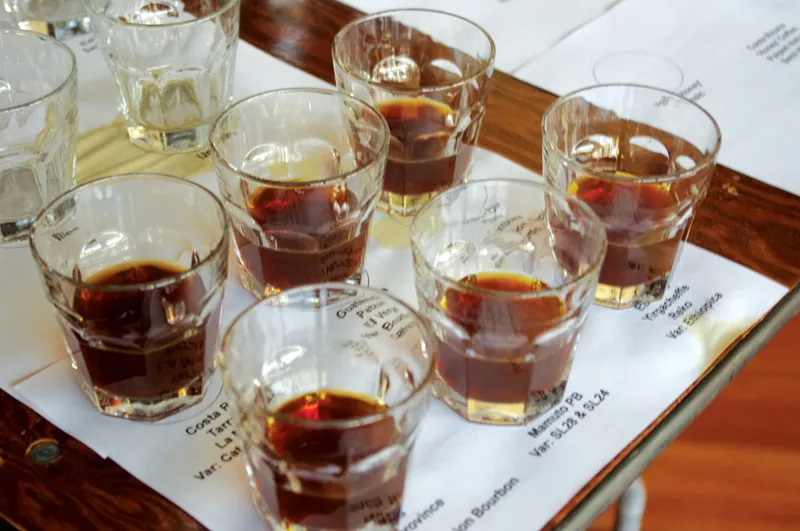
MICE cupping room, photo by Anastasia Prikhodko
At the close of 2018, after seven years of MICE, Coburn says the team felt compelled to reflect and reassess.
“What we really wanted to do was take it back to the beginning,” he says. “MICE is an opportunity for people to do business together but that wasn’t necessarily what MICE was about when we created it.
“The show was initially about being a place where the industry came together, accessible for international attendees, and for people to get together to catch up, network, and as a consequence of so many people at one place, business was done,” he says. “So what we really wanted to do with 2019 was to remind people why MICE was started and just try and take it back to basics.”
First-time exhibitors Andre Selga and Nadia Moreira, a married couple, operate Southland Merchants, a Brazilian green bean exporting company based in Adelaide. Selga explains that their purpose in attending is to highlight Brazilian coffee and “show that Brazil’s got more than the chocolate, nutty flavors that roasters are used too.”
A high point for Selga was having two of Southland Merchants' farmers travel from Brazil to join the expo, along with the chance to meet and connect with other coffee roasters, exchange information, and gather feedback from roasters.
Coburn estimates that roasters and café owners accounted for roughly 55–60% of expo attendance.
“The roasters and green bean buyers who exhibit at MICE are bringing an extremely sophisticated level of education to the industry,” he says. “It’s not about pouring a cup of coffee anymore, there’s so much that goes into it. What was once perceived as a casual industry is now a professional, educated and sophisticated market.”
Ben Bicknell, strategic project manager at Five Senses Coffee, describes the expo as a catalyst for uniting a committed and enthusiastic group of coffee professionals.
“We really focus on using this opportunity to showcase not only our coffees but also our people—the core of our business,” says Bicknell. “We really just try to provide guests with an opportunity to come and have a chat and learn some more about us—what we’re doing, why we do it, and critically, make sure they have a cup of delicious coffee in their hand while we talk.”
Five Senses offered a series of tasting flights at the show, giving guests the chance to learn about some of the company's relationships with coffee producers. Several of those producers joined the team at MICE this year, including Sammy Demisse of Keffa Coffee (Ethiopia), Henrique Cambraia from Fazenda Samambaia (Brazil), and Keremba Warioba of Communal Shamba (Tanzania). Five Senses also contributed 20 percent of all its coffee sales during the show to a medical center near Communal Shamba’s coffee-growing region in southern Tanzania.
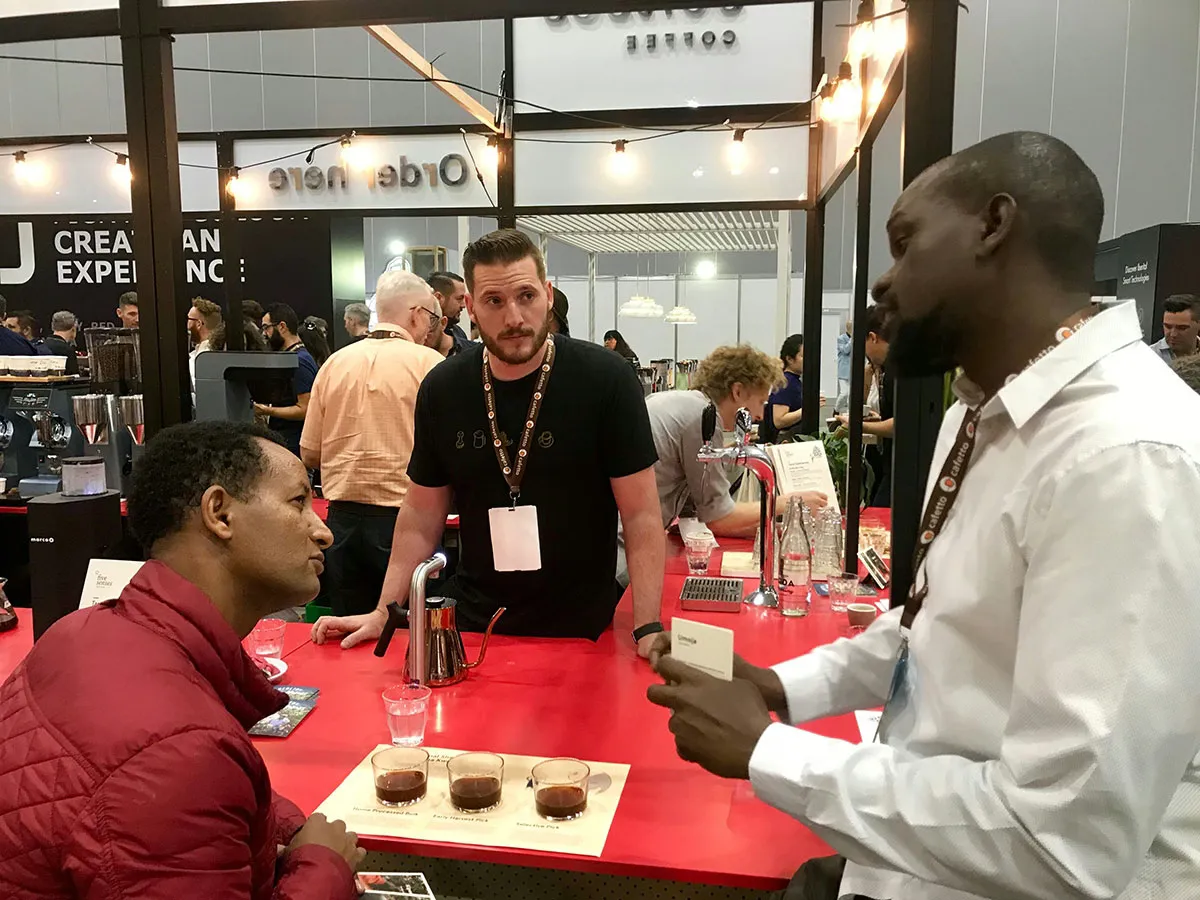
photo provided by Five Senses – Will (centre) serving customer (left) the Communal Shamba from Tanzania tasting experience and assisting with the information is Karimba (right) from Communal Shamba.
Organizing an event of this scale in Australia naturally presents distinct challenges. Coburn explains that while Australia's geographic isolation in terms of travel is an obstacle, the foremost issue organizers faced recently was the world economy.
“The price of coffee has really hit a lot of producing countries and that impacts whether people have budgets to go and do shows around the world, so that has been the biggest challenge,” he says. “We have a goal to establish MICE as one of the four or five top events globally that the coffee industry wants and has to be at, and I think it’s probably getting close to being one of those.”
Regarding new elements for 2020, Coburn says the show’s Roasters Alley, now in its third iteration, will be relaunched with a completely different format and view. In addition, Melbourne is set to host the 2020 World Barista and Brewers Cup Championships at MICE from May 4–7, 2020.
“For coffee professionals globally, hosting the World Coffee Championships is a dream come true,” says Craig Dickson, managing director of Veneziano Coffee Roasters, in a statement. “Melbourne hosted the industry’s premier event for the first time in 2013, and to see it return to our city which is so rich in coffee culture, is an honour and the ultimate celebration of the Australian coffee industry.”
Competition & Award Winners
Product Innovation Award—Judge’s Choice: The Energy Bar, The BrewBar Product Innovation Award—People’s Choice: Milkit Dual Milk Tap, United Supplies Eleonora Genovese Australian Coffee Woman of the Year: Gina Di Brita, founder of Numero Uno Coffee Roasters 2019 Australian Vitasoy Barista Champion: Matthew Lewin, ONA Coffee 2019 Australian Pauls Professional Latte Art Champion: Jibbi Little, jibbijug 2019 Australian Brewers Cup Champion: Yanina Ferreyra, Project Origin 2019 Australian TCX Cup Tasters Champion: MJ Kim, Shamble Coffee Brewers