Where Baristas and Coffee Enthusiasts Meet: A Look Back at CoffeeCon
At a one-day consumer coffee festival, baristas traded the service counter for conversation, discovering an audience hungry for deeper knowledge about brewing.
By Jordan Evans3 min read
Beyond the Espresso Machine
For many baristas, the daily routine is defined by speed and service: pull shots, steam milk, hand over a cappuccino with a smile, and keep the line moving. Genuine exchanges about coffee—especially with customers who are passionate about the industry or eager to refine their home brewing—do happen, but they are often squeezed out by the morning rush and other tasks. There is plenty of enthusiasm to share, yet a busy weekday rarely leaves room for it.
That is part of why baristas are drawn to competitions: they offer a stage to step away from the café and talk about the beverage that drives so much curiosity. It was also the impulse behind Chromatic Coffee’s decision to make the drive from the South Bay to San Francisco for CoffeeCon, a one-day festival aimed at consumers. The team went in without a clear picture of what to expect. CoffeeCon is not exactly a trade show; it features lectures and classes, gathers a wide range of local roasters, and draws an audience of everyday coffee drinkers with a real appetite for the craft. How much exposure the roaster would get, or what relationships might come from it, was uncertain—but the prospect of sharing space with people who already enjoy their coffee, and of telling their story to those who had not yet heard it, was energizing.
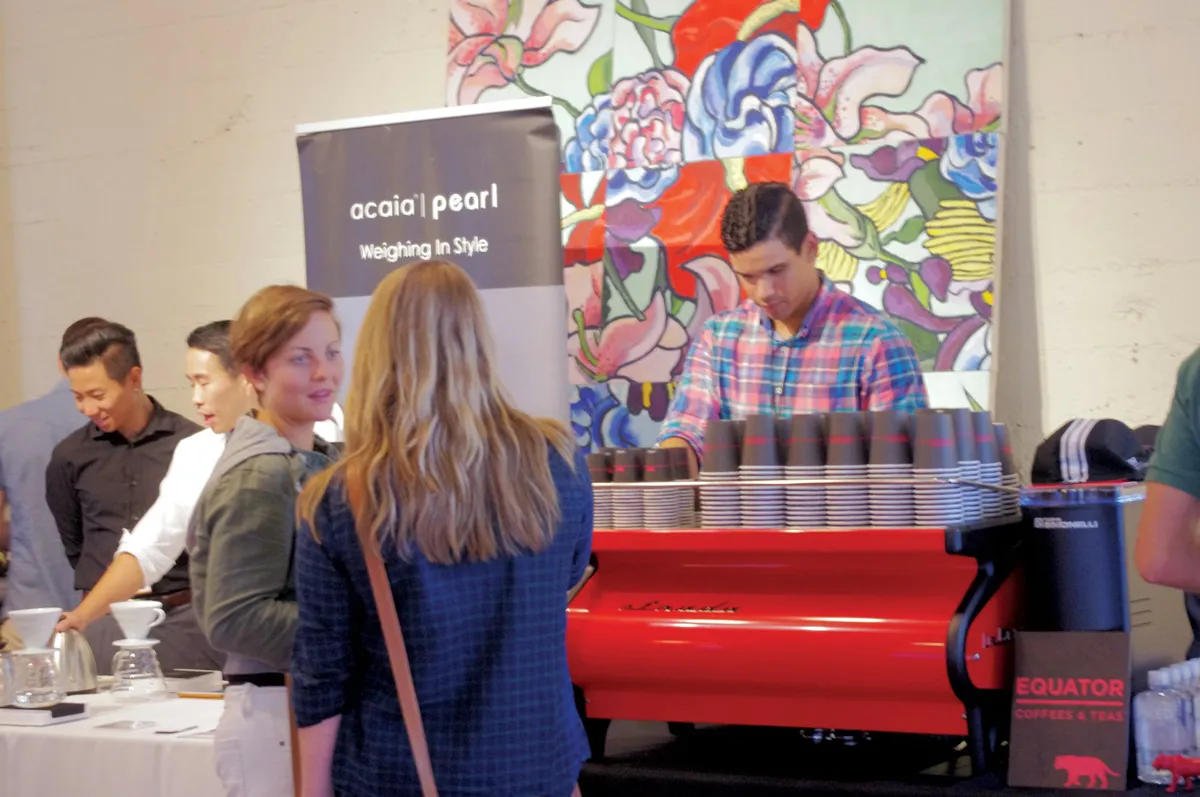
Acacia Pearl and Equator’s booths at CoffeeCon.
An Audience That Came to Learn
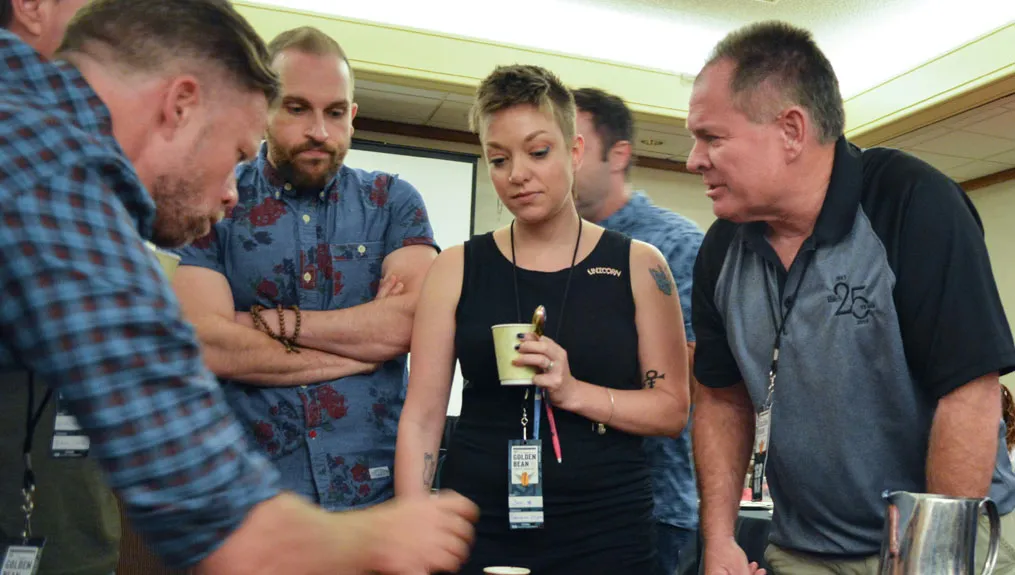
Arriving at the convention, the team set up quickly, greeted a few familiar faces, and waited for the crowd. Coffee drinkers are the reason the team entered the coffee world in the first place, so there was a sense of excitement—perhaps a touch of giddiness—as attendees began filling the art space. Over the course of the day, it became clear that this was not simply a crowd sampling different brews. These were consumers with an above-average commitment to the craft, and many of them were ready to listen and learn. While brewing, the team recounted their origin story: a few friends with a dream, working from a basement at home with only a sample roaster, a plane ticket to El Salvador, and a commitment to quality and to all the people involved in producing a distinctive beverage.
Other queries we encountered went into discussing the relationship between roast levels and water properties, variables that don’t get a ton of love in everyday interactions at our Santa Clara shop.
The level of interest was both surprising and gratifying. The team had attended the Big Western and similar regional events, but CoffeeCon produced a different kind of interaction. Here, attendees were not merely after free coffee; they approached with curiosity. Conversations about home brewing were frequent, with grind size a recurring focus, and a set of brew-method cards—each showing the preferred grind—was on hand to answer questions. Other discussions touched on how roast levels interact with water properties, subjects that rarely get much attention in the day-to-day exchanges at the Santa Clara shop.
The Educator Behind the Counter
For baristas, it is refreshing to be reminded that another part of the role is education. At Chromatic, the team tries to lead by example by putting care into everything they do: signs are screen-printed in house, and the artist series bags feature work by local artists who also display their art in the café. Yet baristas can become stagnant. Most people in a coffee bar are busy and want their usual pick-me-up; the café functions more as a retail encounter than as an educational exchange of ideas. Events like this one are vital to keeping that exchange alive. Taking barista know-how and dedication on the road is invigorating—a reminder that baristas are stewards of the product in more ways than one.
On the eve of CoffeeCon San Francisco, the event’s creator, brewing expert Kevin Sinnott, wrote a message to baristas on his blog: “Your profession will grow as people realize the craft and skill and, yes, art that goes into your work.” He compared attending CoffeeCon to cheering “for the home team.” Through participation in events like his, the team likes to think they contribute to the growth of the industry at large and to consumer understanding of just what a barista does. The next chance to connect with consumers for a day—whether at a Bay Area throwdown, CoffeeCon 2015, or when some of those attendees stop by the shop to finish the conversation started at a booth in July—cannot come soon enough.