The Chef Who Wrote the Rules for a Better Cup
Matts Johansson went from a curious café regular in Gothenburg to co-founding the World Barista Championships and shaping how a generation of baristas thinks about espresso.
By Skyler Adams5 min read
In the early nineties, Matts Johansson had an experience that redirected his life. “I was in a small café in Gothenburg where I regularly sat, had a coffee, and watched the world go by. The other reason I went is that I was fascinated by the guy who ran the shop. He roasted the beans in the oven, just a normal, domestic, everyday oven, then put them through an espresso machine.”
Johansson, then working as a chef, sipped the “surprisingly OK” cup and noticed a stack of coffee magazines nearby. He picked one up, and a coffee legend was born. “Looking through the features on roasting, coffee shops, and beans, I thought, ‘There’s a whole world out there.’ It was something I hadn’t even considered before.”
The seed was sown. After a trip to San Francisco, Johansson became convinced coffee could be his future. “What really changed things for me was this great little independent café in the Castro. They were serving beautiful specialty coffee. At the same time, Starbucks was getting really popular. I could see there was a market, and if that was the case in the US, why not in Sweden?”
Johansson’s rationale for opening a café went like this: I like cafés; I’ve visited good ones all over the world; I’m a trained chef: why not open a coffee shop?
One obstacle was the economic turmoil on the Swedish side of the Atlantic. The country was in a financial crisis, and restaurants and hospitality businesses were failing in every direction. “The economy affected everything, all areas of the market. The old style cafés went, the posh places disappeared, too. And there wasn’t really a pub culture in Sweden, so basically we were left with no meeting places.” In short, there was a gap—or rather a huge, gaping hole in the market.
Lacking barista or even coffee shop experience did not deter Johansson. His reasoning was simple: “I like cafés; I’ve visited good ones all over the world; I’m a trained chef: why not open a coffee shop? I had some savings—around 10,000 euros—and bought a place in Gothenburg near the university.”
That was in 1993. With little if any modern coffee culture to draw on and no one to learn the craft from, Johansson largely taught himself. “I was an autodidact. I’d watched baristas work, read what I could and had a rough idea of how to do it. I started using an espresso machine and initially my product was very much in the dark roast, Italian style. It worked because, at the time in Sweden, the classic Italian style was seen as cool and sophisticated.”
The thirty-seat shop, Caffe Espresso, was an immediate success, expanded quickly, and became known for its lattes and espressos, an exotic rarity in Gothenburg. Johansson did not, however, rest on his laurels. He sold the business in 1999 and went to Italy, where he refined his craft, visiting machine factories, roasteries, and countless cafés to watch baristas produce beautifully crafted drinks.
“I was experiencing all these great products, but it occurred to me that there was no ‘right’ way to do things. I wanted to set out what made the perfect espresso.”
A rather lofty ambition, you might think: writing the parameters of the beverage that defines a nation. But in 2000 he wrote Espresso Book, which became a bible for a generation of baristas. “It’s forgotten about now,” Johansson shrugs modestly. “But it was one of the first books to really define what went into a good drink.” The book provided a sturdy foundation for the World Barista Championships, which Johansson co-founded at the turn of the millennium.
“The idea was to lay down some rules and set standards for what was a rapidly growing industry. We defined how a cappuccino and espresso should be made, with pretty strict brew times, grinds, weight, and so on. At that time we felt it was necessary because the Italians, Aussies, Americans, and so on had such different ways of doing things.”
The original style had a distinctly Italian flavor. “It made sense to do it the Italian way because they started the whole industry. Get the basics right then you can adapt and adjust. Being a chef, that was my philosophy. Looking back, we had to be strict. Having a focus was vital to the growth of the global market at that time, and the WBC had a huge impact.”
So what is next for the original custodian of the coffee code? Johansson first plans to expand his chain of four coffee shops that are almost—but not quite—named after himself. “They’re called Da Matteo because when I was in Italy they found it difficult to say my name, so it kind of morphed into Matteo.”
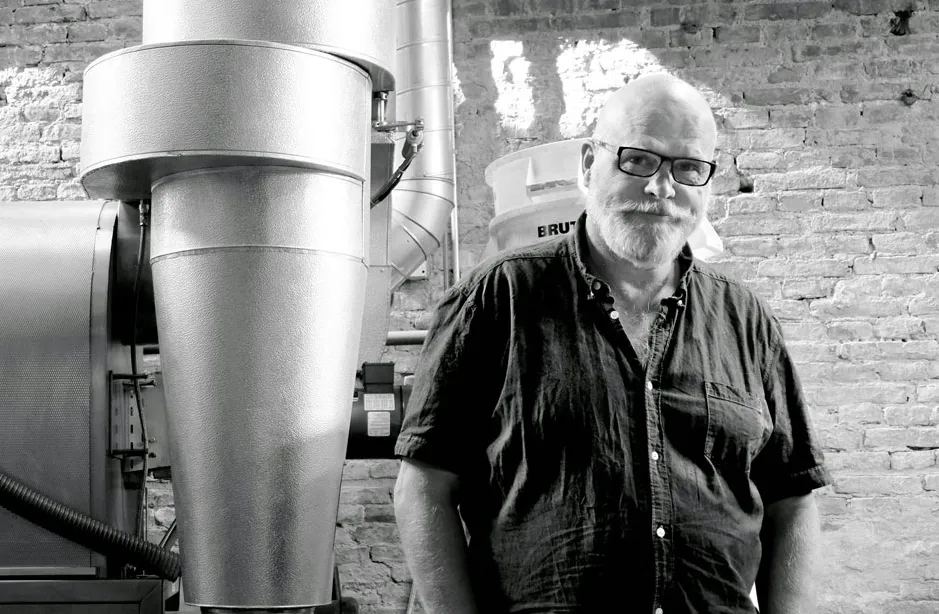
Matt Johanson.
Although Johansson began with an Italian roasting style, he now favors what he calls a medium roast. “Swedish coffee culture is still pretty young and a lot of people are used to a dark roasted product. So we try to get a balance which will ensure a good product whilst keeping the customers happy. The result is something comparatively light to retain the purer flavor, but not as light as for example in Norway.”
Building appreciation for a superior product is a subject Johansson discusses with a hint of frustration. “We’re doing what we can in our cafés to talk to people about coffee and explain the differences between products but there’s an issue with the rest of the hospitality industry. Top-end restaurants will have the best wines and some great craft beer, but when it comes to coffee they don’t seem to care. I’ve talked to restaurant owners who tell me they use the machine they got free with the kitchen fit-out. Coffee isn’t a priority and that’s something that needs to change.”
Another hurdle is Sweden’s fragmented market. There are a few high-end specialty joints like Da Matteo, and chains such as the highly regarded Espresso House, but something of a void in between. Would Johansson consider working with a big player to create a quality product with more mass-market appeal? “I’m a working class guy from a small village and you quickly understand what’s going on in the market and how you need to adapt. We want to grow, so yes, we would like to have an investor.
here is a precedent. Espresso House was the first coffee company to use private equity money and now they have 200 shops in Sweden, in Norway. It’s one of the best chains in Europe.”
So what does Johansson see as the future of Swedish coffee? “Our confidence is high and our self-perception is that we’re growing in importance in the worldwide industry.” He then checks himself. “In reality though we’re still a small gamer.”
That undersells the scene he helped create. Sweden has long punched above its weight for a country of fewer than ten million citizens (just bigger than London). Without Sweden, and without Johansson, specialty coffee would not be what it is today.