How Danish Specialty Coffee Found Its Own Voice
From a handful of pioneers to a globally respected scene, Denmark's coffee culture has transformed over two decades—built on collaboration, local pride, and a push for better sourcing.
By Quinn Hill9 min read
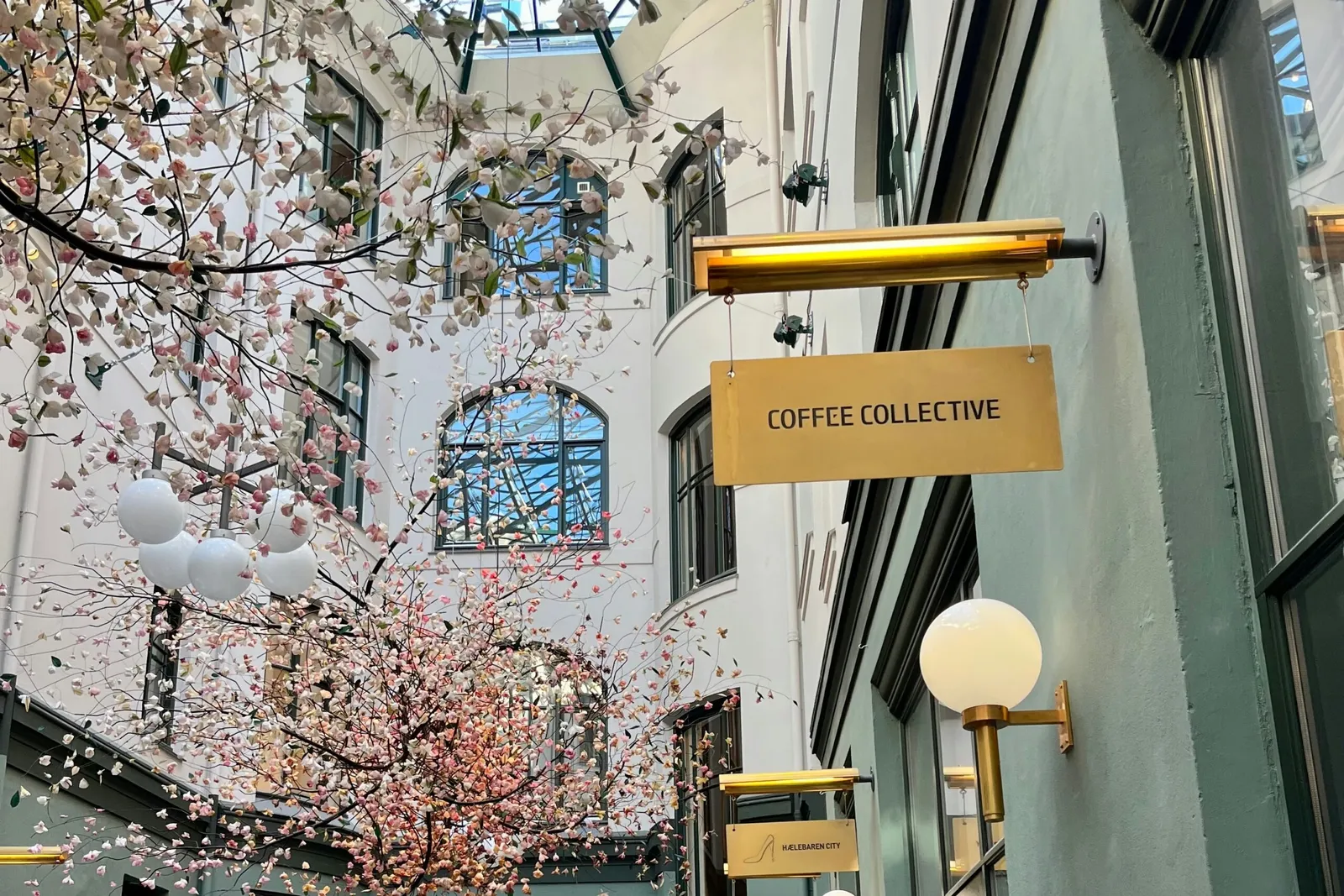
Denmark may be home to fewer than six million people, but its residents rank among the world’s top coffee consumers: the average Dane drinks about 19 pounds of coffee annually, or roughly 430 cups. While many of those cups still come from conventional brands, a growing share is now poured by specialty roasters that have earned Denmark a place on the global coffee map—a status that did not exist until fairly recently.
For decades, coffee in Denmark has been tied to large commercial brands such as Merrild and Peter Larsen Kaffe. These companies supplied the coffee that fuels the Danish “coffee and cake” ritual—a staple of work life and celebrations, where a thermos and pastries are considered essential. Specialty coffee, by contrast, only began to enter the national conversation in the mid-2000s.
“At the time I won the World Barista Championship in 2006, there were a few coffee shops around in Copenhagen, but we thought it was underdeveloped compared to what we knew coffee could be,” says Klaus Thomsen, one of three co-founders of Coffee Collective. “We could see there was a big gaping hole in the market for the qualities of coffees that excited us.”
Over the past two decades, the Danish coffee landscape has changed rapidly. Thomsen and many others have helped shape a distinctly Danish coffee identity—one that emphasizes collaboration, even among competitors, and draws on local traditions. Today, Denmark stands as one of the world’s most recognized specialty coffee destinations, a reputation built by embracing what makes the country unique.
Origin Stories
“Since we started early in 2014, so many new roasters are popping up, especially in Copenhagen,” says Sine Klejs Gren, founder of Holy Bean Coffee Roasters, based in Aarup, a small town on the island of Fyn. We’re sitting on a bench outside Café Sølle in Odense, Fyn’s largest city, on one of Denmark’s infrequent sunny days.
“We are actually the only one, if we can say so, focusing on specialty light roasts here on Fyn. There are other roasteries, but they focus on a darker roast for automatic espresso machines in offices,” Gren explains. “We are going for small cafés, like Café Sølle, because they want to do something different.” Holy Bean provides wholesale services and coffee courses for businesses “that care about the values behind the coffee,” she adds, including a Michelin-starred restaurant.
A roastery like Holy Bean, dedicated to light-roasted coffees, would have been hard to imagine in a town of just over 3,000 people even a few decades ago. When Thomsen entered the specialty coffee scene around 2003, “the Danish specialty scene was very, very small, almost non-existent. There were two Danish World Barista Champions at that time, but they were using coffee roasted in Italy,” he says with a laugh during a Zoom interview.
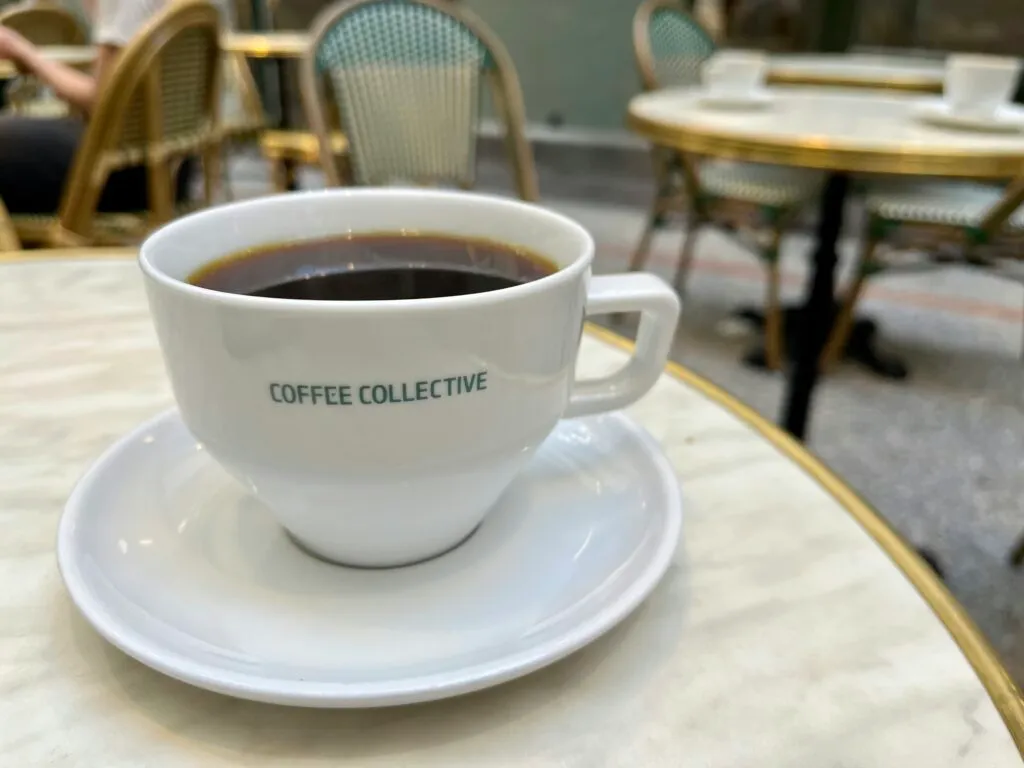
“We started our roastery first in a little warehouse near the Copenhagen airport and just did wholesale and a webshop for half a year. And then we finally managed to open our own coffee shop, which was always the dream, in February 2008,” Thomsen recalls. That café became the first of nine in the capital region, including a coffee bar inside a refurbished telephone booth and a bakery that supplies all the other locations. Today, Coffee Collective is a certified B Corp that released its sixth annual transparency report earlier this year, detailing its sourcing and purchasing goals.
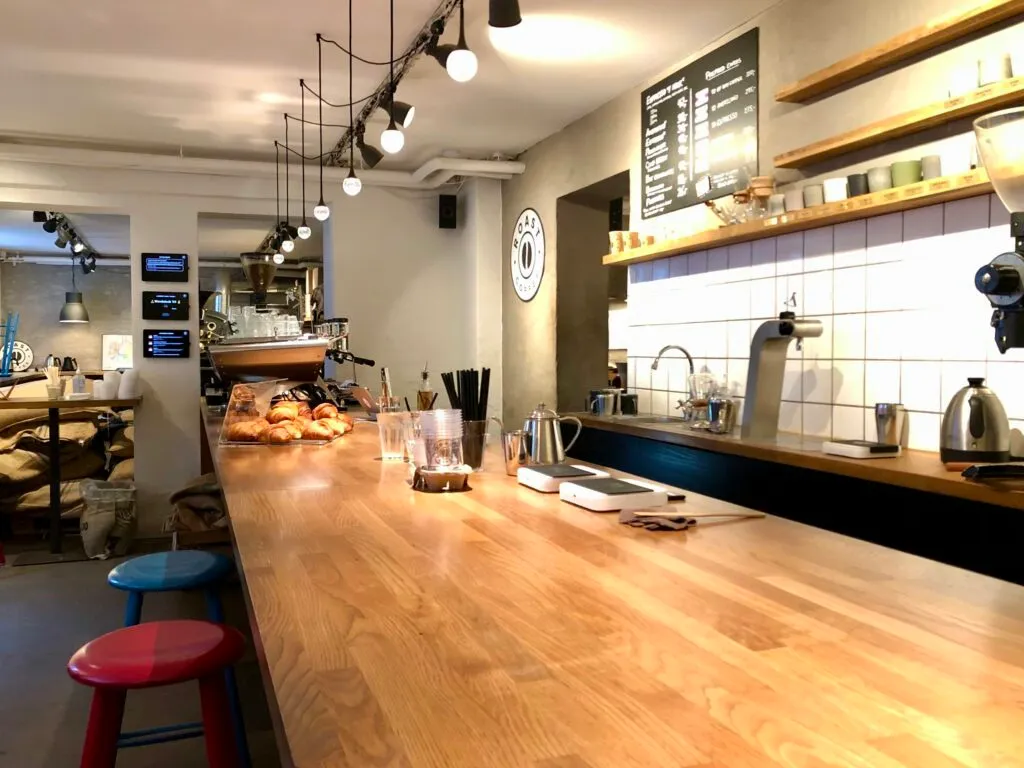
Andreas Astrup, CEO and founder of ROAST Coffee, came to coffee from the nonprofit sector. “I had a dream about setting up a roastery in a producing country, maybe in Kenya. But then I got offered a job in Bangkok. Whenever I had a weekend off, I’d go up north in Thailand or to Laos and Indonesia and bring back green beans to roast on my balcony,” he says over Zoom. When Astrup returned to Copenhagen, he seized a now-or-never moment and opened his roastery in 2015 in the Islands Brygge neighborhood. Today, the roastery is located just around the corner from its original spot.
At the time I won the World Barista Championship in 2006, there were a few coffee shops around, but we thought it was underdeveloped compared to what we knew coffee could be. We could see there was a big gaping hole in the market for the qualities of coffees that excited us.
Klaus Thomsen, Coffee Collective
His initial business plan envisioned a single space combining a roastery and café—a showroom for the coffee—while concentrating mainly on online sales and subscriptions. After taking a roasting course with instructor Willem Boot, Astrup changed direction. “I very much learned by doing,” he says. “The first year, I was both roasting and looking after the bar at the same time. It wasn’t a great way to do it, but it was just a lot of fun.” Today, ROAST has three locations around Copenhagen, and Astrup is developing a new project called the “50-50” label, which aims to guarantee coffee producers 50% of the retail price of a bag of coffee.
ROAST is among a growing number of roasteries trying to shift focus toward sustainable coffee sourcing. “Coming from the nonprofit sector, one of the things I didn’t want to do with ROAST was start a new kind of feel-good charity,” Astrup says. “I wanted to do something sustainable, a more equal relationship, something that could grow and actually change things.”
As of August 2023, the “50-50” program accounted for 2% of ROAST’s coffee, and six of the 16 coffees on its web shop carried the label—but Astrup’s goal is to purchase more coffees under this model. “I think the market needs to change, but I’m optimistic. The customers need to be aware they need to pay a higher price, especially in exchange for better quality,” Astrup says. “It’s definitely still a work in progress. But it’s very close to my heart.”
A Growing Danish Coffee Scene
When I first moved to Denmark in 2020, I was delighted to find that filter coffee was as common here as in New York, where I grew up. Filter coffee is also called almindelig kaffe (“ordinary coffee”), a term that a Merrild blog notes “is often connected with an old thermos and a boring taste” (my translation from Danish).
Almindelig kaffe typically refers to conventional, non-specialty coffee, which is what most Danes are accustomed to drinking. Specialty coffee, however, is increasingly appearing on menus—and Thomsen believes the proof is in the cup. “We’ve always resented when people say consumers can’t taste the difference,” he says. “And we’ve always been like, that’s bullshit. … As baristas, we knew people could taste the difference even in a single latte. They would come in and say, ‘It’s funny how your latte tastes different than the guy down the street.’ Like, ‘His is much more smoky,’ or ‘Yours is more caramelly.’ People are way smarter than they’re given credit for.”
Coming from the nonprofit sector, one of the things I didn’t want to do with ROAST was start a new kind of feel-good charity. I wanted to do something sustainable, a more equal relationship, something that could grow and actually change things.
Andreas Astrup, ROAST COFFEE
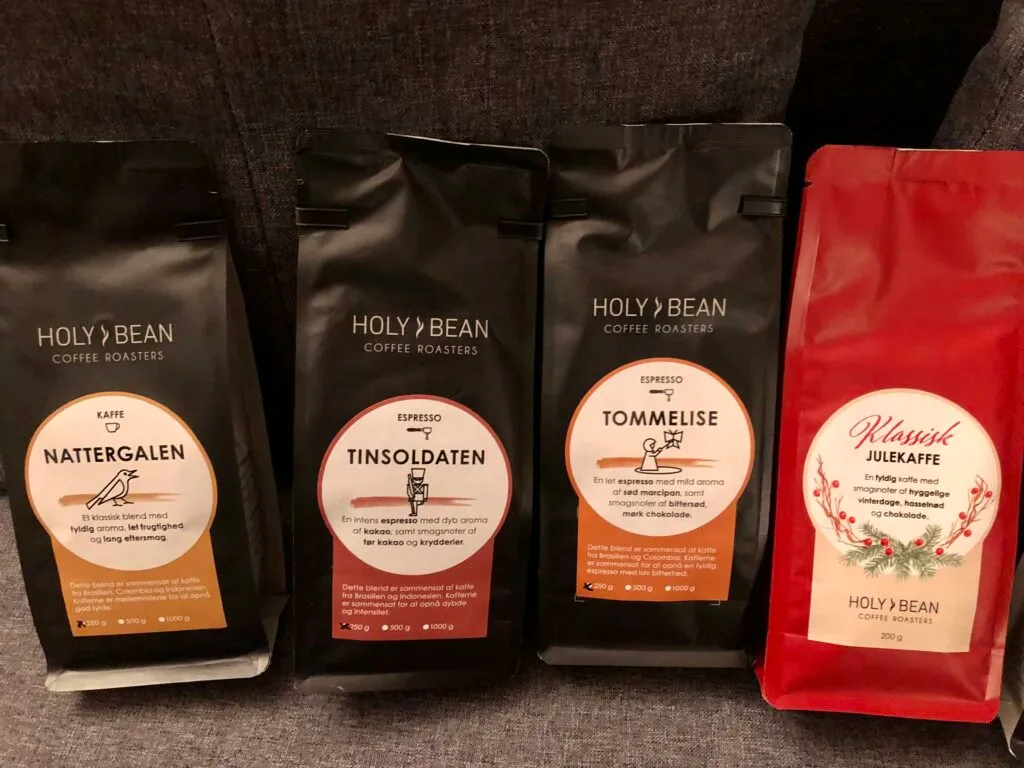
One of Holy Bean’s strategies for introducing specialty coffee to more conventional consumers has been partnering with wine and boutique shops, where Danes might look for a gift to bring to a dinner or housewarming. In a bundle of Holy Bean coffees I once received as a Christmas present, there were three blends named after Hans Christian Andersen fairytales: “Nattergalen” (The Nightingale), “Tinsoldaten” (The Steadfast Tin Soldier), and “Tommelise” (Thumbelina). Gren and her collaborators saw this as a natural fit for the Danish market. “Everybody knows HC Andersen,” she says of the writer, who was born in Odense.
Although Holy Bean now focuses on light-roasted coffees, Gren says that in the early days she struggled to build a coffee menu she was excited about while also meeting customer expectations. “In the beginning, I hated that everybody wanted the same thing. They wanted full-body chocolatey and nutty, and to put milk in their espresso. And I wanted to sell very light-roasted coffee and present those unique floral and citrus flavors.”
Eventually, Gren learned to find a balance. “At one point, we said, ‘Okay, what if we do a medium roast? It is still quite a balanced cup of coffee.’ As the years went by, I understood why it is so important to have coffee that everybody likes. It’s allowed us to grow a healthy business slowly and steadily.”
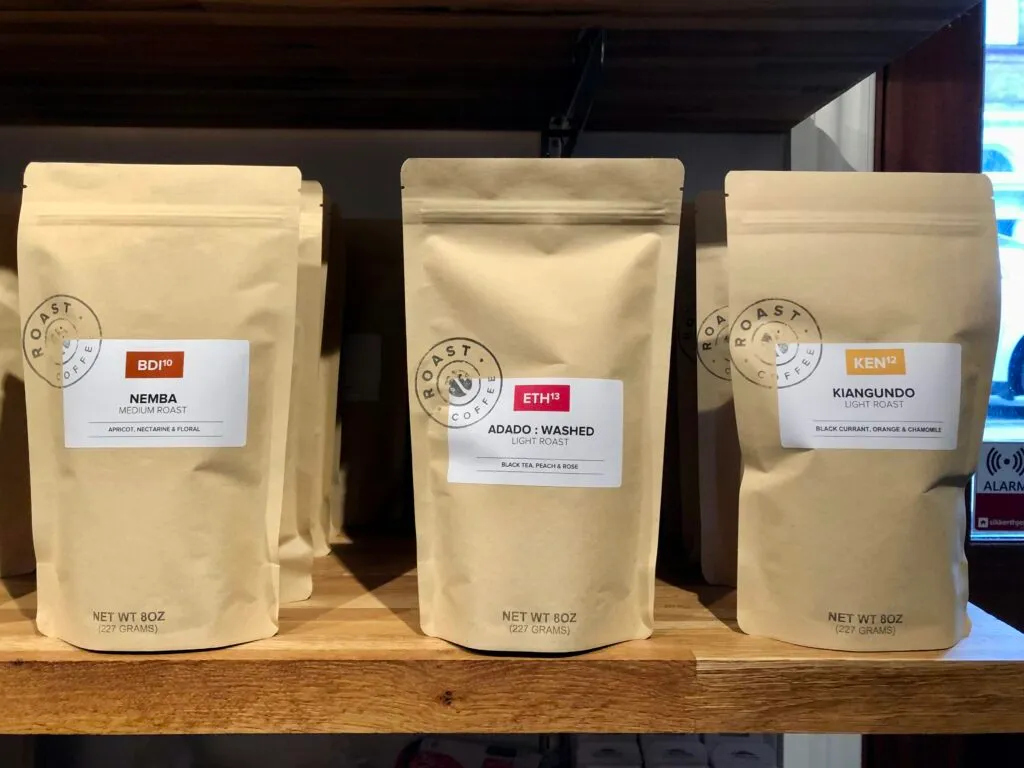
Offering a wider range of roast profiles can also draw more consumers into specialty coffee. ROAST serves its full range of light, medium, and dark specialty roasts as pour over, with origins including Burundi, Yemen, and Papua New Guinea. Their packaging features a country abbreviation and a number—for example, KEN12, which resembles a colorful chemical symbol and indicates ROAST’s twelfth offering from Kenya.
Astrup says ROAST’s bag design and naming conventions help customers identify whether a bag comes from a lot or region they’ve purchased before, illustrating how far consumers have come in recent decades. “There’s more focus on good quality coffee than there used to be, and people know much more about coffee than they used to,” he says.
From Local Relationships to Global Recognition
Although Coffee Collective operates cafés only in Copenhagen, its coffee can be found in 20 countries across Europe, Asia, and North America. “In our first years of operation, we felt that we were more known internationally than we were locally,” Thomsen says.
“It was a consequence of the fact that I had won the World Brewing Championship and my business partner Casper Engel Rasmussen won the World Cup Tasting Championship the year after we started, while our third business partner Peter N. Dupont has big recognition among people who source coffee. So whenever we had people traveling abroad, they would come back and say, ‘How the hell did your coffee make it to a shop in Seattle?’”
Danish coffee brands have an increasingly visible presence on the world stage. Beyond large international chains like Ole & Steen and Joe & The Juice (both founded in Copenhagen), specialty roaster La Cabra (based in Aarhus, Denmark) opened its flagship New York store in 2021, and April Coffee Roasters (founded in Copenhagen) expanded to Seoul in 2022.
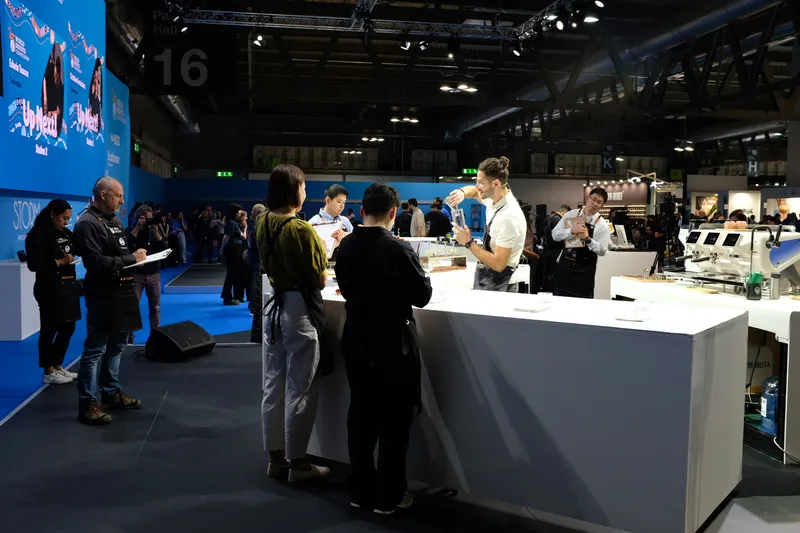
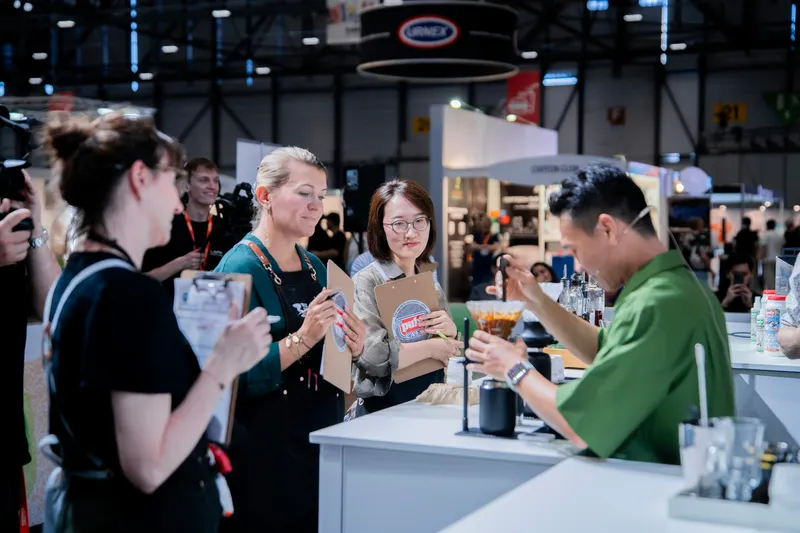
Thomsen says that World of Coffee, an international coffee trade show coming to Copenhagen in 2024, demonstrates how much the specialty coffee industry has grown in the capital. He credits that growth to the collaborative spirit and mutual trust that characterize much of Danish business culture. “I think there are very few cities worldwide that have as much good coffee as Copenhagen does right now. … When our industry colleagues do something awesome, we feel like, ‘Oh man, that was cool, but ah, we can do something even better.’”
A nearby roastery had a fire some years ago. And I said, ‘Of course you can come and roast in our roastery,’ because I hope they will do the same one day if I have a crisis. I totally understand that some things like roasting profiles are a secret in this business. But overall, I would say that we are quite close.
Sine Klejs Gren, holy bean coffee roasters
“I think all the new coffee shops and roasters that opened up are not competitors in many ways. It’s more colleagues, where we all know each other and go to each other’s shops and try each other’s coffee and talk about it,” says Astrup. “I believe we opened up the market for each other.”
Camaraderie and mutual respect seem to be the fuel that propels the Danish coffee scene forward, and people readily help one another when they can. Gren, who is currently pregnant with her third child, says another coffee colleague agreed to help her move and lift heavy things around the roastery when she was pregnant with her second—and this support goes both ways. “A nearby roastery had a fire some years ago,” Gren says. “And I said, ‘Of course you can come and roast in our roastery,’ because I hope they will do the same one day if I have a crisis. I totally understand that some things like roasting profiles are a secret in this business. But overall, I would say that we are quite close.”
“It’s like a friendly competition to improve us all,” says Thomsen. “And I think we all grow together.”