Seven Incarnations and a Slow Bar: The Reinvention of a Pike Place Café
A German-born historian turned Amazon marketer built a multi-roaster shop near Pike Place Market, survived a near-collapse, and kept reimagining the business.
By Jordan Gray4 min read
When Sebastian Simsch recounts the history of his café, he doesn't frame the shifts in business model, location, roasting, or staffing as ordinary course corrections. To him they are weightier than that: each one marks a distinct life of the café, separate from the others yet joined by a continuous thread of rebirth. Midway through our conversation he pauses to tally them on his fingers, cycling through the digits a few times at a quick clip (thumb flicking out to mark one, European style). By his count the shop has been reincarnated six times so far. Perhaps seven. Keeping track of all your past lives is not easy.
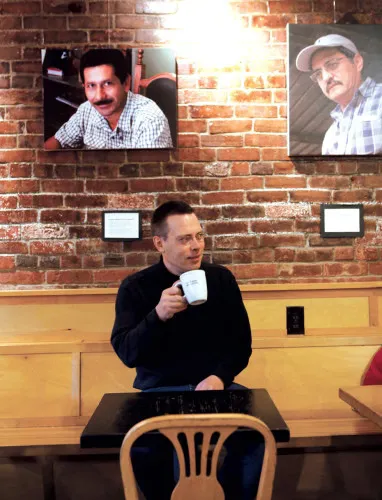
Seattle Coffee Works owner Sebastian Simsch.
The café's first life played out one door down the street, at the back of a T-shirt shop. The original concept called for displaying the widest possible range of roasters. Surveying the roasting landscape at the time, Simsch saw plenty of excellent roasters who had no idea how to market their beans — some couldn't even assemble a respectable website. "What if we did an Amazon of coffee?" he recalled thinking, picturing a single destination for beans. At opening, Seattle Coffee Works carried ten roasters.
His background before the café was at Amazon, so that model was deeply familiar. What he lacked was coffee experience. Simsch, a German native, began his career as a historian, but the isolation of thesis and book work wore down his patience. Living in California in the mid-nineties, he moved into high tech, taking a marketing role at the home retailer Williams-Sonoma. For fun, he arranged with HR to work the floor of a store once a quarter.
He then joined Amazon and relocated to Seattle in 2004. Coffee had not been his passion before the move, but a visit to the since-closed Hines Public Market Coffee changed that: Bronwen Serna, freshly crowned US barista champion, made him a macchiato. For Simsch, that cup was coffee zero.
"If you're going to run a café, run the café."
Two years later, after assisting with the launch of Amazon's industrial store, he quit and opened the café a block from the entrance to Pike Place Market — a part of Seattle he found oddly short on good coffee. (Capitol Hill's cluster of excellent cafés isn't far away in distance, but the climb makes the two areas seem miles apart for foot traffic.)
Not long after the opening, Amazon lured him back away from his young café. He tried to do both jobs as well as he could, but as he puts it, "If you're going to run a café, run the café." He wrapped up his Amazon project and came back to the struggling shop. "I thought my presence would fix things, but it didn't."
So the first incarnation was ended. He held on to the multi-roaster idea but cut the list short. The business kept floundering, so he let the staff go and became the only barista, working twelve-hour days six days a week. That period, he says, is when he turned into a coffee professional. Pulling that many shots that often, while fixating on the result, is bound to sharpen anyone's barista skills. "It was the best thing I've ever done," Simsch says.
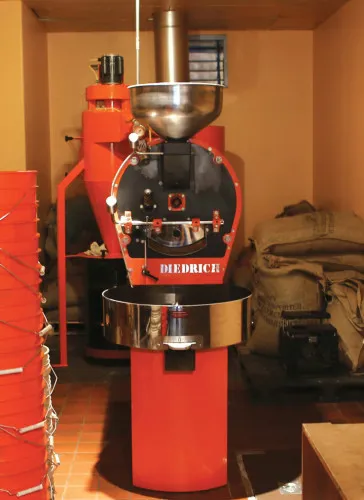
Four months in, he could afford to hire a barista. Later that same year — 2008 — he started roasting, and the café took off. "We were actually viable, my god," he says. The multi-roaster plan was retired. The following year they moved into their present space, which holds a green lab and a Diedrich roaster named Anna.
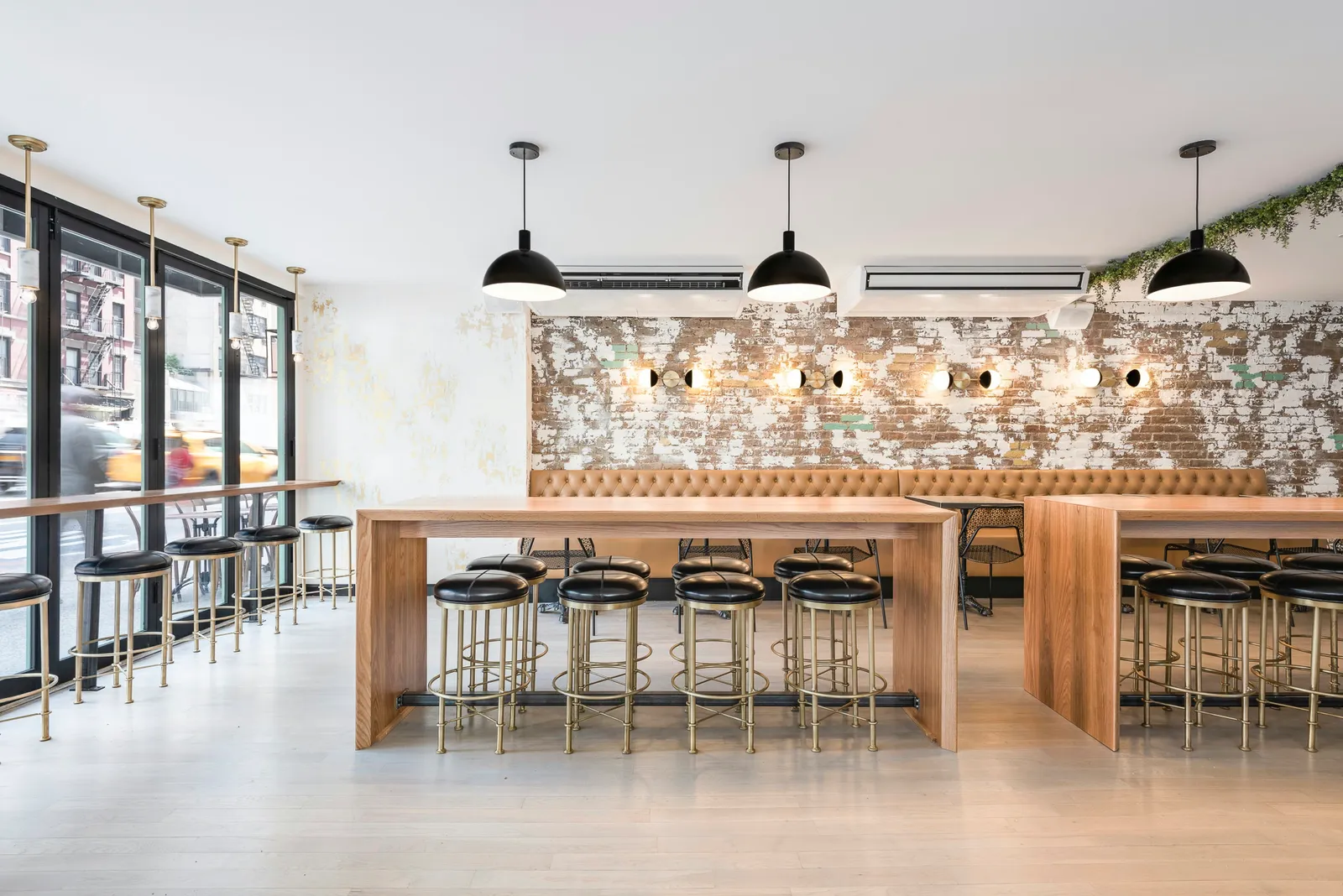
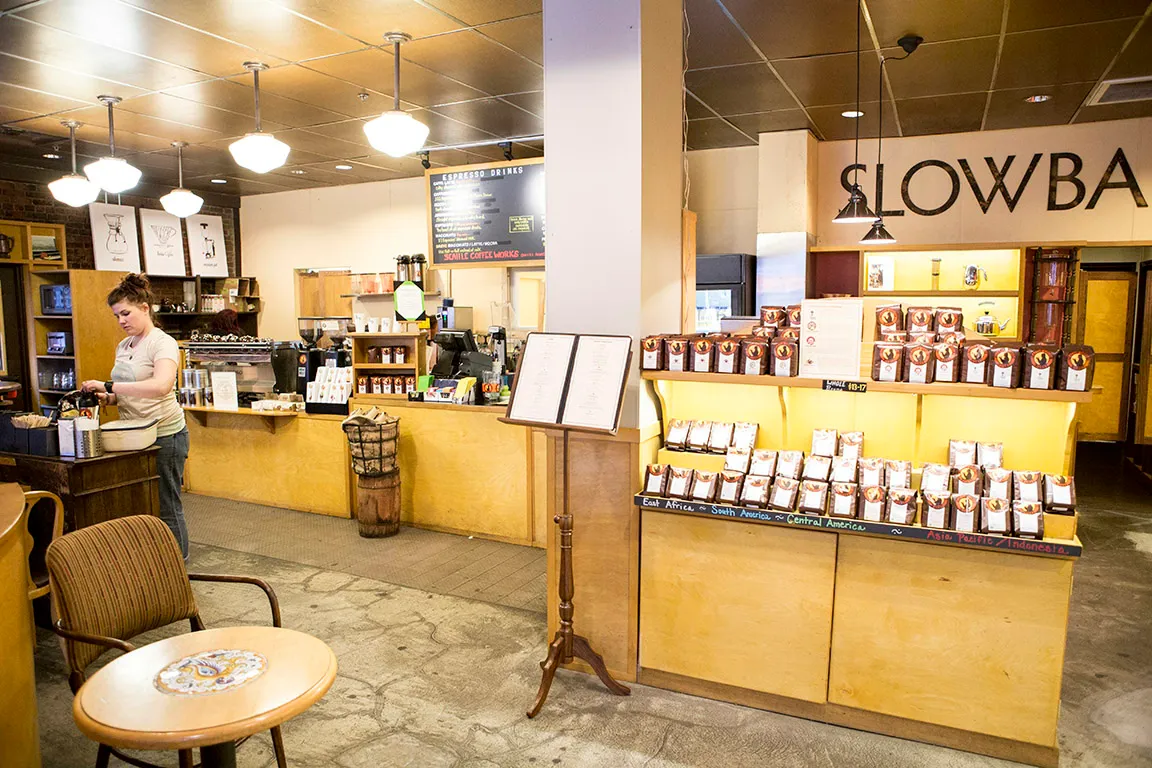
Entering Seattle Coffee Works shows how uniform the third-wave look can be. Rather than spare, nearly laboratory-style décor, the shop is warm in color and packed with things, cozy in the manner of an old couch. Flannel-cozy.
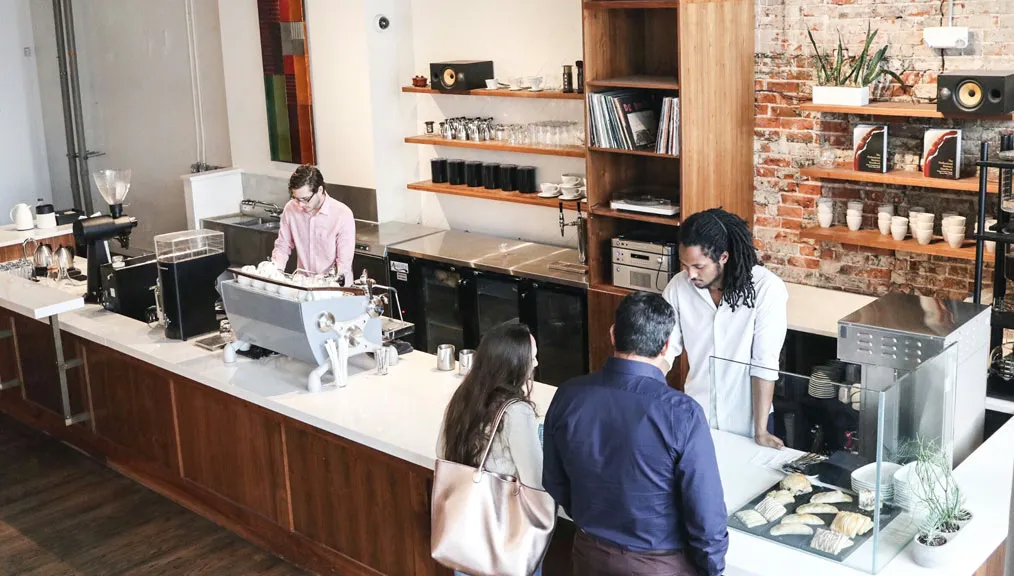
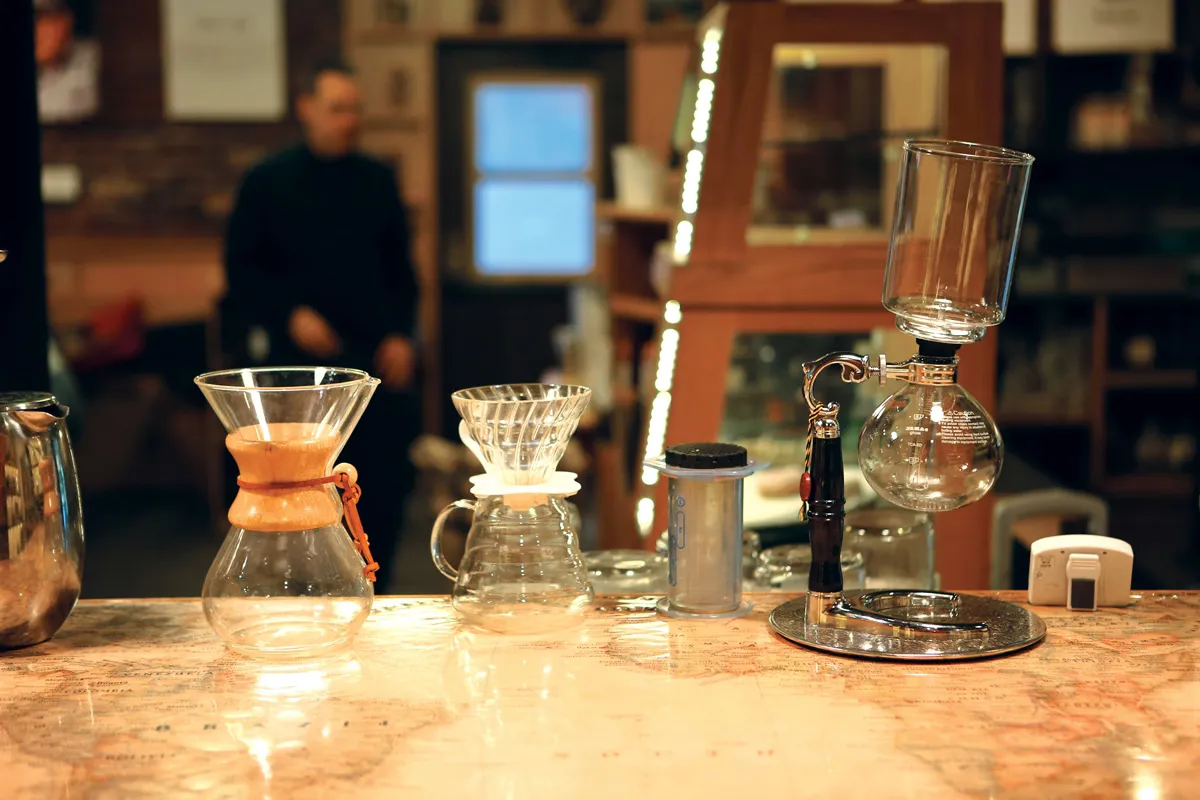
Entering Seattle Coffee Works shows how uniform the third-wave look can be. Rather than spare, nearly laboratory-style décor, the shop is warm in color and packed with things, cozy in the manner of an old couch. Flannel-cozy. Unfairly, that snugness calls to mind the second wave, when Starbucks set the template for the Seattle coffeehouse feel. Then a barista pulls an espresso and demonstrates that the third wave lives in the cup, not in the furnishings. Beside the bar for espresso and batch coffee sits the slow bar, where the staff prepares single origins by a range of brewing methods. On the day before my visit it served ninety covers. "It allows all of us to express our artistic side," Simsch says.
Since the move into this space, the transitions between the café's lives have come incrementally rather than as revolutions. Simsch wants every one of his roasts to be direct trade, and he wants his whole staff — now about twenty people — to have made a trip to origin. He puts himself roughly halfway on both goals.
As our interview ends, Simsch leads me into the lab to show off a new espresso machine due to be installed soon. It is a beautiful piece of equipment, and it will transform the look of the bar entirely. Simsch is excited about the change — and about the café's next life.