From Chinatown Shop to Tea Innovator: The Journey of Silk Road Tea
Daniela Cubelic opened Silk Road Tea in Victoria's Chinatown in 1992. The shop now has two locations and is expanding, with a focus on education, quality, and experimentation with tea growing on Vancouver Island.
By Sawyer Carter4 min read
A staff member in a scarlet apron greets visitors at Silk Road Tea in Victoria, British Columbia, offering a taste of the day's featured tea—Japanese sour cherry green tea. The shop sits just steps from the red and golden gates of Chinatown, and soft jazz plays as the scent of tea-infused bath and body products drifts through the air. Near the entrance, teawares from India, China, Morocco, France, and England are displayed in an eye-catching arrangement by color, style, and material.
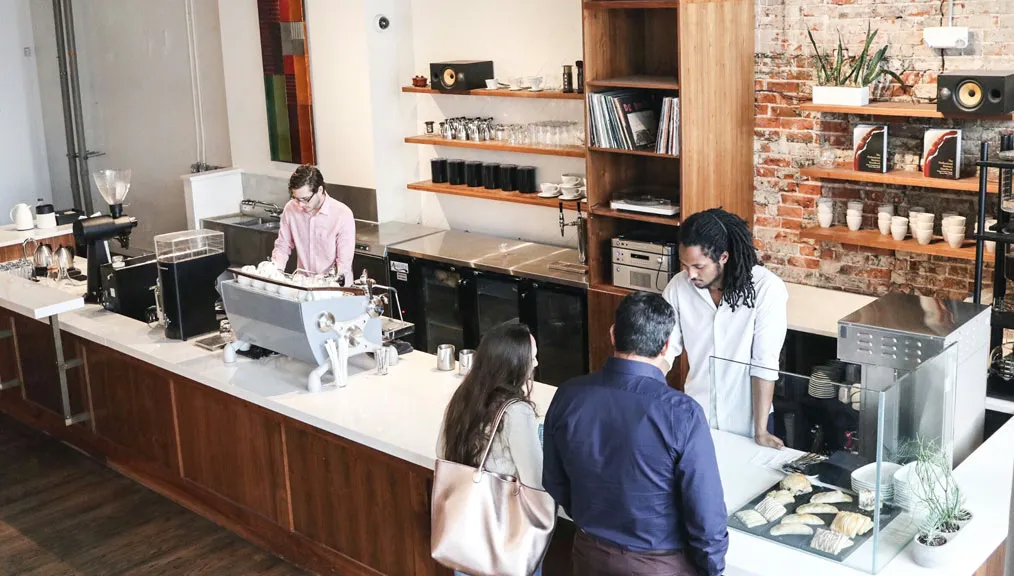
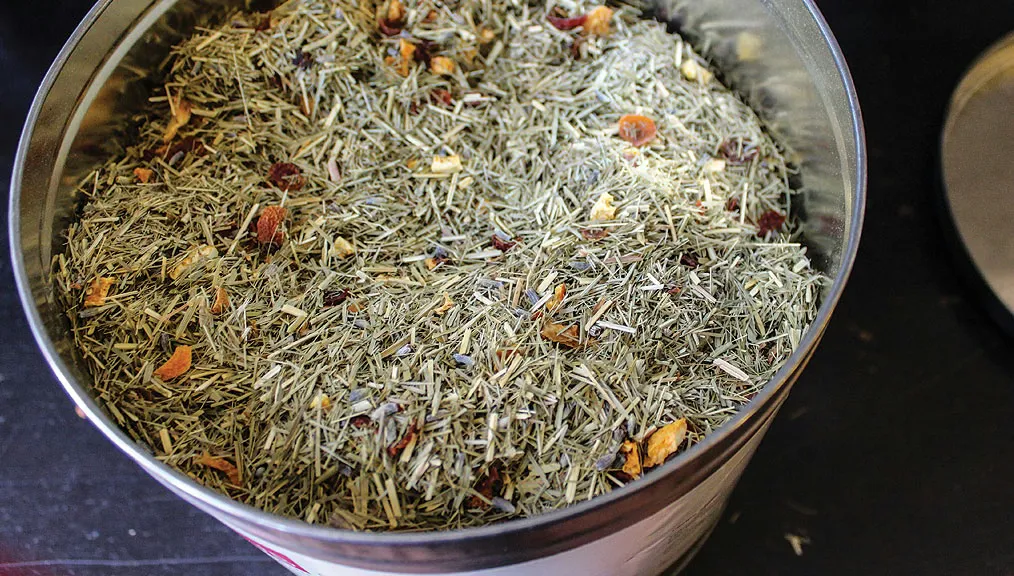
Silk Road Tea occupies a historic building from 1910 and has expanded into a neighboring space, giving it two distinct sections. The tea bar, the core of the store, is located in the newer section, which features original hardwood floors and exposed red brick walls. Opposite the dark wood bar stands the shop's “Great Wall of Tea,” a display of roughly seventy-five large silver tins containing original blends created by owner Daniela Cubelic.
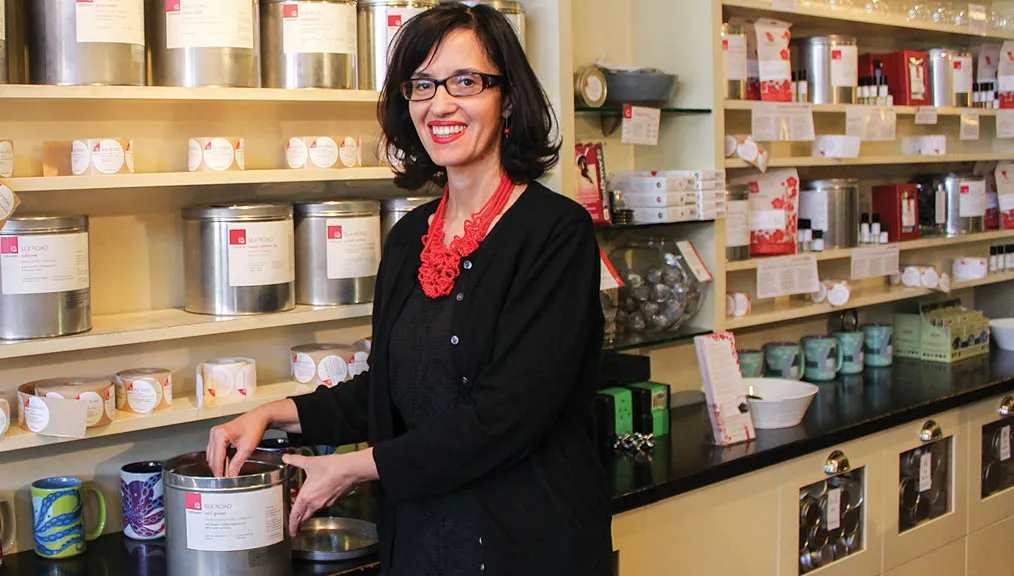
Daniela Cubelic founded Silk Road Tea in 1992 when she was twenty-two.
The shop operates on a self-serve model: customers select a tin in their preferred size, fill it with tea, and attach a Silk Road label to the lid.
Silk Road now has two locations in Victoria and more than forty employees. This spring, a new shop is set to open in Vancouver's Kitsilano neighborhood. The flagship store remains in Canada's oldest Chinatown. In the late nineteenth century, thousands of Chinese immigrants arrived in the port town during the gold rush and later during the construction of the Canadian Pacific Railway, establishing homes, shops, restaurants, and associations a few blocks from the Inner Harbour. Immigration from China was restricted in the 1920s, and the neighborhood declined. In the late 1970s and 1980s, the city of Victoria began a revival that restored the area to its current vibrant state and attracted new businesses—including Silk Road Tea, which opened in 1992.
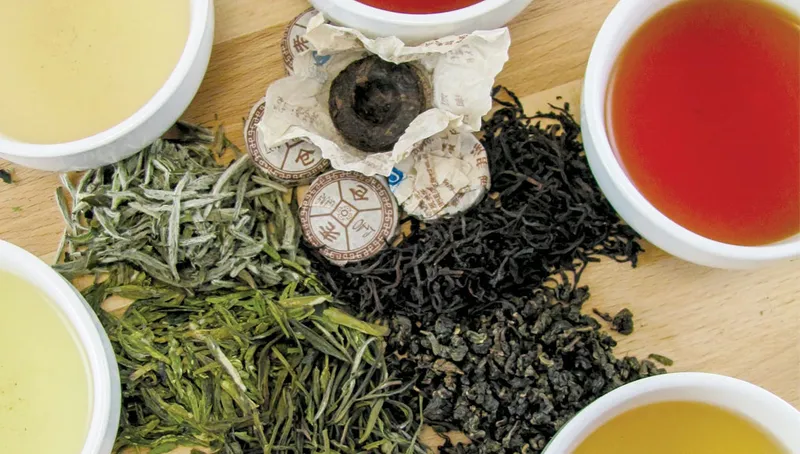
As a teenager in the 1980s, Cubelic was influenced by the revitalization of Chinatown. Her interest in tea and Asian culture led her to apprentice with Chinese and Taiwanese tea masters both locally and abroad. She opened Silk Road at age twenty-two and has spent most of her life in tea. By holding tea leaves in her hand, she can assess their freshness, grade, harvest, manufacturing method, and whether they were stored properly. This skill has become increasingly important for Cubelic, whom the Globe and Mail has called “Canada’s Queen of Tea.”
“The fact that you were buying loose-leaf tea used to mean that you were buying high-quality tea. That’s not the case anymore,” she says. “You can take low-quality leaves and manufacture them in a way that keeps the leaf intact, so it looks like a better quality leaf than it is.”
Cubelic has drawn on this expertise to create more than 100 original blends for Silk Road. From the shop's early days, she has also offered free educational workshops on topics such as cooking with tea, brewing iced teas, and teas for weight loss.
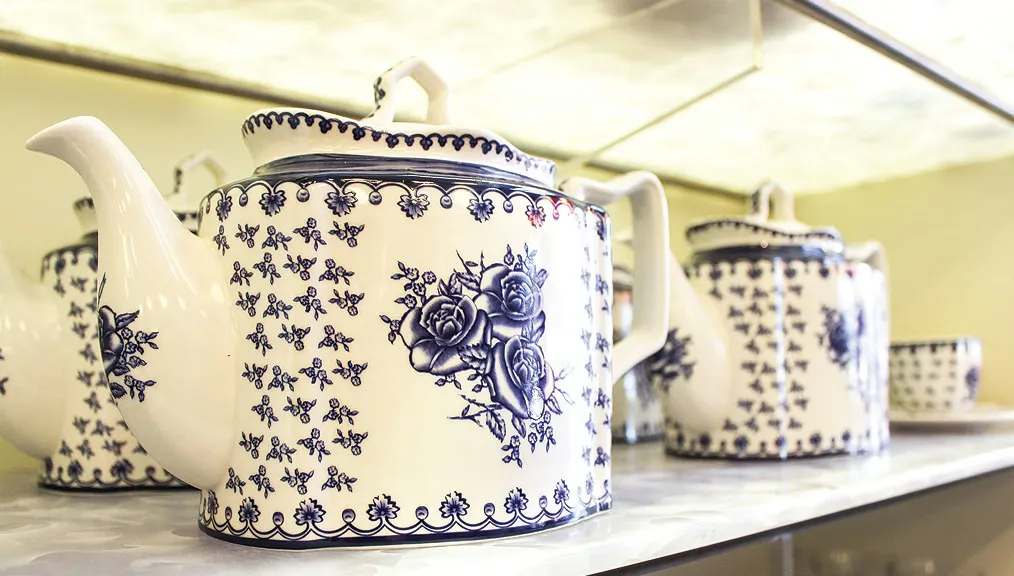
Her knowledge extends to teawares and cultural tea traditions, which she views as complements to enjoying the beverage. She has studied brewing equipment from around the world and understands the significance of patterns and styles tied to tea traditions. The wares she sells come with cultural and historical stories that help sales staff explain the value of higher-priced items to shoppers.
For years, customers asked Silk Road to sell its loose teas in tea bags, but Cubelic believed the equipment used to bag tea damaged the leaves. After a long search, she found a suitable equipment manufacturer in Japan and in 2014 launched ten blends in tea bags. The response was strong: tea sales rose by 40 percent in the first year without reducing loose-leaf sales. Resale and wholesale business contributed significantly to that growth; restaurants, Cubelic found, were eager to adopt the bags because they are easier to use and help with portion control.
Cubelic's commitment to high-quality, organic ingredients made it inevitable that she would eventually try growing her own tea. Vancouver Island has a moderate climate—one of the few places in Canada that receives little snow—and tea can grow there. In 2009, she planted tea gardens in three undisclosed locations in Greater Victoria. Over the last three years, the plants have produced a small quantity of delicately flavored black tea, which appears in the Berry Victoria blend.
Despite the promising harvests, the tea-growing team has yet to determine whether “it’s truly possible to grow good quality, good tasting tea,” Cubelic says. “If we end up with tea with no flavor and no antioxidants, that’s not necessarily a good idea.”
If Cubelic's tea plants meet her high standards, she will expand the gardens and use their yields in more blends. She also envisions a future where Vancouver Island has a full tea industry, “where you can visit the tea estates, like you do wineries.”
As with the tea bags, Cubelic describes growing tea plants as an interesting challenge. “I think in a long-term way and not in terms of short-term profits. . . . That sometimes means you grow more slowly. But you grow more steadily. You do things in the right way.”