Behind the Beans: What It Takes to Build a Coffee Advent Calendar
Counting down December with specialty coffee has become its own seasonal ritual. The roasters who produce these calendars face sourcing puzzles, shipping tightropes, and freshness pressures that make the finished box look deceptively simple.
By Jordan Gray5 min read
Advent calendars have long offered a cheerful and tasty way to mark the run-up to the holidays. Beer makers, whole-leaf tea sellers, and cheesemongers all got there first, so specialty coffee's arrival on the scene was really just a question of timing.
Yet these calendars amount to more than a novelty countdown. A well-planned one gives a roaster room to be inventive and to shape a complete drinking journey. Today's offerings reach past the cup itself, bundling limited-run coffees with guided tasting videos and even board games as a warm, flavorful way to mark the season.
For all their marketing value as a way to reach customers, putting an advent calendar together is harder than it looks. Finding a broad lineup of top-quality coffees, working around a shipping window that is tight yet complicated, and building an experience that feels genuinely original add up to a huge project—though one that can deliver a substantial return.
Designing the Experience
Prices across popular calendars swing widely. Denmark's La Cabra sells its Christmas Calendar for $75 (currently sold out), a set built around three groups of eight instant coffee selections. Arkansas-based Onyx Coffee, meanwhile, prices its heavily sought-after calendar at $175, with two ounces of each of 24 different coffees per customer.
KaffeBox
Even with quality coffee as a shared foundation, the two brands take divergent approaches—a sign of how broad the range of possible experiences is. Onyx's 2022 edition, for instance, came with a board game the company called Onyx Coffee Land, modeled on the well-known game Candyland. Buyers get enough in each 2-ounce portion for a full pot, roughly two to three cups, to share with loved ones—and a game to play together besides.
In Vancouver, multi-roaster cafe Revolver Coffee assembled its calendar from 24 roasters across 13 countries. Each day brings coffee from a different roaster altogether, among them 3fe in Dublin, Father's Coffee Roastery in the Czech Republic, and Square Mile in London. Per Revolver's website, every day is a surprise. "So far as we know, it's the only 'multi-roaster-from-across-the-globe' coffee advent calendar of its kind. It's a unique experience for yourself or as a gift for someone else."
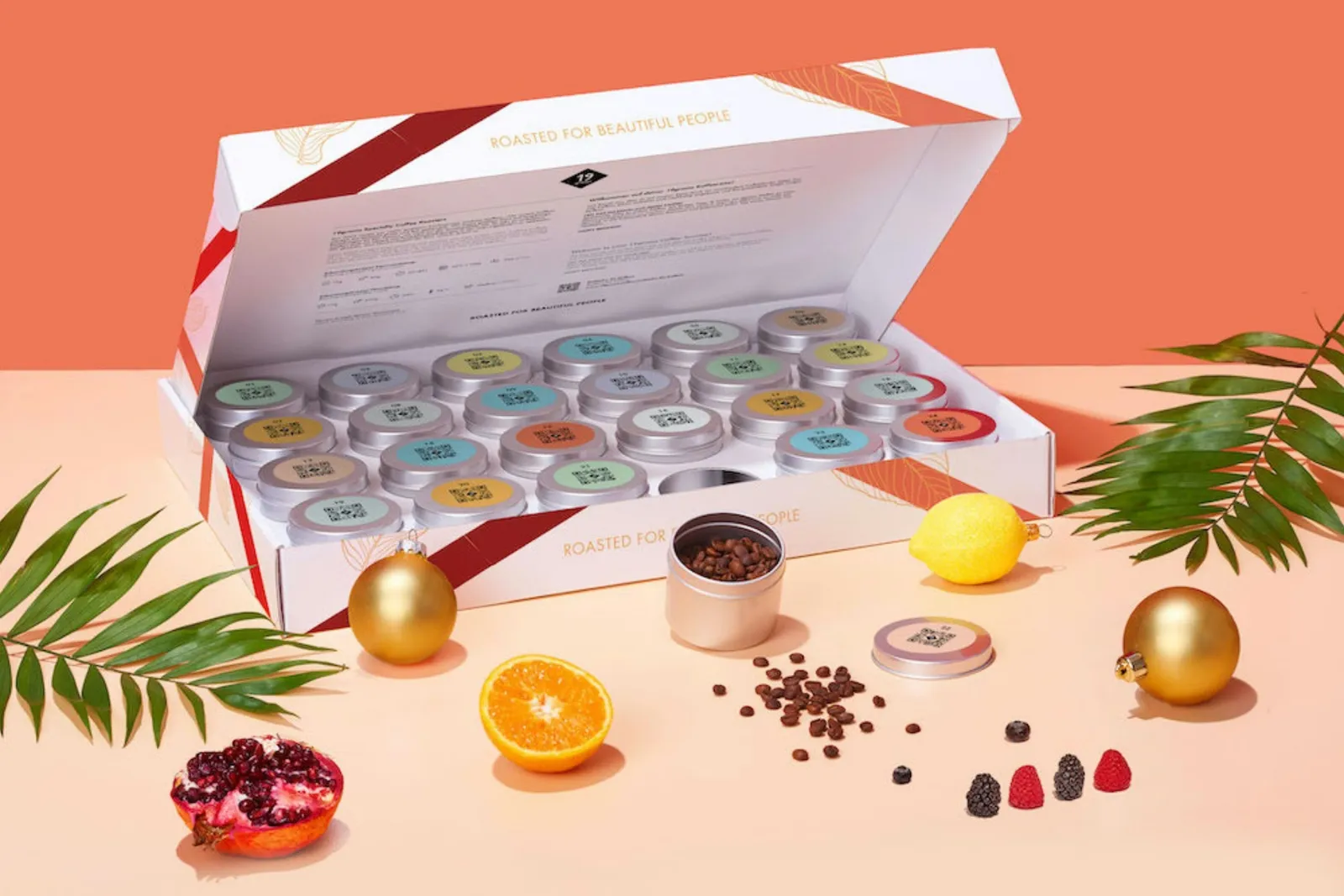
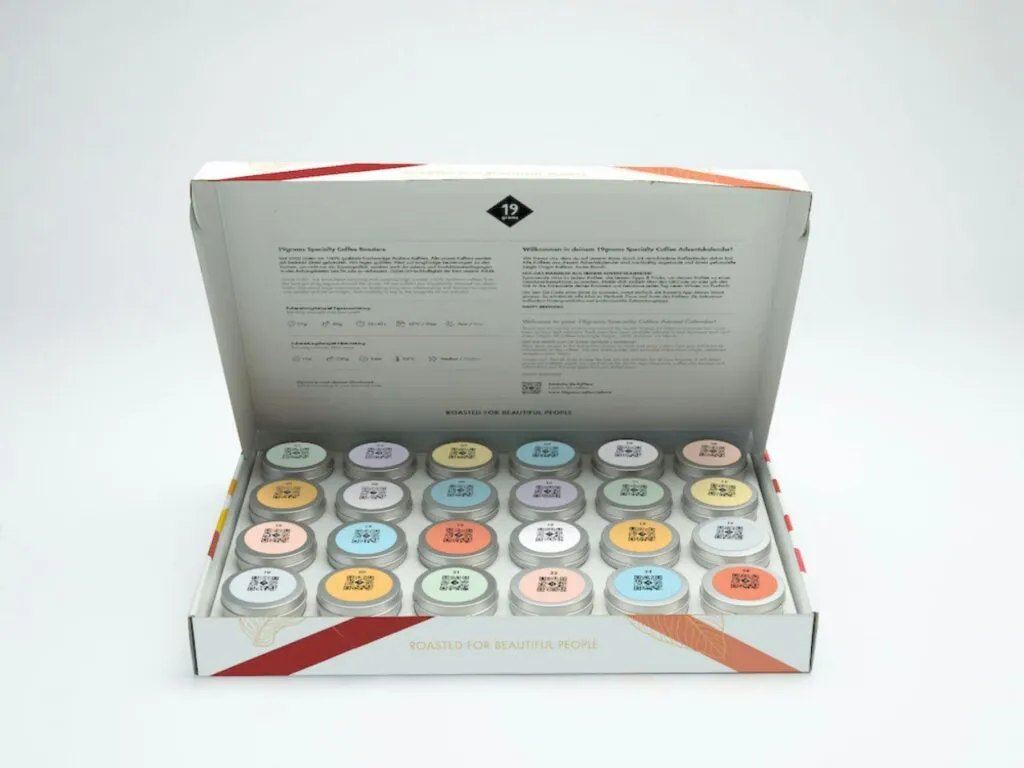
Pia Klein, who handles marketing for Berlin's 19Grams Coffee Roasters, said the company's calendar has changed a great deal since it first appeared in 2014: "At the time, coffee advent calendars were not really a thing yet… we are proud to say that we improved the concept over the years and learned every year and we are so happy that coffee lovers all over the world brew it every year. It also is a very exciting journey for us."
19Grams now builds a range of calendars around brewing preferences. Buyers can choose a version compatible with Nespresso capsules, a more conventional espresso or filter option, or break with tradition entirely and receive four single-origin coffees each week through Christmas.
19Grams Coffee
Denmark's Coffee Collective follows a comparable rhythm, delivering a single coffee each Sunday in keeping with local custom. As the company's website puts it: "Around Christmas time in Denmark, we have a tradition for receiving gifts every Sunday of Advent."
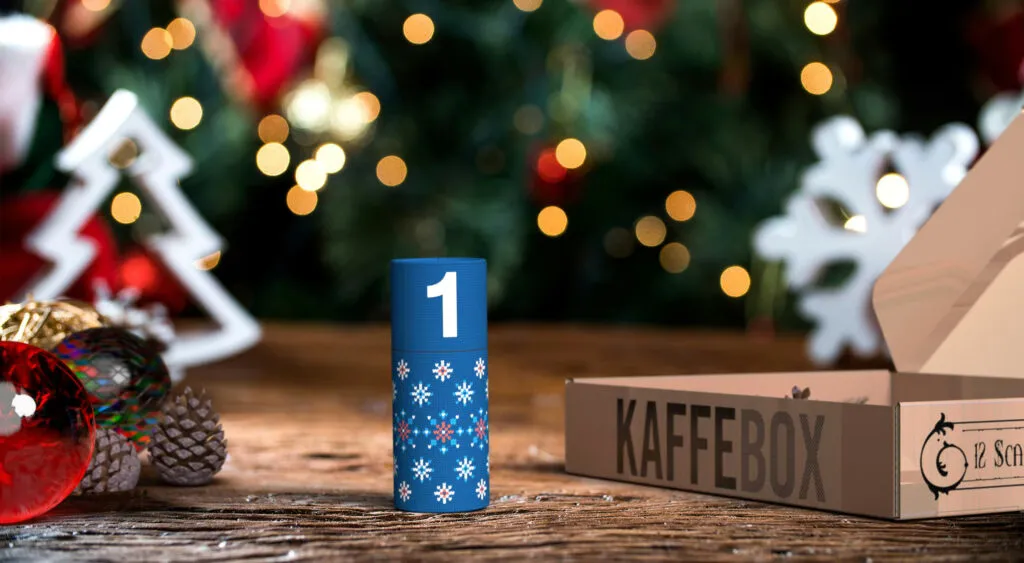
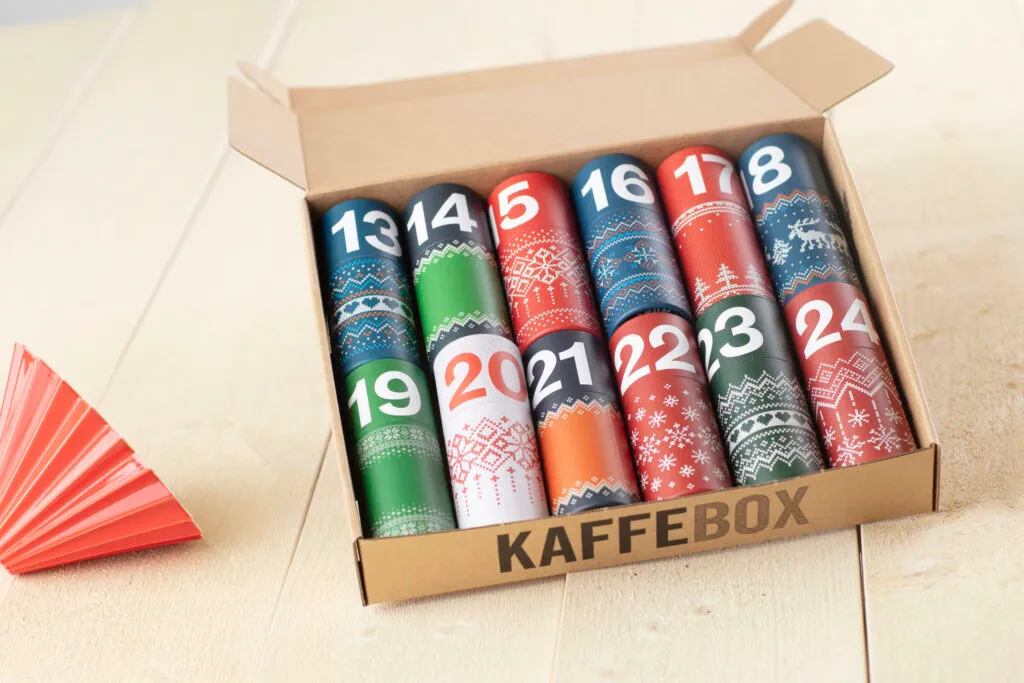
Beyond gathering standout varieties—several of which appear only during the holidays—some companies put extra effort into the customer's overall experience. KaffeBox, a monthly subscription service focused on Nordic roasters, split its calendar into two shipments, a choice that protects freshness while creating additional logistical hurdles.
"All the coffee for the calendar is roasted right before the roaster ships it to us," said Tyler Olson, KaffeBox's founder. "We pack it up right away and ship it to customers. We send the calendar in two sets, so the last 12 days of the calendar are roasted a week later than the first 12 days. We ship the calendar as close to Dec 1st as possible and prioritize coffee freshness over being able to ship the calendar very early."
Target audience also shapes what goes inside. Calendars pitched at devoted coffee drinkers tend toward rare lots and single doses, while those meant to draw in newcomers carry more coffee to share or a playful feature designed to stir curiosity and excitement.
Protecting Freshness
Freshness across roasting and shipping is a central worry for any advent calendar, or any seasonal coffee set for that matter. Because most calendars are limited releases, roasters have to plan their coffee quantities with care. Customers, in turn, receive close to a month's worth of coffee to spread across December, which makes it essential that each day's cup is enjoyed at its best.
KaffeBox
London-based delivery service Pact Coffee, like many peers, sells its calendar on pre-order. Knowing exactly how many calendars must be assembled lets Pact commit to a precise amount of coffee, keeping waste to a minimum.
La Cabra's calendar is built from bags of Steeped Coffee, a brand adjacent to instant coffee that portions coffee into bags meant to be steeped like tea. The single-serving pouches, as the company's website describes them, come "sealed in nitrogen-flushed packages, maintaining the clear aromatic character of freshly ground coffee," which removes some of the freshness difficulties calendars typically face. 19Grams Coffee Roasters chose individually sealed tins for its single-origin coffees. "We ensure the tins we are using are all sealed," Klein said. "We roast the last calendars in mid-November, so we have to be very quick in packing and shipping, but we have gotten very good over the years."
Most companies begin work on each year's edition roughly six months ahead of launch. Visual assets matter a great deal—as the images accompanying this story suggest, many brands invest in striking, detailed designs. Some go further, adding multimedia elements to deepen the experience. Czech roaster The Roses, for example, invites buyers to follow daily tasting videos that unlock only on the matching calendar day. Onyx Coffee Lab produced a video with two-time US Brewers Cup champion Elika Liftee demonstrating a simple, forgiving brew recipe meant to let every coffee in the calendar show its best side.
Advent calendars serve as an engaging way to bring in new customers while giving seasoned coffee lovers something distinctive and hard to find. Anyone weighing a calendar for next year should also factor in the intricate logistics and begin planning as early as possible. Demanding as they are, these calendars open up a fresh way to drink coffee—one that invites playfulness, anticipation, and discovery.