Coffee Judging Overhaul at Good Food Awards Draws Mixed Reactions
The Good Food Awards has updated its coffee judging rules in partnership with the Roasters Guild, shifting to home-brewing evaluation and stricter certification requirements, but the timing of the announcement has left some roasters frustrated.
By Blake Reed3 min read
Revised Coffee Judging Standards at Good Food Awards
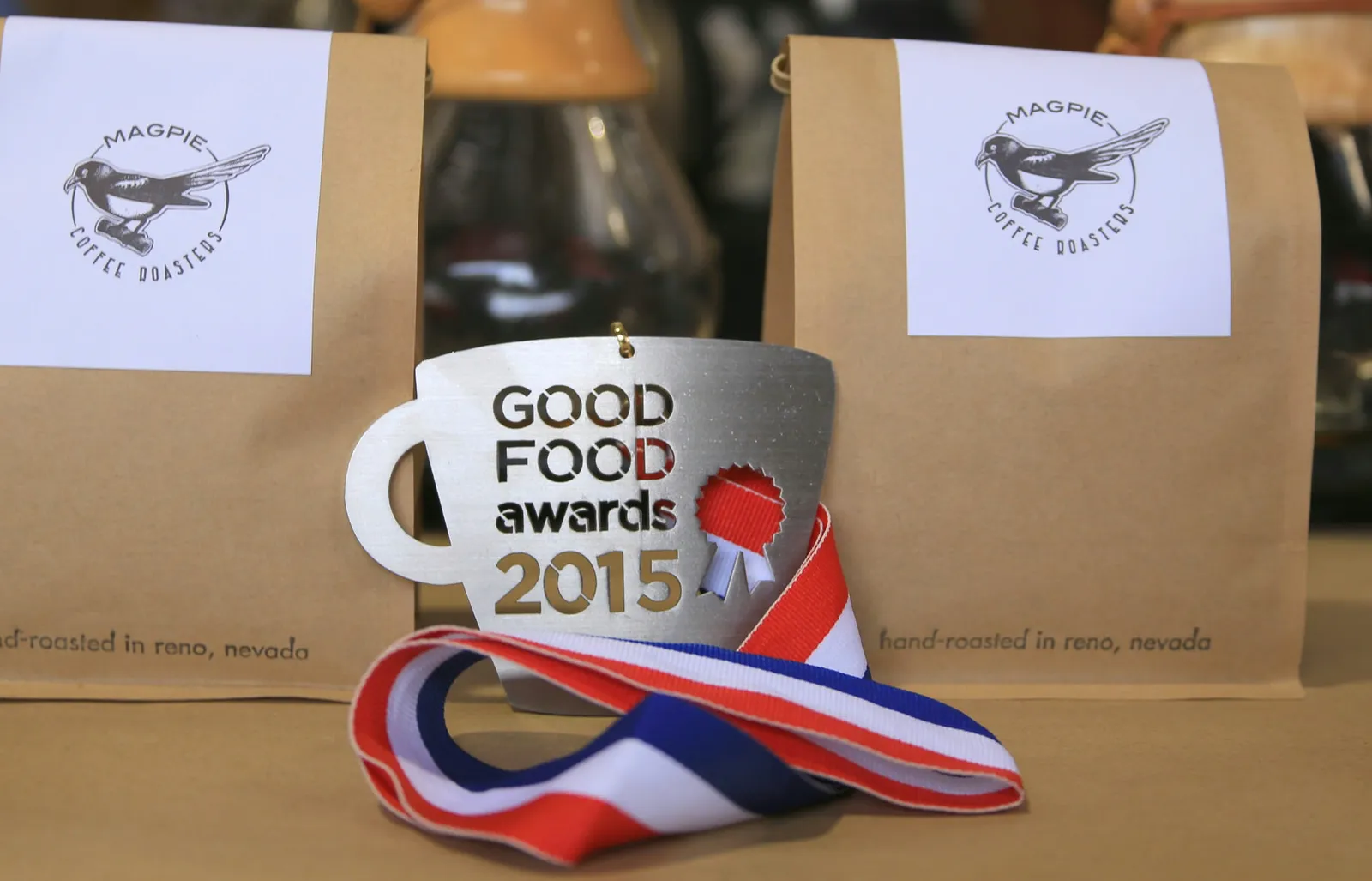
The Good Food Awards, an annual honor for sustainable American food products, has partnered with the Roasters Guild to revamp the judging criteria for its coffee category. The competition, which hands out over a hundred prizes across thirteen categories—including pickles, honey, cider, and cheese—has quietly introduced changes that alter how coffees are evaluated. Winners receive the Good Food Awards seal and an invitation to a sought-after marketplace event in San Francisco the following January.
Key Changes to Evaluation
The updated coffee-judging protocol replaces traditional cupping with home-brewing equipment, mandates certifications and lot documentation, and scores entries using the Brewers Cup form instead of the Cup of Excellence score sheet.
Nathanael May, director of coffee at Portland Roasting and a contributor to our website, served as a judge this year. He explained that the previous use of the Cup of Excellence form tended to favor bright, acidity-forward coffees.
While the program promises to be much more interesting this year, the changes were announced after the submission period had begun.
“On top of that,” he says, “the listed requirements for traceability, farmgate pricing, and reductions in agrochemical use were rarely enforced. This led to everyone entering Kenyas and Ethiopias that traditionally score really well with coffee professionals and that, coupled with the lax enforcement of requirements, led to the same kinds of coffees winning. Of course, for companies that try to meet the requirements, and ended up not scoring as well because of that, it was frustrating. Why try if the requirements aren’t truly enforced?”
Frustration Over Timing
Although the Good Food Awards is a prestigious competition, it has long puzzled and frustrated coffee roasters. The recent changes, while promising a more engaging program, were announced only after the submission period had already started. (My company Catalyst Coffee Consulting was among the roasters who had formulated a roast for the competition based on the old standards.)
Sarah Weiner, who founded the Good Food Awards in 2009 with Dominic Phillips, addressed the lack of prior communication with the coffee industry and the new alliance with the Roasters Guild. She said the collaboration's realities—vetting ideas and securing logistics—took too long to notify the coffee community before July sixth, when the entry period began, and the new team preferred not to delay until the following year. Weiner stated, “We made the changes to the entry form messaging mid-month, before seventy-five percent of the entries had come in, and regarding the twenty-five percent that had already entered, we e-mailed them with the changes and gave them a month from the message to choose a new coffee should they like.”
By using the new judging protocols we hope to see a wider range of coffees entered as the new form does not favor one type of attribute over another.
New Brewing Protocol and Judging Philosophy
Mark Inman of Olam Specialty Coffee, the immediate past chair of the Guild, noted, “Since the inception of the GFA, the Roasters Guild had a desire to be involved. As the GFA evolved and started working with other guilds (such as cheese, butcher’s, and bread), both the GFA and the RG saw their involvement as the natural next step in the evolution of the coffee category.”
Instead of blind-cupping, judges will brew the coffees using home-brewing equipment donated by Espresso Supply, Bonavita, and Baratza: BV1900TS brewers and Baratza Forte BG grinders. The recipe calls for seventy-two grams of coffee to 1.3 liters of water. Inman explained the rationale: “By using the new judging protocols we hope to see a wider range of coffees entered as the new form does not favor one type of attribute over another, as it had on the previous judging protocols. A medium roast coffee or a blend could just as easily score as high as a very high acid Kenya or Ethiopia now that the scoring is weighing multiple attributes equally.”
Certification and Documentation Requirements
Weiner shared that verifying the sustainability of each coffee had been complicated in the past. To address this, the judging team strongly recommends that each coffee submitted carries one of seven certifications—National Organic Program, Fair Trade USA or Fairtrade International, Bird Friendly, Rainforest Alliance, C.A.F.E. Practices, 4C Association, and Demeter Biodynamic—or requires extensive documentation of farming and sourcing practices during the qualification process.
Looking Ahead
This year, the Good Food Coffee Awards will be different, and many hope, better. May summed up the sentiment: “As a judge, this is great news (more variety in coffees!), and as an entrant, this is even better (more realistic chance of doing well with a larger variety of origins!).”