From Coffee Unions to Clone-Free Brews: Revisiting the Tumultuous 2022 Coffee Landscape
A look back at how war, inflation, climate pressures, labor organizing, and sustainability marketing shaped the coffee world during a turbulent 2022.
By Dakota Watson9 min read
The coffee industry in 2022 reflected a world in upheaval: conflict, rising prices, environmental strain, a reinvigorated labor movement, and a steady stream of questionable sustainability claims. Here is a retrospective on a year that left few corners of the sector untouched.
Conflict, Costs, and a Falling C Price
2022 delivered a lot at once—a major power's invasion of a neighbor, widespread inflation, a cost-of-living squeeze felt in nearly every country, and a crash course in the meaning of “fungible.”
Coffee was woven into all of it. After Russia invaded Ukraine in February, large chains pulled out of Russia. Starbucks shuttered 130 locations, which were soon purchased and reopened under the deliberately distinct Stars Coffee name. Sanctions on Russia rippled through the industry downstream: fertilizer costs soared, and the World of Coffee event was relocated from Warsaw to Milan.
The Ukraine war compounded inflation that was already climbing, pushing coffee companies—like nearly everyone else—to raise prices. Several large players did so while posting record earnings: Starbucks, JDE Peet’s, and Nestlé each reported striking profits yet pointed to inflation as the reason for higher prices.
Observers wondered whether consumers would cut back on cafe visits as inflation and living costs made 2022 hard for nearly everyone—except, naturally, the executives announcing record profits. The head of the International Coffee Organization (ICO) speculated that “people are going to lower the quality of what they drink and change where they drink it.” No definitive proof emerged that this happened, though coffee shop foot traffic did decline, and Starbucks did weigh selling its UK operations.
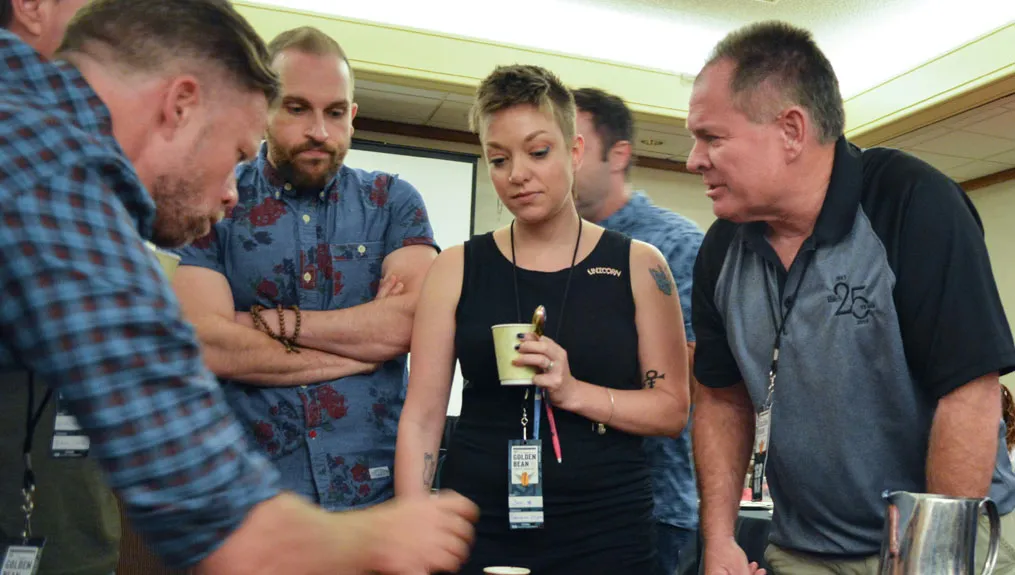
In competition news, Morgan Eckroth won the US Barista Championship in April and livestreamed the event to millions of followers on TikTok and YouTube. At the World Championship in Melbourne, Eckroth finished second to Australia’s Anthony Douglas, who took the title on home soil. Taiwan’s Shih Yuan Hsu (Sherry) won the World Brewers Cup.
Starbucks was not the first coffee company to dabble in non-fungible tokens (NFTs), but it went all-in on the blockchain-based digital tokens, planning to build a loyalty platform around them. As it happened, the beta launch of Starbucks Odyssey coincided with a string of cryptocurrency collapses, while NFT trading volume dropped 97% between January and September.
In the physical market, the commodity coffee price declined after opening the year at a decade high. That peak stemmed partly from forecasts of tight supply following a bad weather season in Brazil. The sway one country holds over global prices is striking: as more optimistic reports about Brazil’s 2023 harvest emerged, the C price plunged. Predictions eventually moderated somewhat and the price recovered—but only modestly.
Climate Pressure on Coffee
As in every year, the looming and ongoing climate crisis shadowed everything. For an agricultural crop like coffee, the effects are felt more sharply—and in fact are already visible.
Research published in January projected that climate change would wipe out more than half of suitable coffee-growing land by 2050. Most growing regions would see suitable land shrink, while some areas—southern Brazil, the United States, and South Africa—could gain (if that is the right word) from shifting conditions “due to increasing minimum temperatures of the coldest month.”
More bad news followed: an Australian study in October anticipated a rapid fall in coffee production across major producing countries, with the tipping point nearer than commonly assumed.
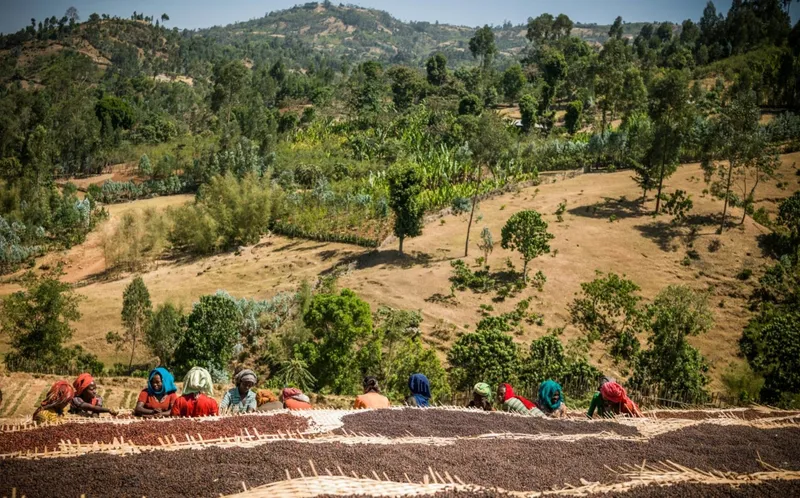
Projections suggested Colombia’s 2022 output could be its lowest since 2014 because of excessive rain, while Kenya’s output was also expected to drop “drastically” owing to climate-related weather patterns. In October, as the harvest got underway, Vietnam saw above-average rainfall that sent robusta prices higher. In Tanzania, higher temperatures and insect damage cut harvests around Kilimanjaro by 75%, forcing farmers to move uphill or, in some cases, abandon coffee entirely.
In response, new breeding programs have sought more resilient varieties, governments have invested in regenerating and modernizing farms, and producers have turned to agroforestry as a possible answer to the accelerating effects of climate change.
A Breakout Year for Coffee Labor
Calling 2022 a big year for the labor movement would be an understatement. Public approval of unions reached its highest level since 1965. Organizing wins landed at companies previously seen as untouchable, including Amazon, Apple, Trader Joe’s, REI, and the New York Times.
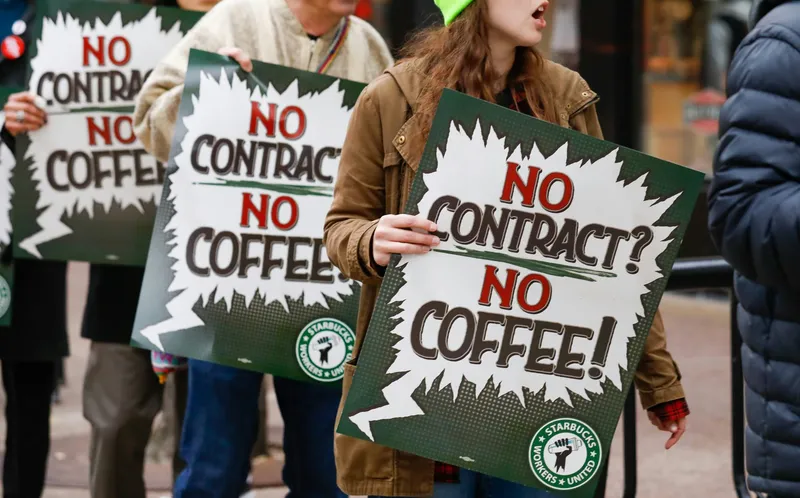
Perhaps the most significant—and certainly the most visible—was Starbucks Workers United, a campaign that grew from a handful of stores in Buffalo, NY, at the start of the year to more than 260 as of this writing.
On December 9th, 2021, a Starbucks location in Buffalo, New York became the first of the company’s 6,000+ US stores to unionize. That victory set off a wave of new organizing. The wave peaked in February, March, and April, with 66, 71, and 65 locations filing for union elections in those months, respectively. The pace slowed later in the year, reportedly because of new benefits Starbucks announced (only for non-unionized workers) and the aggressive union-busting tactics the company began to use.
Facing the growing wave, Starbucks hired the controversial “union avoidance” law firm Littler Mendelson, set up an anti-union website, held captive audience meetings, and sent top executives to linger around stores. Dozens of organizers were fired—one for wearing an anti-suicide pin (that dismissal was recently ruled illegal). In July, newly-returned CEO Howard Schultz announced store closures, which he said were meant to protect worker safety but which the union called a “clear attempt to scare workers across the country.”
Starbucks denies any wrongdoing regarding the union, but the National Labor Relations Board (NLRB) has cited the company for over 900 violations of federal labor law this year. Collective bargaining has been slow to nonexistent, with organizers saying the company is “dragging out bargaining as far as they can to try to demoralize partners.” The union staged a series of strikes in November and December to protest the delays.
Beyond Starbucks, the coffee labor movement kept momentum in 2022. Workers at two Peet’s Coffee locations filed for union elections in November, directly inspired by the Starbucks campaign.
In specialty coffee, the headline was how quickly the Intelligentsia union push moved—and how well it succeeded. Workers at five Chicago locations filed for elections in May, voted to unionize in August, and ratified their contract in December. By comparison, the Colectivo Coffee union, whose workers fought union-busting and voted to unionize last August, was still waiting on a contract.
2022 also brought successful union drives at Heine Brothers’ Coffee in Kentucky, La Colombe Coffee in Chicago, Peace Coffee in Minneapolis, and many smaller shops. Some companies chose to fight their union waves aggressively—in Starbucks’ case at the expense of its carefully crafted progressive image—but the steady accumulation of wins across the industry offers hope for a more equitable future in 2023.
Sustainability Claims Under Scrutiny
There is only one place to begin: in April, Nespresso “achieved” B Corp status, barely clearing the bar with a score of 84 (80 is the minimum). One of the most respected private certifications, B Corp attests that a company “is meeting high standards of verified performance, accountability, and transparency” across its business practices.
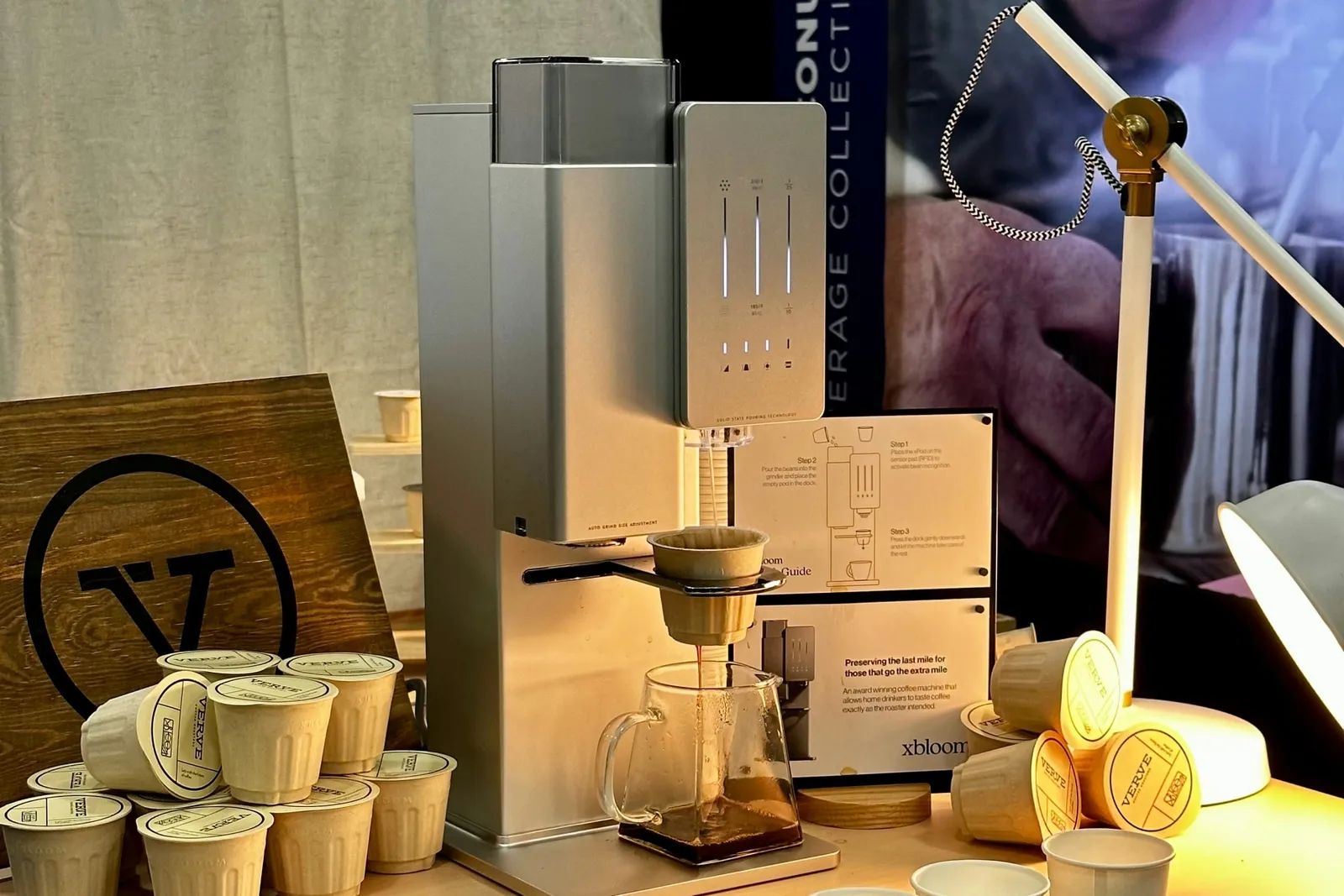
Nespresso had sales of $7 billion in 2021, dominated by single-use coffee pods, producing 14 billion each year. The company’s own admitted recycling rate of 30% means 12,600 tons of aluminum from coffee pods ends up in landfills annually. Then there is a 2020 report that found child labor within Nespresso’s supply chain, something Nespresso has “acknowledged,” according to B Corp, “and also implemented prevention practices.”
In October, Nespresso enlisted George Clooney—to whom it has given tens of millions of dollars to be the face of the brand—to warn us about climate change. In November, it also launched a line of home-compostable coffee pods, mentioning its B Corp status in the announcement.
Not to be outdone, Nespresso’s parent company Nestlé pledged $1 billion to build a sustainability plan over the next eight years, providing training and cash incentives to encourage producers to move towards regenerative agriculture. That is great, so long as you ignore Nestlé’s contribution to many of the world’s ecological issues and move quickly past the fact that the company’s revenue was $25 billion in 2021 alone.
But we are not here to pick solely on Nestlé and its subsidiaries. Keurig Canada was fined $3 million by the Competition Bureau of Canada in January over the company’s claims about the recyclability of its single-use pods, while Starbucks got a lot of press in March for unveiling “new plans to eliminate single-use cups.” In reality, as only select headlines made clear, the brand is just “hoping guests will adopt a culture that moves away from disposable cups—and toward the use of reusables—by 2025,” and the word “eliminate” did not actually appear in the company’s official announcement.
Atomo, the beanless coffee company, raised more money (and got more positive press) for its “sustainable,” lab-grown alternative to an agricultural crop that employs millions of smallholder farmers worldwide—farmers who could lose income because of Atomo’s aim to “disrupt” the coffee industry with a drink not made from coffee. And Blue Bottle announced it would roll out “oat milk by default” across the US as part of its “commitment to achieve carbon neutrality by 2024.” While reducing dairy production is a laudable act, carbon-neutral claims are dubious at best, and Blue Bottle is owned by Nestlé (so much for not picking on them again).
This section could go on forever—who knew coffee companies would try to use sustainability as a selling tool?—but it is time to move on to the burning question on everybody’s lips:
Did Coffee Help or Hurt Your Health in 2022?
Mostly help.
For example, one study found that drinking coffee was associated with a lower risk of type 2 diabetes in people with a history of gestational diabetes mellitus, a form of diabetes first diagnosed during pregnancy. New research also found that drinking coffee could “significantly reduce the risk of endometrial cancer,” a type of cancer that begins in the uterine lining before spreading to other organs.
According to a study by the National Kidney Foundation, daily coffee consumption “may significantly reduce the formation of kidney stones.” It could also alleviate some of the symptoms of Attention Deficit Hyperactivity Disorder in adolescents and adults. Coffee could lower your risk of heart disease by 10-15%; may help lower the risk of acute kidney injury; could help extinguish nicotine cravings; could help some men with prostate cancer live longer; and could make you run faster.
Then there is the big one: coffee could lower your risk of early death by 29-31%, even if you like to add sugar. That was not the only study claiming drinking coffee could extend your life, either.
On the downside, a study from Norway found that men who drink espressos could have higher cholesterol levels than women. To-go coffee cups shed trillions of plastic particles, which probably is not great for the person drinking from them. Consuming hot coffee or tea can almost triple your risk of throat cancer. And a slightly inconclusive study from Harvard University found that coffee might be linked to a long-term decrease in happiness and well-being.
And, of course, coffee also makes you shop more, but who can say if that is good or bad?
Lighter Notes From the Year
Let us close with some of the quirkier stories from the past year: a study showing you can make cold brew faster using lasers; Tom Hanks launching his own coffee brand; potato milk becoming a thing; Italians getting “all steamed up” over the rising cost of espresso; and Tim Horton’s offering customers affected by its year-plus spying campaign a free coffee and pastry by way of apology.
We will see whether 2023 can top that.