Fine Chocolate, Better Mochas: How Craft Cocoa Is Reshaping the Café Drink
Makers of specialty chocolate explain how bean-forward, low-sugar bars and powders are turning the mocha into something of a different drink from the old syrup version—and what that means for café menus and coffee pairings.
By Morgan Wood6 min read
When Alan Draper was asked how specialty chocolate had shifted the mochas served at 4A Coffee, he turned the question to a customer who orders one every day at the café in Brookline, Massachusetts. Her reaction gave him pause: she said nothing, and her expression left him wondering whether he had overstepped. Perhaps she did not relish being pegged as a mocha obsessive.
A few hours later, a colleague of hers dropped off a letter. What Draper had taken for irritation was in fact the visible result of ideas pushing their way toward the surface.
In the note, she wrote about coffee and chocolate coming together, each making the other better. "There's magic in each cup of mocha," she wrote—a kind of fan letter to her daily drink. Words alone, she felt, could not carry the pleasure it gave her, so she reached for superlatives. "It's perfection," she wrote, "simple and earthy."
An Ingredient With Its Own Standing
Chocolate occupies an unusual niche among the flavors cafés add to coffee. Milk and sugar function as the salt and pepper of coffee: sometimes handled behind the bar, but mostly left out for customers to adjust. Syrups and other whole ingredients tend to be confined to signature drinks, where they appear at all.
Chocolate sits somewhere between those categories—neither a staple nor a gimmick. Consider it this way: apart from milk, what other ingredient has a coffee drink of its own on essentially every café menu? Historically, chocolate has not received the scrutiny and care that an ingredient in that position warrants. That is now shifting.
For roughly ten years, leading chocolate makers have been buying specialty cocoa beans—in some cases through direct-trade arrangements—and handling them gently and deliberately. Makers attribute this development squarely to coffee. The chocolate that goes into a mocha now comes in as many variations as the espresso it is paired with.
Conversations with chocolate makers about what makes great chocolate resemble conversations with roasters about coffee. Much of the work in producing the final product—a process that starts in much the same way as coffee roasting—consists of drawing out the best qualities of the cocoa beans. For contemporary chocolate makers, that means not getting in the beans' way. Under the earlier approach, at least in the United States, beans were roasted dark, and the flavors of the finished product mostly reflected that roast level. Bite into an excellent chocolate now and you taste the bean itself, which can show flavors as wide-ranging as red berries, lemon, and tobacco, to name only the first few.
Beyond Syrup
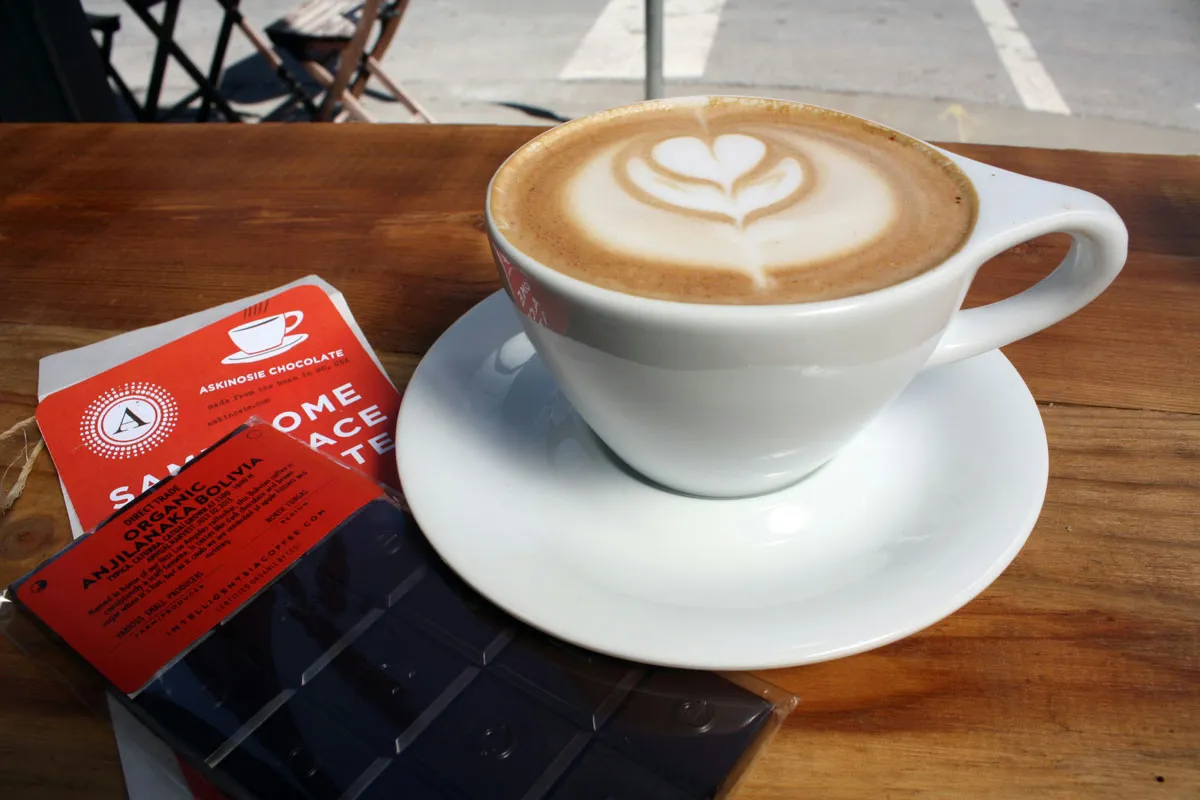
Mochas built on chocolate of this kind deliver far more flavor than the familiar sweet chocolate syrup. "It's like you're tasting almost a completely different drink," says Lawren Askinosie, director of sales and marketing for Askinosie Chocolate in Springfield, Missouri. "It's that round, rich, full-bodied experience that a lot of people don't realize they were missing until they try it."
One major difference between standard syrups and fine chocolate is sugar content, which is lower in the latter. Draper of 4A uses Taza Chocolate, whose chocolate rounds might be called rustic—if rustic also implied decadence. "It's like going back in time," Draper says. "The bars take a lot to wrap your head around, but cut with milk, it allows people to appreciate it without needing to reconfigure their brains."
Even so, customers may need to adjust what they expect. Chocolate from Taza does not yield a sweet mocha. It yields considerably more.
At the forefront are the bright, fruity notes that set modern craft chocolate apart. Every chocolate maker interviewed for this article agrees that these attention-grabbing flavors call for extra thought about how chocolate and coffee are matched.
Alex Whitmore, Taza's owner, joined several other chocolate makers in saying that putting a bright coffee with a bright chocolate sets up considerable conflict in the cup. Where the aim is a balanced union of flavors—usually the aim with mochas—Whitmore recommends deeper roasts or low-acidity coffees. Curiously, the ideal partner for modern chocolate may be a coffee whose own profile leans chocolaty.
A gentle match may work best, but the explosive flavors in these chocolates also create room for a fireworks display of taste. There is something to be said, after all, for a passionate affair, even one that ends badly. Jamie Fey, a café manager at Dogwood Coffee in Minneapolis, says many single-origin coffees open up when chocolate is present. Citric notes unfurl in ways they never do without the extra ingredient.
Building Layers of Flavor
Cafés aiming for something close to culinary fantasy have room to vary their chocolate. As with coffee, chocolate can be sold by the country of origin of its cocoa beans, and some shops pair different chocolate origins from a single company with different coffees. Scott Querry of Solstice Chocolate in Salt Lake works with six coffeehouses. "I like the way [the different shops] choose a very specific origin of coffee and a very specific origin of chocolate," he says. "I would think most places would say, 'Oh, we like this single origin of yours, and it works well with our whole line.' That's not the case."
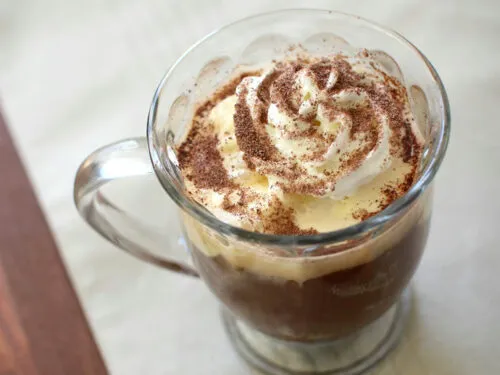
Coffee roasters tend toward purism; chocolate makers, by contrast, see their creations as ingredients as much as something to be savored on its own. Accordingly, most chocolate companies sell a range of chocolates and chocolate products for cafés to use in drinks. Syrups, whole bars, and bulk broken bars are the most common. Some offer shaved chocolate, and a few sell cocoa powder. Ghirardelli now sells an ultra-premium cocoa powder for cafés that prefer to stay with established brands.
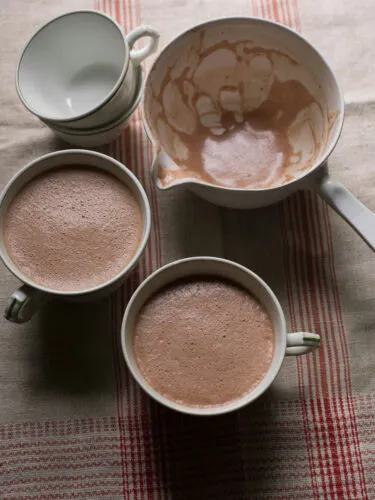
Which product a shop picks depends on its needs and on what its chocolate partner offers. Dogwood uses cocoa powder from Askinosie: espresso goes into the powder, gets whisked, then milk is added. Fey says the method is no harder than working with syrup or ganache. Blueprint Coffee in St. Louis once used cocoa to make syrup but has moved to broken bars for making ganache in its small kitchen.
Draper makes his mochas with Taza's shaved chocolate, adding it directly to the cup. Whitmore favors the method but points to a couple of issues. The first and largest is that shaved chocolate can melt in transit—an argument for working with a local chocolate company, which more and more food-focused cities now have. The second, perhaps better described as a consideration, is that shaved chocolate contains fatty cocoa butter, which will float in small globules on the surface. Some customers may be put off by this, but plenty of others will enjoy the silky, rich mouthfeel that the small amount of fat provides.
New Forms in the Cup
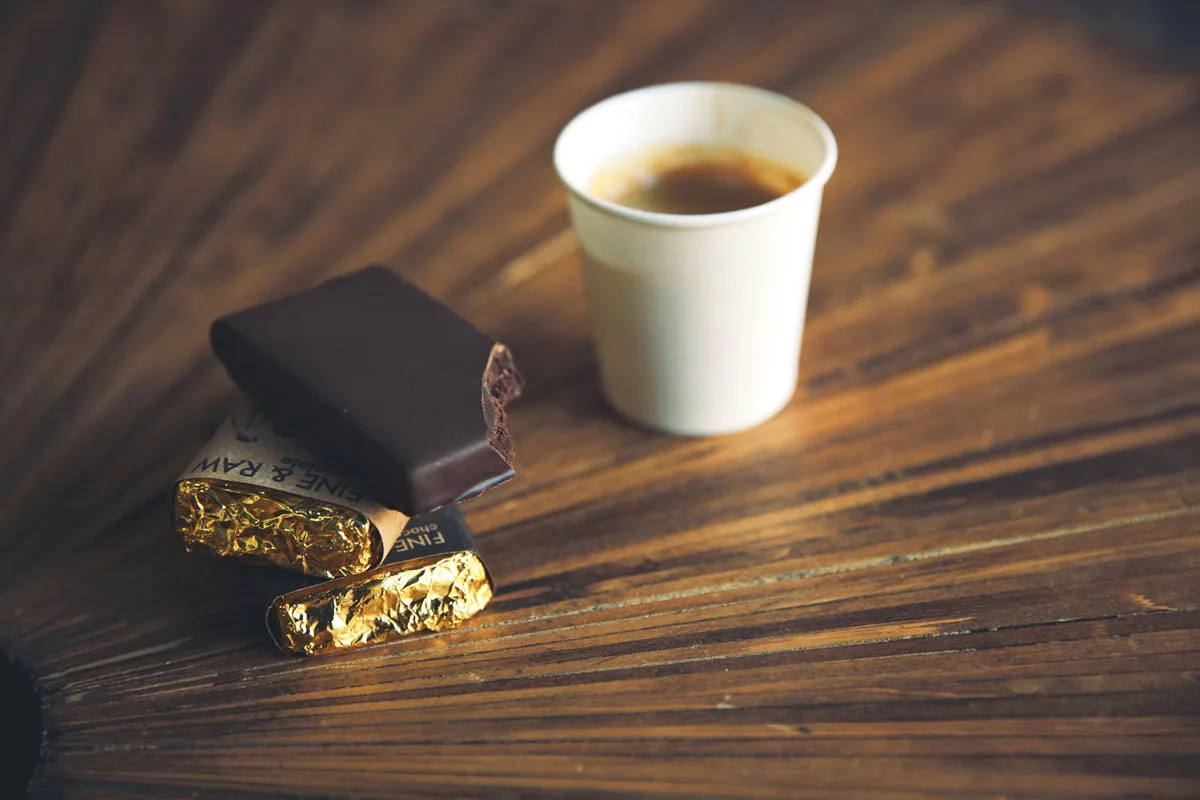
Bars or pieces of chocolate can be melted down into syrup, but the higher fat content means they can quickly turn solid again. At Fine and Raw, a chocolate shop that also serves specialty coffee, Daniel Sklaar melts his chocolate in a crock-pot kept on display. "When people see it—a pot full of chocolate that we ladle out—their eyes pop," he says.
As coffee drinkers develop more sophisticated palates and a taste for adventure, bold-flavored chocolates are earning a place beside the grinders and tampers. The flavor possibilities in mochas are opening up, and a drink that coffee purists might once have dismissed can now make a case for being more compelling and complex than a coffee on its own.
With so much flavor potential, the choices can seem easy to get lost in. Sklaar advises café owners to bring great chocolate to their menus with a spirit of play. "When you're dealing in such fantastic quality," he says, "you just splash it around and have some fun."
Cover photo courtesy of Fine and Raw