Rethinking the Espresso Shot: When Weaker Means More
Some cafés are deliberately dialing back espresso concentration. A pioneer of the style now has second thoughts, while others keep pushing extraction further.
By Morgan Howard3 min read
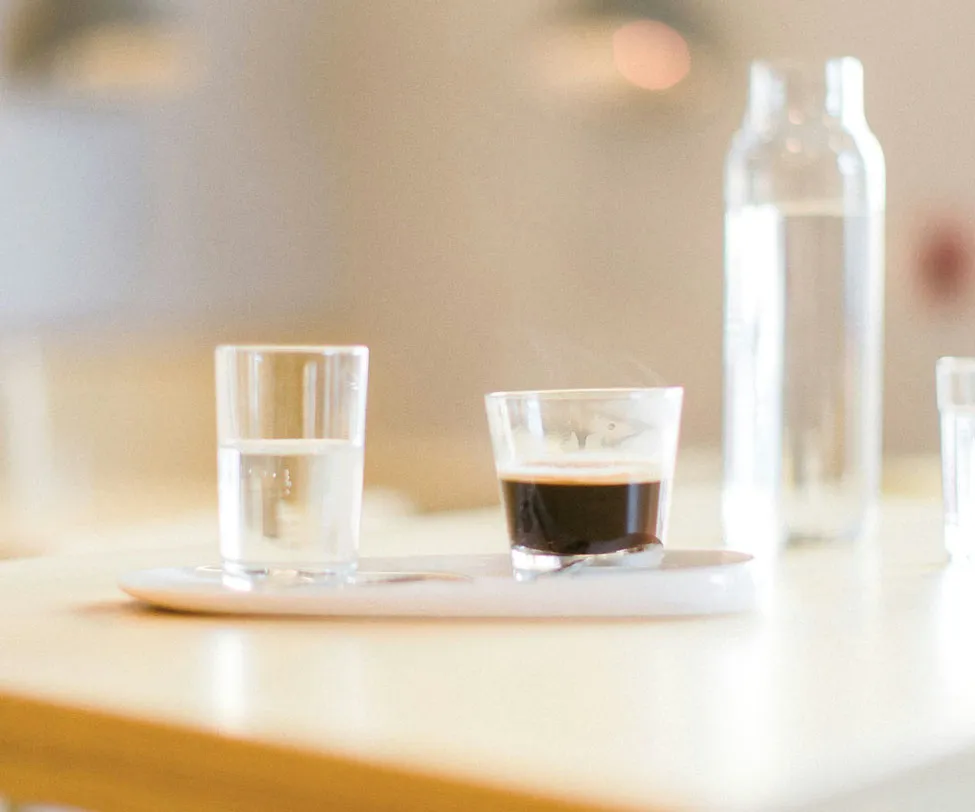
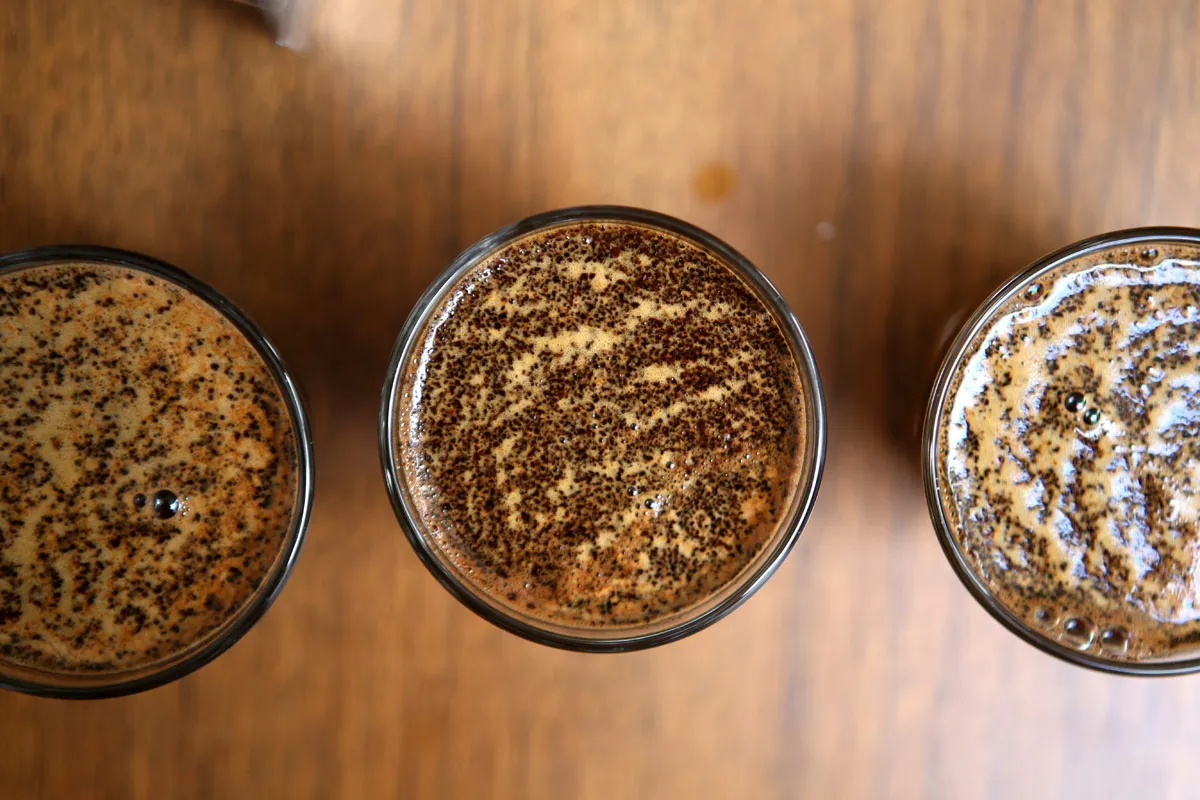
Walk into Steadfast Coffee in Nashville and ask for an espresso, and what arrives is not a tiny demitasse. It likely would not fit in one. You get a rocks glass filled more than halfway. The shop builds a separate recipe for each of its seasonal single-origin espressos, yet a typical dose of 17.5 grams producing yields as high as 50 grams means the resulting shot carries a markedly lower concentration — fewer total dissolved solids — than most specialty coffee drinkers are used to. That does not make it weak, the shop insists.
Lee Sill, Steadfast's director of wholesale and assistant roaster, says the reduced strength contributes to clarity.
Robbie Melton, the shop's head barkeeper, reaches for a spirits analogy: "We compare it to a cask strength whiskey," he says. "A splash of water really opens up the flavors." The shot pictured at the top of this story is one of theirs — an AB Githinna dosed at 17.5 grams and yielding 56 grams. At Steadfast, that translates to espresso served at roughly 7 percent concentration, well below the 11–12 percent strength that had long been treated as the undisputed industry benchmark.
One factor behind the rise of lower strength espresso is the proliferation of coffee companies using refractometers to set brewing parameters.
Those who favor weaker espresso argue firmly that it depends on a particular roasting approach. Coffee roasted lighter is less soluble than a traditional dark espresso roast, so extracting it fully calls for more water. Before he joined Steadfast, Sill worked at a café that sourced beans from several roasters, and he found that each roasting style called for its own espresso settings. "I would pull a ristretto with one roaster, three-to-one with another," Sill says. "With these lighter coffees I can be more aggressive with the pull and be able to get away with it without negative tastes attributes."
Steadfast is hardly alone in preferring a weaker shot. A survey run by James Hoffmann, co-owner of Square Mile Coffee Roasters, found baristas in cities worldwide leaning toward a 1:2 ratio. (A twelve percent concentration espresso typically sits at a ratio between 1:1.5 and 1:1.8.) In Sydney, the average recipe came in at 20.6 grams in and 47.2 grams out — a ratio of 1:2.3. Few shops pull ratios as high as Steadfast's, but Hoffmann's figures suggest espresso is trending weaker around the globe.
Part of what drives this shift is the growing number of coffee companies that use refractometers to dial in brewing. By passing light through a sample, the device measures the percentage of total dissolved solids (TDS) in the brew. Combined with the mass of the dose and the yield, that TDS figure allows a calculation of extraction percentage — how much of the ground coffee actually dissolved into the cup. For many roasters and cafés, the numbers came as a revelation. Some discovered their espresso recipes were extracting considerably less coffee than they had assumed. Instead of roasting darker to raise solubility, some roasters chose to change the recipe and extract more. "The thought process is to use more water to get around a twenty percent extraction," Melton says.
Yet an early champion of the weaker style now has doubts about where it is heading. Wille Yli-Luoma, founder of Heart Roasters in Portland, says he roasted far too light for years. Heart once served espresso in cappuccino cups because of the large volume, but it has lately been pulling shots at a more conventional eleven percent strength. "We hit a maximum point," Yli-Luoma says. "It was not strong enough. The body was not working together with the flavor."
Yli-Luoma attributes his ability to achieve a high-extraction espresso without giving up strength to recent changes in his roasting method. "I want to taste no roast defects. I want to taste terroir, but I don't want to taste grass," he says.
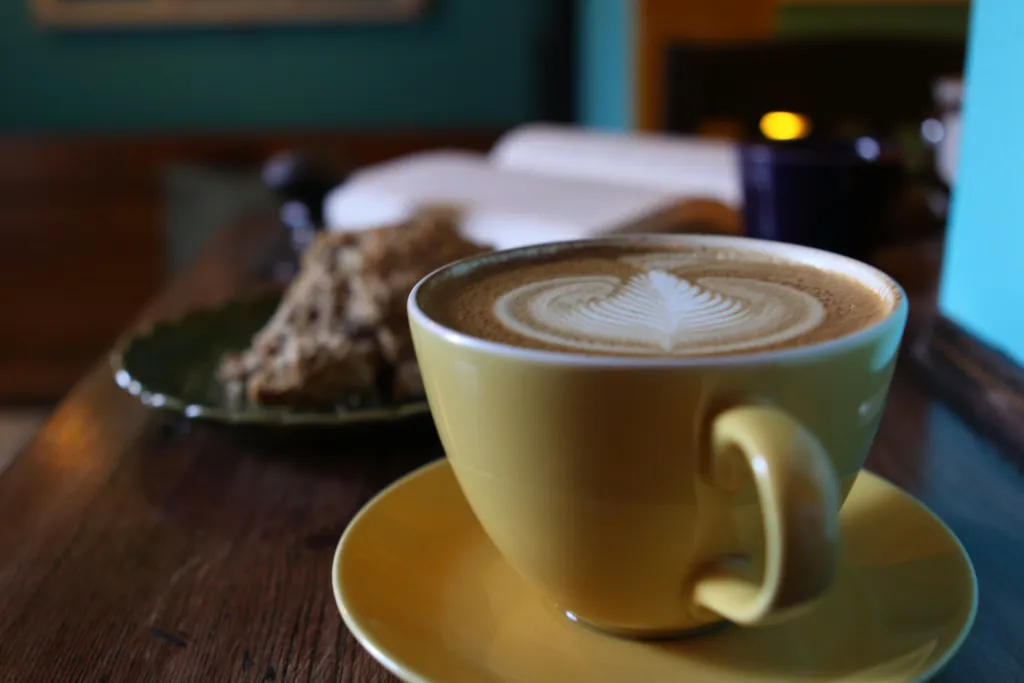
While he accepts that weaker espresso brings certain advantages, Yli-Luoma contends that drinkers favor a more conventional concentration. Of the large shots, he says: "On its own it tastes great. There's lots of flavor clarity." But, he adds, "it gets lost in milk. You have cappuccinos that don't taste like anything. When the TDS is past 11, you have a better ratio of milk and coffee." Heart's customers, according to Yli-Luoma, have already responded to the change. "Customers are coming back for second cappuccinos."
Supporters of lower strength espresso accept that it may not suit every palate, but they keep testing the outer limits of extraction. "It's not right or wrong." Sill says. "At the end of the day, we value clarity and complexity above everything else."