Nashville's Coffee Ascent: From Music City to Specialty Coffee Hub
A new wave of cafés and roasters in Nashville is building a collaborative coffee culture that aims to set an example for the South.
By Drew Rivera8 min read
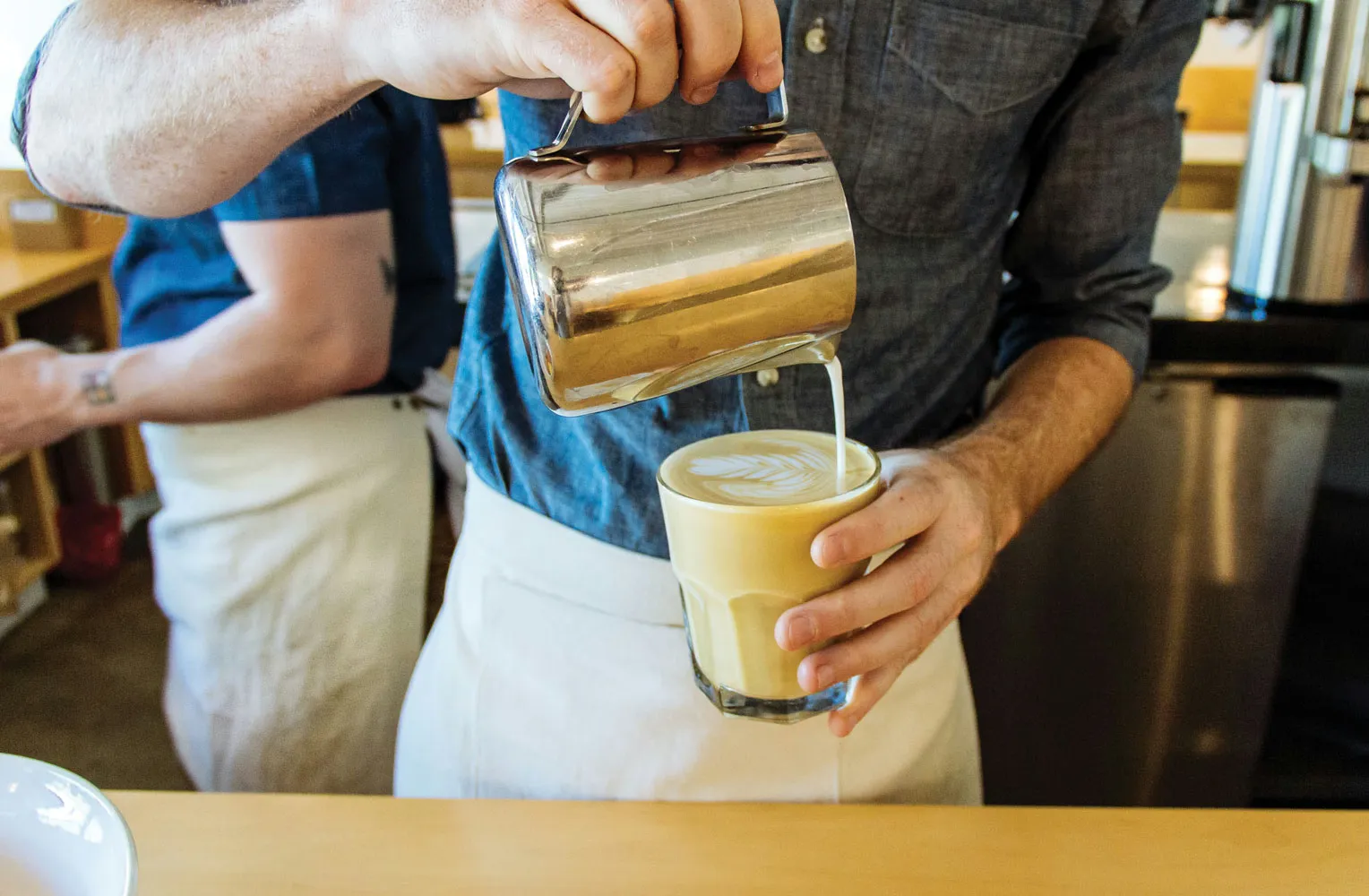
Winston Harrison, a certified Q grader and head roaster at Crema Coffee Roasters in Nashville, moved to the city for music but found himself burned out on the scene. "I moved here for music and I got burnt out on it, but I still wanted to do something creative," he says. His story is a common one in Nashville, a place nicknamed Music City that has long drawn aspiring musicians. That same blend of creativity and ambition now drives a younger generation of baristas and entrepreneurs who are pushing coffee culture to new heights in the South. Nashville's population is young, well-traveled, and has disposable income, thanks in part to a booming medical research industry and the enduring music scene. This has fueled a surge of new cafés and restaurants.
Nashville’s population is young and well-traveled, with expendable income and a taste for finer things.
"It can’t open fast enough," says Nathanael Mehrens, co-owner of Steadfast Coffee, one of Nashville's newest cafés. "And the quality can’t be high enough," adds Jamie Cunningham, one of Mehrens' three business partners. They are talking about the city's culinary scene at large, but the remark could also serve as a motto for their startup. For the past six months, Steadfast has run as a pop-up café inside the Skillery, a shared workspace in the Germantown neighborhood. That period allowed the team to establish the company and connect with neighbors while finishing their full café, conveniently located behind the pop-up. The café will feature twin Modbar espresso stations, sixteen craft beer taps, and a full menu created by Julia Sullivan, an up-and-coming chef who has worked at New York's three-Michelin-starred Per Se. Initially, coffee will come from Seattle's Slate Coffee Roasters, though a Steadfast roastery is under construction in nearby Franklin. The roasting operation is led by partner Sean Stewart, who placed third at the 2013 US Brewers Cup.
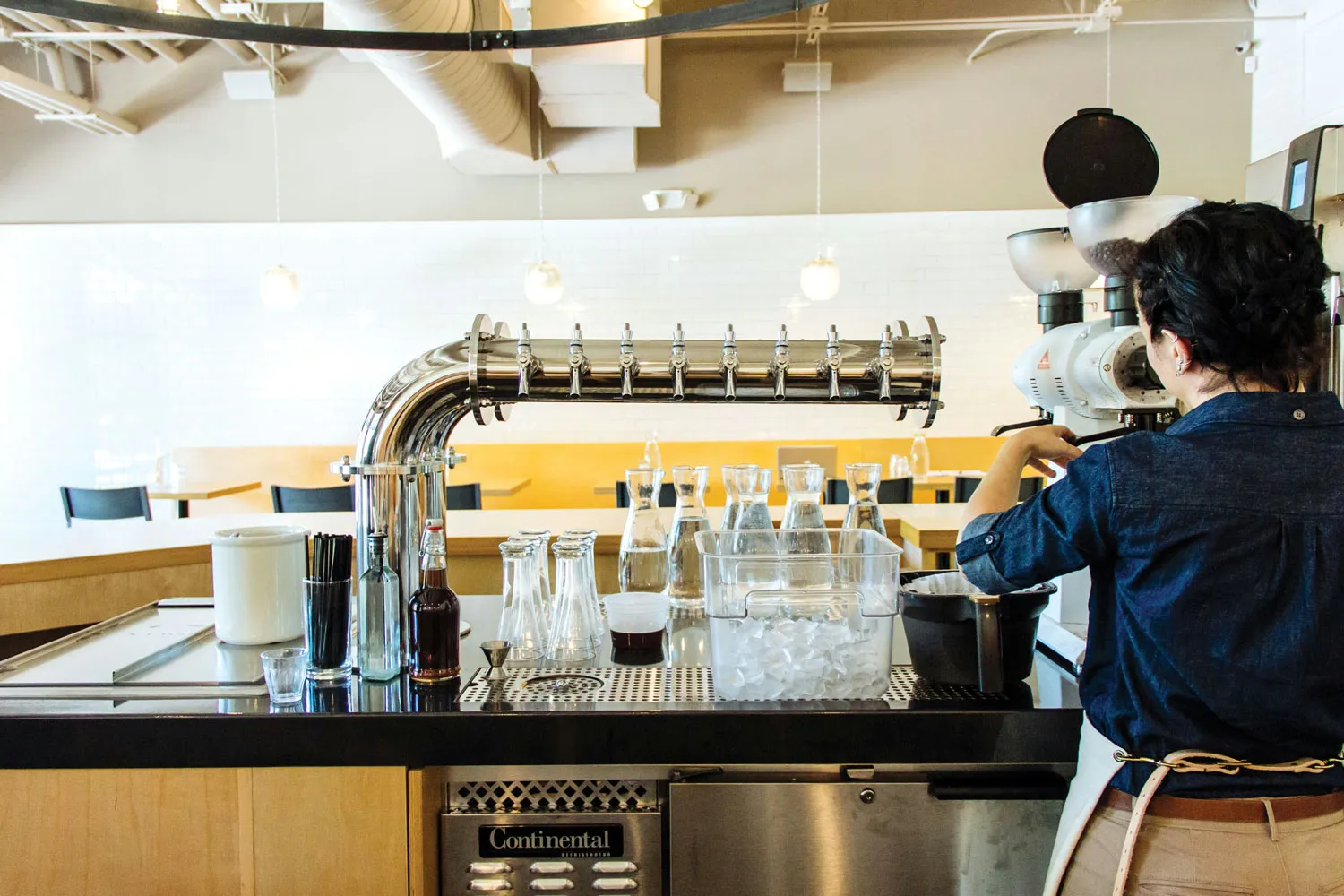
Sixteen craft beer taps at Steadfast Coffee.
"We want to be the sort of place where the customer feels like the star," Cunningham says. For Steadfast, that means designing a customer experience where hospitality is as important as beverage quality. Inspired by cafés like Los Angeles's Go Get Em Tiger, the coffee program will emphasize autodrip filter coffee and volumetrically brewed espresso. This focus on speed and efficiency frees staff to take care of customers. "Humans are good at empathy," Mehrens says. "Machines are good at making a repeatable product."
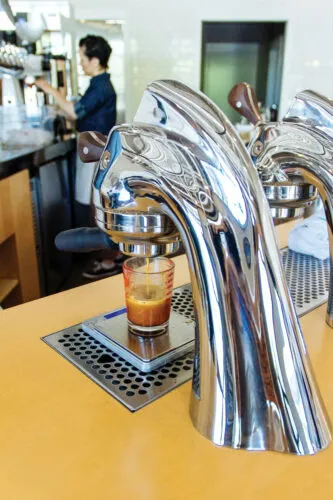
Modbars at Steadfast Coffee.
This philosophy stems from years of specialty coffee experience. Cunningham previously managed quality and education at Bongo Java, an early Nashville coffee pioneer with five locations around the city. Mehrens and Stewart credit earning their Barista Guild of America certifications in 2009 as the turning point in their coffee careers. Both went on to work at Crema and then founded the consulting and catering company Beve Mobile Coffee. "We don’t want to just ride on other people’s coattails. We want to blaze some new trails," Cunningham says.
Outside Tennessee, Nashville's coffee scene is probably best known for Barista Parlor. With celebrity backers, designer furniture, and an enviable array of equipment, its two cafés have drawn international attention. Whether it's Japanese cold-brew towers, Slayer Espresso Machines, or site-specific installation art, Barista Parlor does nothing halfway. Stocking six different roasters at all times, the company pioneered one of the country's more extensive multi-roaster programs. Now it is preparing to enter roasting for the first time at its Golden Sound location.
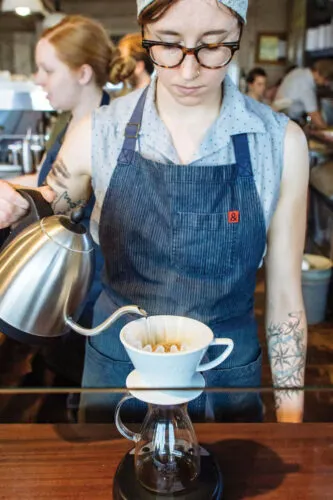
A pour-over at Crema Coffee Roasters.
Although Barista Parlor may have put Nashville on the specialty coffee map, the city's specialty coffee rise traces back to Crema, an understated café and micro-roastery just south of downtown. The address, 15 Hermitage Avenue, once housed a diesel mechanic shop, but with its expansive deck the space feels more like a remodeled house—one with a view of an NFL football stadium. The recently revamped interior offers a warmer, more inviting take on industrial-chic style. It is contemporary but does not shy from the third-place identity once synonymous with specialty coffee. Even with the deck, seating is precious at Crema, and it is common to nurse your first sips while waiting for a table. The crowd is diverse: Vanderbilt and Belmont students buried in books, and nationally known musicians trying to grab a coffee under the radar.
Over the past eight years, Crema has quietly collected a number of awards, including two second-place finishes at the Specialty Coffee Association of America's Roasters Choice competition. But owner and founder Rachel Lehman downplays the accolades. "I was just a barista who wanted to do something better," she says.
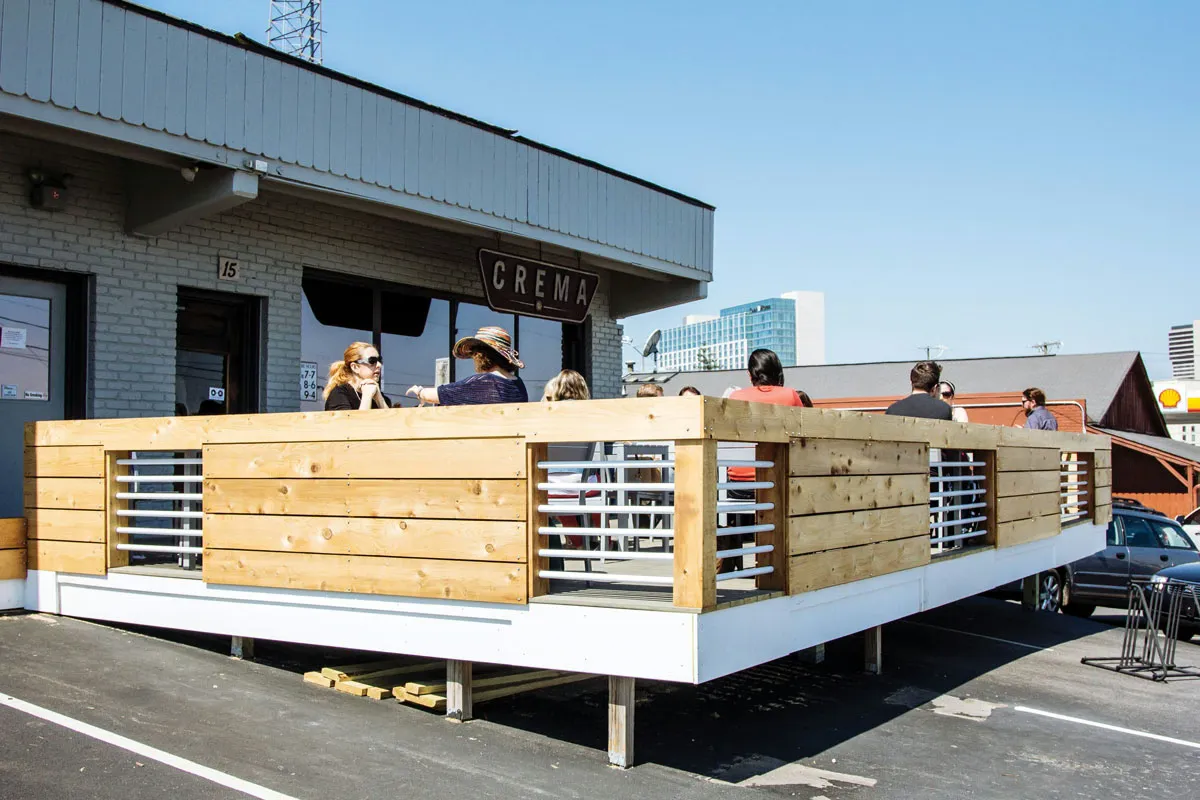
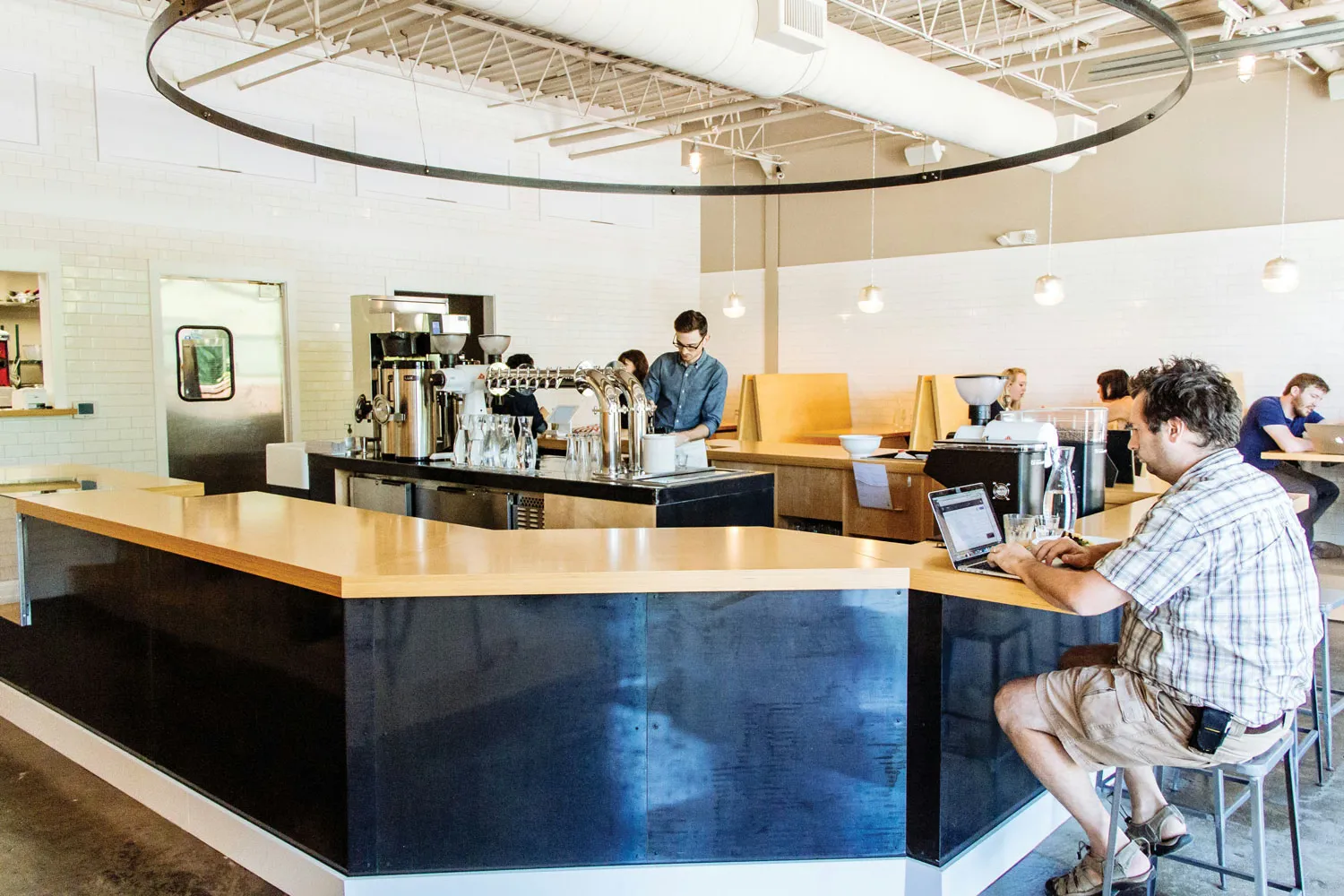
Outdoor deck seating at Crema, above. Seating around the bar at Steadfast, below.
Lehman started working in coffee at fifteen. What began as a high school job became a way to pay for college in Colorado. After moving to Nashville to marry her husband, Ben, she began to see it as a career. "I really enjoyed the hospitality side of the business," she says. She soon found, however, that her interest in coffee quality exceeded that of her employers. "I felt like I was just treading water."
"We were the first people to have different price points for coffee," says Lehman. "People didn’t understand there were different qualities."
After a failed bid to buy an existing café, Lehman decided to start from scratch. She found the space on Hermitage Avenue and saw its potential: it was conveniently located between downtown and the interstate and far enough from other cafés. The Lehmans renovated the space themselves, and Crema opened in 2007. The young business struggled to find a coffee supplier that met its needs. Local roasters did not meet Lehman's exacting standards, and companies outside the region were reluctant to ship to Nashville. "A lot of our education came online," Lehman says. "I learned latte art by watching videos."
Everything changed after a chance encounter with Aaron Blanco, owner of San Antonio's Brown Coffee. Lehman was impressed by the caliber of Blanco's direct-trade coffee, and Crema became a Brown wholesale account. Armed with a higher standard of specialty coffee, Lehman set out to change how Nashville perceived coffee. "We were the first people to have different price points for coffee," she says. "People didn’t understand there were different qualities."
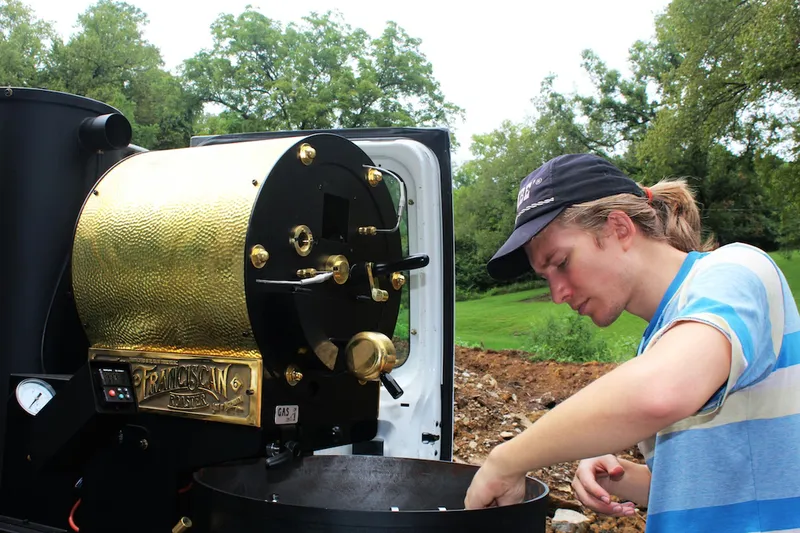
That pursuit of quality eventually led Crema to buy a Diedrich IR-12 coffee roaster and begin roasting its own beans in 2012.
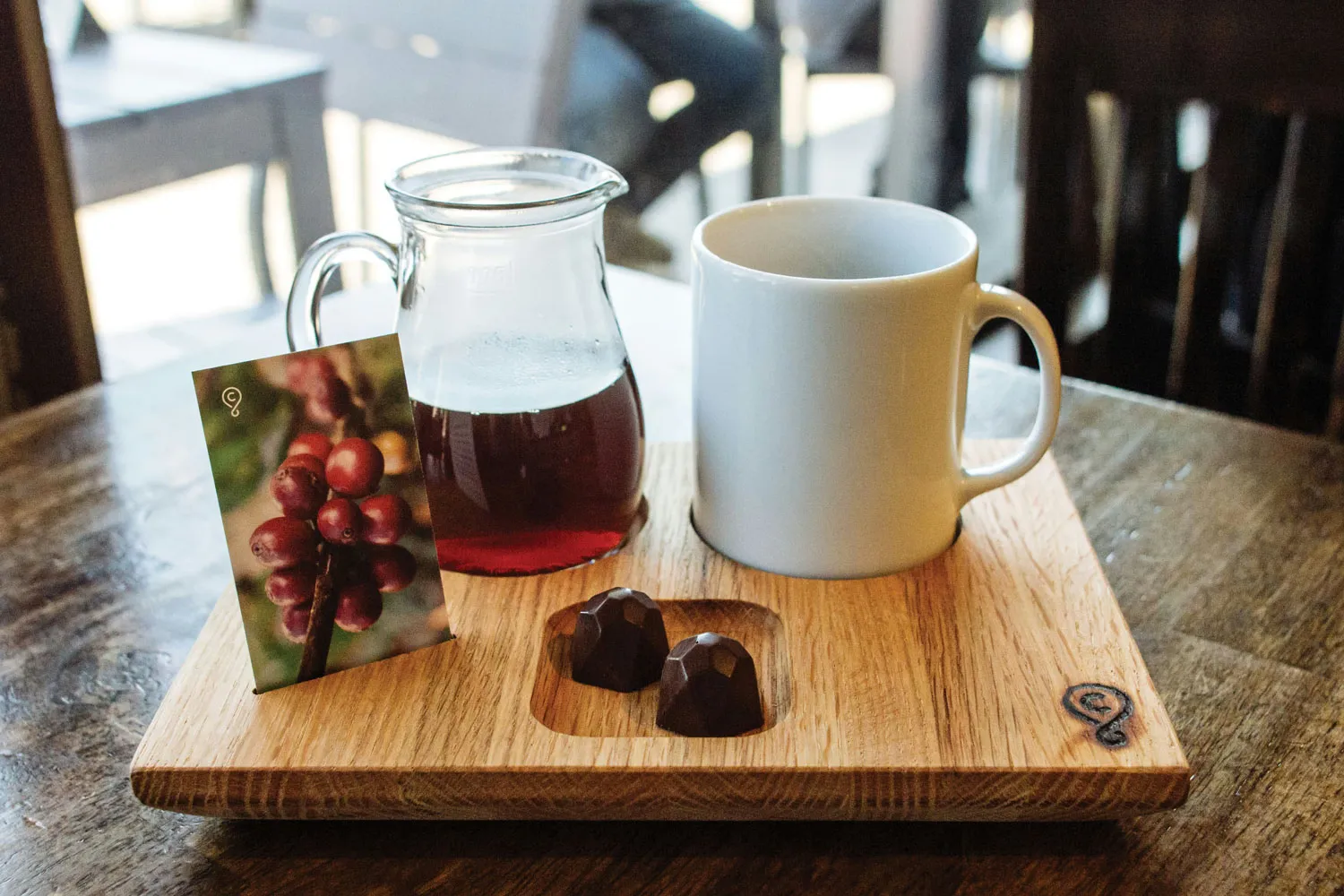
Crema’s “papaya coffee” paired with locally made chocolate truffles.
"I have one foot in the roasting room, one foot in the shop," Lehman says. "I enjoy roasting, but it’s hard as an owner because you really have to focus." Despite the busy schedule, she still works a weekly bar shift to stay connected with customers. "She knows almost everyone’s name," says barista Jessica Pesut.
"Our roots are being small and intentional," says Ben Lehman, Rachel's husband and business partner. Crema aims to source eighty percent of its coffees through direct-trade relationships, a goal they are on track to meet in 2015. "The kind of coffee we like you can only get when you meet farmers. Then they introduce you to other farmers and it kind of snowballs," Rachel says.
"I would love to see Nashville become an example to other cities in the South and all over the country about how a city can work together to create a strong industry and even stronger community."
The investment in direct-trade relationships is already paying off. Recently, one of Crema's partners, Luis Alberto Monge, discovered a natural mutation on his farm in Costa Rica. He was surprised to find that the tree's fruit tasted more like papaya than a typical coffee cherry. "I remember, while I was at his farm, Luis told me, ‘You have to taste this,’" Harrison says. "We stood there and just ate the fruit for a while." The harvest of this still-unnamed variety yielded just over ten pounds of green coffee, but Crema suspected it would be special and arranged to buy all of it. Due to the limited quantity, the "papaya coffee" is offered only as a single-cup pour-over, paired with a truffle developed by a local pastry chef to complement its unique flavor profile.
Crema partners with a range of local wholesale accounts but is selective about who can buy its coffee. "We ask all of our chefs to do our training," Harrison says. "We like local accounts because we can check in on them." Crema's wholesale partners include its down-the-street neighbor Husk, a James Beard Award–winning restaurant from chef Sean Brock, and the Lehmans' favorite restaurant, Prima. "It’s great to get a great meal and a really good cup of coffee afterward," Ben says.
The entire Crema team insists its success is tied to the local community's character. "In Nashville, being a little isolated, you have a little more space to be creative and collaborative," Harrison says. The Steadfast team agrees. "This is where the success of Nashville lies. We’re all going to each other’s shops. We’re all supportive of each other," Cunningham says.
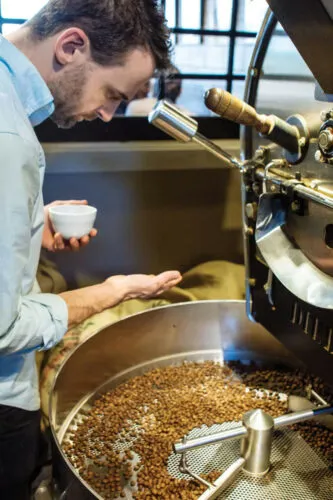
Crema’s head roaster and Q grader, Winston Harrison, at work.
This collaborative culture led to a new organization, the Nashville Coffee Collective. "In the summer of 2014, I realized that the coffee community in Nashville had grown to a point where it was hard to keep up with everything that was going on," says Patrick Rush, who manages Bongo Java's café–ice cream shop hybrid Hot & Cold. Rush formed the NCC with representatives of other coffee companies around Nashville. "Our mission statement is to raise the profile of specialty coffee in Nashville," Rush says. So far, the NCC has organized educational events and latte art contests, all aimed at connecting coffee professionals. "I would love to see Nashville become an example to other cities in the South and all over the country about how a city can work together to create a strong industry and even stronger community," Rush says.
Heath Henley, co-owner of Dose Coffee and Tea, sees another element of the community's strength. "The Nashville coffee community, many of whom are coincidentally connected to the music scene as well, intuitively understands the endless pursuit of perfection," Henley says. His Antipodean-inspired café serves Counter Culture Coffee and house-baked pastries on Nashville's west side. Like Barista Parlor did last year, Dose is expanding to a second location. "It is clear that Nashville is growing quickly," Henley says. "I think that there will be plenty of opportunity here for a long time to come for those who do it right."