Inside Little Owl's Tiny but Mighty Coffee Bar
In 2013, Seanna Forey brought specialty coffee to Denver's LoDo neighborhood with a compact shop on Blake Street; years later, a partnership with Middle State Coffee and a carefully planned layout keep the operation running smoothly.
By Parker Campbell3 min read
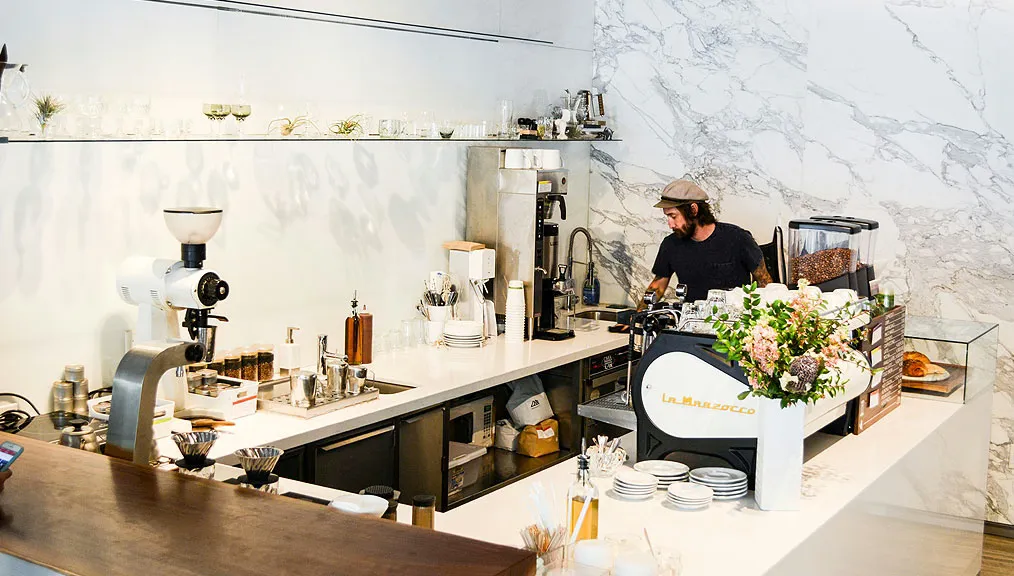
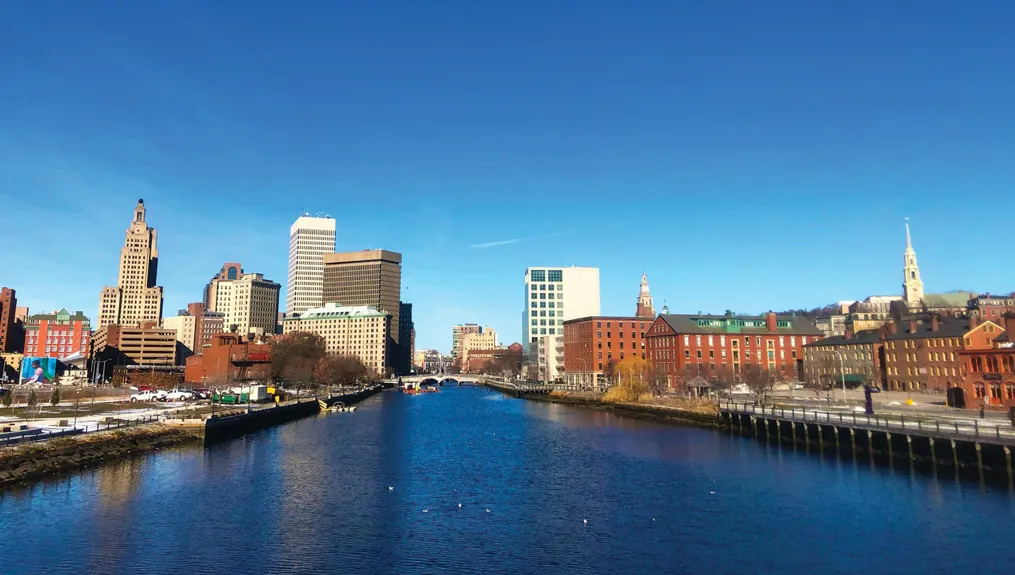
Denver's Union Station funnels a steady stream of commuters, tourists, and suburban residents into the Lower Downtown (LoDo) area, where they disperse to offices, restaurants, and nearby attractions. While Denver as a whole has a strong specialty coffee scene, LoDo itself had no third-wave coffee options until 2013, when Seanna Forey opened Little Owl on Blake Street.
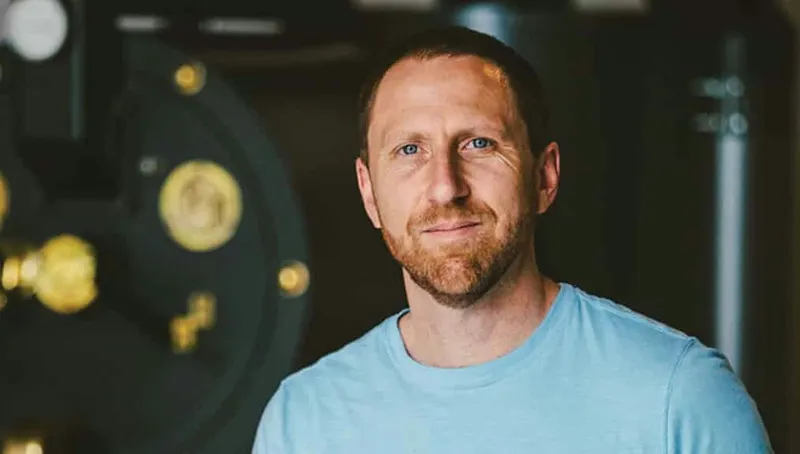
At the time, Forey was living in LoDo and was deeply involved in the city's coffee community. She was acutely aware of the coffee desert in her own neighborhood, so she eventually proposed converting a conference room in the SugarCube Building into a café. "One thing led to another and it worked out," she says.
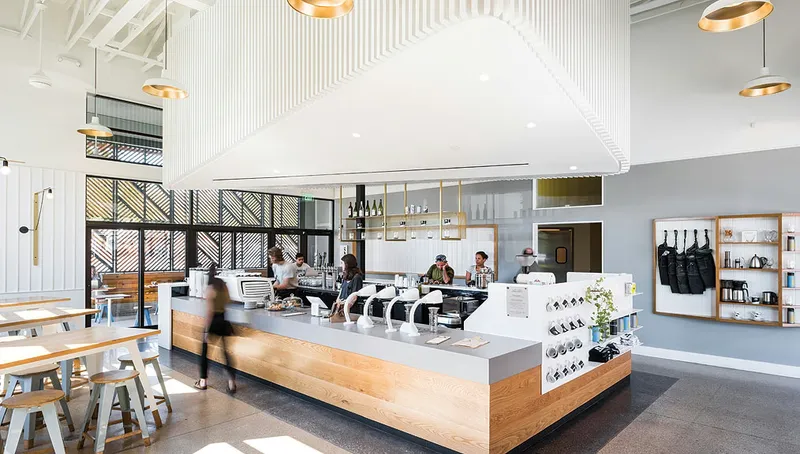
The resulting space, however, was considerably smaller than Forey had envisioned. Making it functional demanded ingenuity, some trade-offs, and extensive research within Denver's coffee network. "I talked to as many baristas as I could, talking through the challenges that they faced even on a normal-sized bar," she recalls.
Forey brought in Joshua McNeilly of Denver's Black Black Coffee to help her distill all that input into a bar design that would be ergonomically sound, foster employee well-being, and create a positive environment.
"That was our number one thing: we wanted positivity and a healthy environment," Forey says. "We really, really tried hard to make it a beautiful space, but one that was approachable and warm."
That welcoming quality mattered for putting out-of-towners new to specialty coffee at ease, and for supporting other Denver coffee businesses. Forey says she drew on negative experiences of feeling alienated in specialty shops and worked deliberately to build a warm atmosphere at Little Owl.
The café is the customer-facing side of Middle State Coffee, a roastery founded by Jay DeRose and Dustin Pace. DeRose played a key role in Little Owl's planning and early operations. He later left the café to work in other areas of coffee, then launched Middle State Coffee with Pace in 2014. As both businesses continued to thrive, Forey and DeRose decided to form a partnership between the two companies.
"We've always been really good friends, and we both realized we were better together," Forey says. "We joined forces; two very different brands that complement each other well."
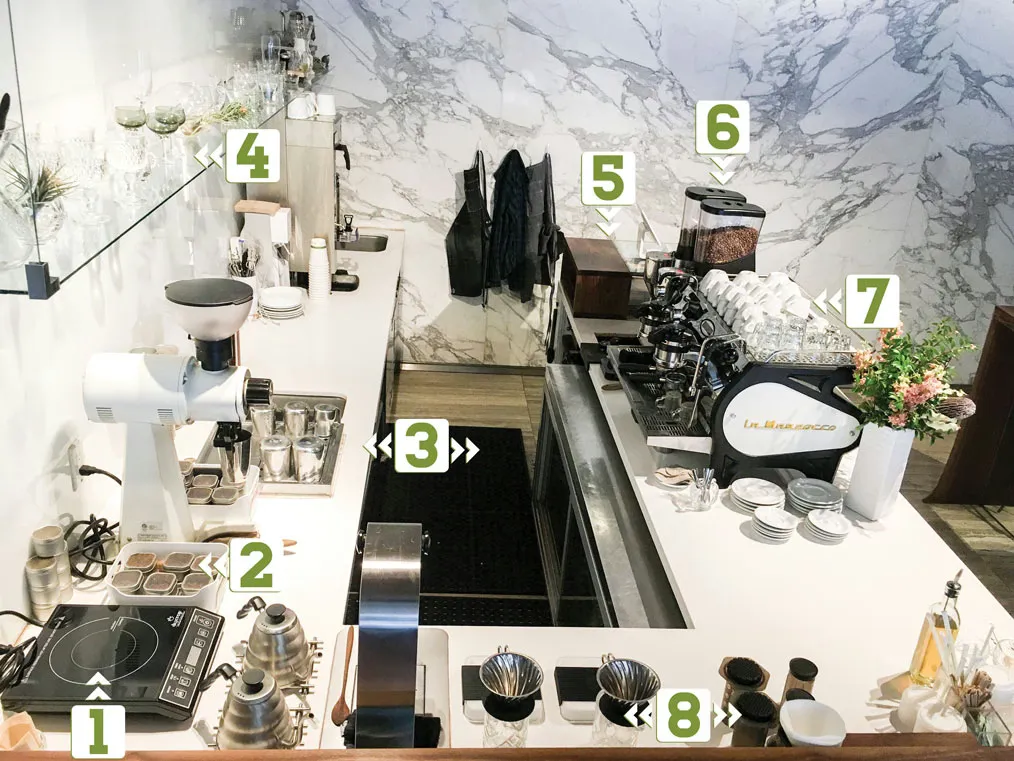
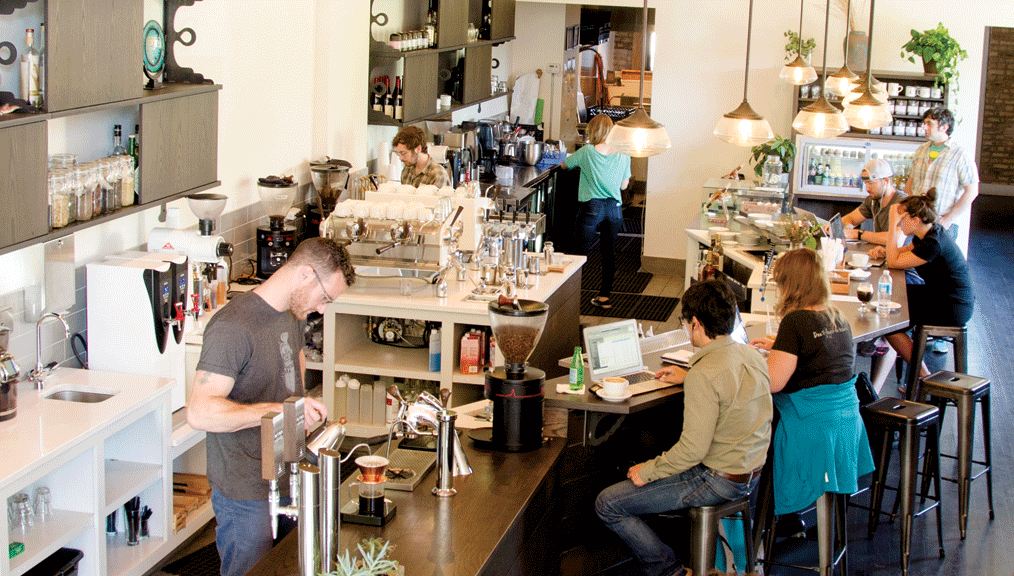
1) Altitude Adjustment: Denver's high elevation means water boils at a significantly lower temperature, which creates complications for under-counter water systems. The Marco Über font pre-heats water to 196º Fahrenheit, after which the water is moved to a kettle on a single burner and kept at boiling for the rest of the pour-over process.
2) Prep Work: At the manual brew bar, single-origin coffees are pre-dosed for either V60 or Aeropress. Glass jars hold single-origin beans pre-dosed for the Fetco CBS-2041e batch brewer.
3) Quick Rinse: The limited footprint forced certain compromises, such as placing a pitcher rinser on the back bar rather than next to the espresso machine. With too little room for hinged doors, sliding-door refrigeration was also necessary, despite its high cost.
4) Glass Act: Every piece of glassware on the back shelf was chosen to fit a specific milk-to-coffee ratio. "That's a big portion of everything we do here," owner Seanna Forey says, "functionality and aesthetic and trying to blend the two."
5) Custom Case: Pastries are kept beneath the point-of-sale in a wood-and-glass enclosure designed by local artist Justin Pollom.
6) Cool Grinders: A pair of Mazzer Robur Kold grinders sit side by side, holding a rotating single-origin and Espresso Neat, the flagship espresso blend from Middle State Coffee.
7) Dual Duty: The barista at the till also operates the two-group La Marzocco Strada MP, chosen—according to Forey—for its looks, performance, and dependable service support.
8) Front-Row Brew: Customers seated at the counter get a full view of the manual brew bar, which features a sleek Marco Über font and under-counter boiler, white Acaia scales, Hario kettles, V60s, and Aeropresses.
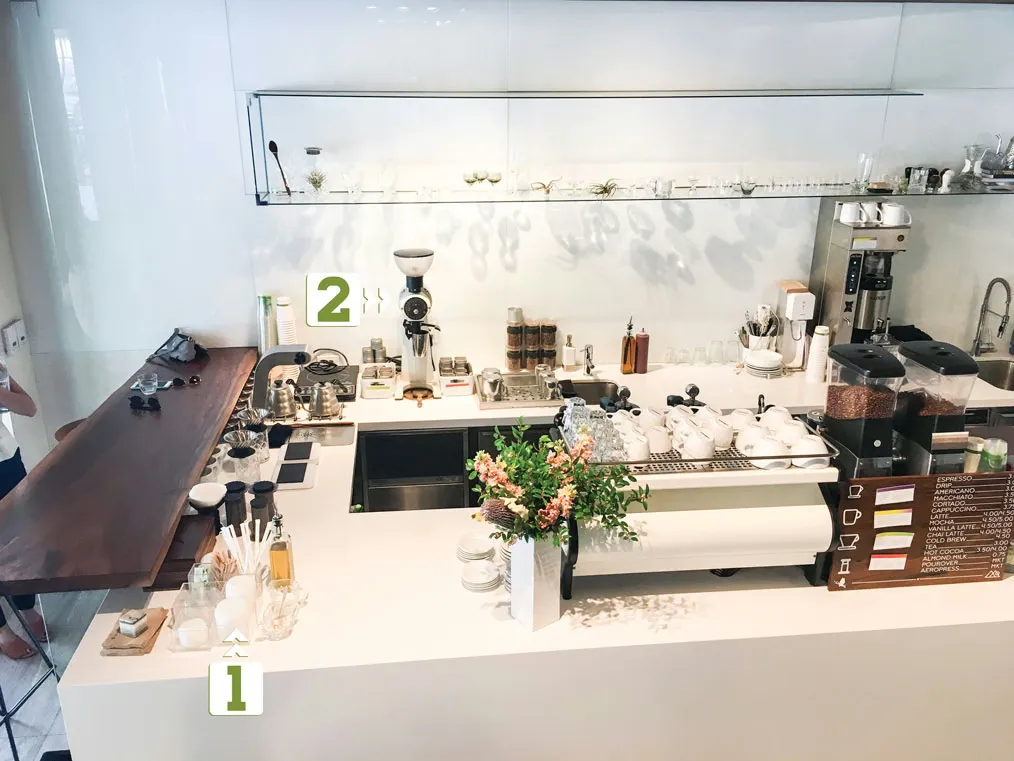
1) Condiment Station: Drinks are picked up beside the Strada MP, where the condiments are also kept.
2) Grind Hub: The Mahlkönig EK 43 occupies a prominent spot and handles grinding for batch brewing, the manual brew bar, and some limited espresso selections.