Chromatic Coffee: A South Bay Roaster's Quiet Obsession with Water
How a group of coffee workers in San Jose turned an ownership change into a cooperative roastery known for out-of-sight innovation and hands-on equipment tinkering.
By Rowan Wilson4 min read
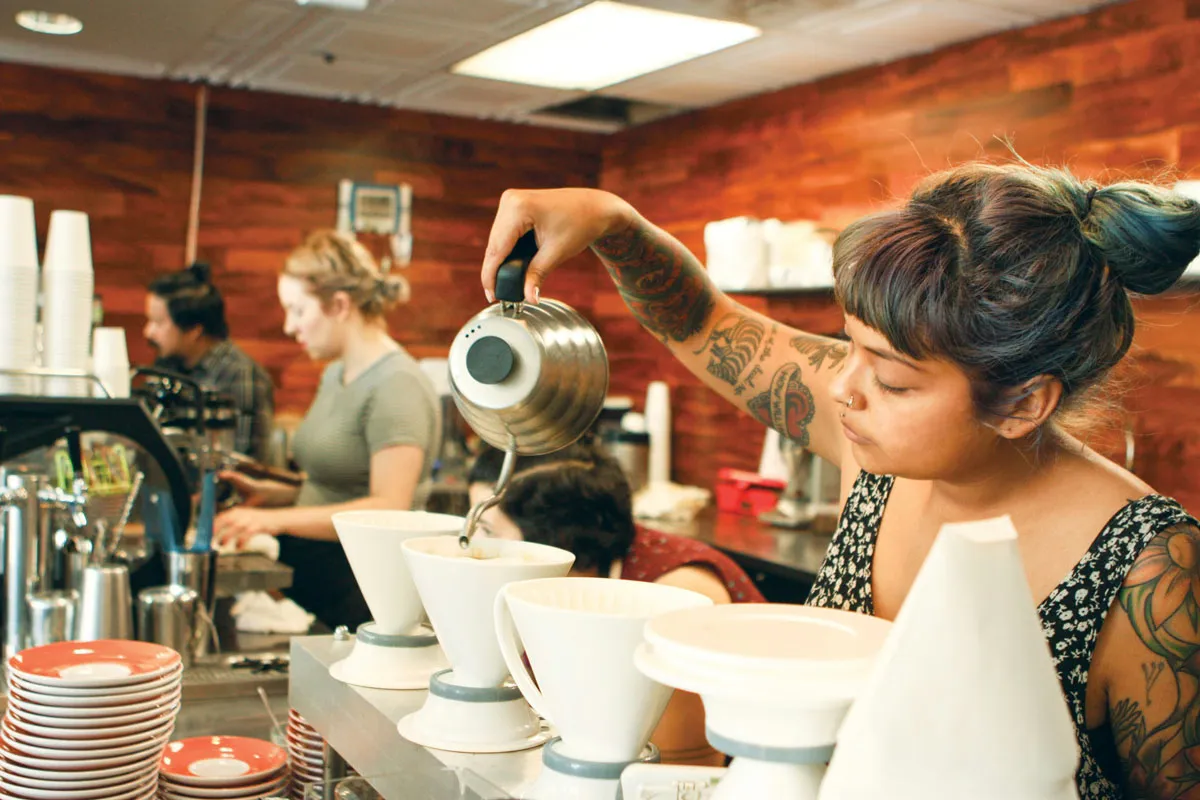
When the Silicon Valley café where they worked changed hands, James Warren and several colleagues saw an opening: they could apply the varied and hard-earned skills from their combined coffee careers to a venture of their own.
Warren and his co-workers left their jobs in 2012 and took over the café space—which Warren and his sister Wendy had recently bought—then set about rebuilding the operation. From that spot, Chromatic Coffee grew into a business that sources, roasts, and brews in collaboration with producers and in line with its commitment to coffee and its customers. The founders brought on people whose outlook matched theirs, and the roster of co-owners expanded. Today, counting the San Jose roastery and the Santa Clara café, Chromatic has six co-owners and—fitting for a company based in California's innovation hub—employs some of the country's most advanced roasting and brewing methods.
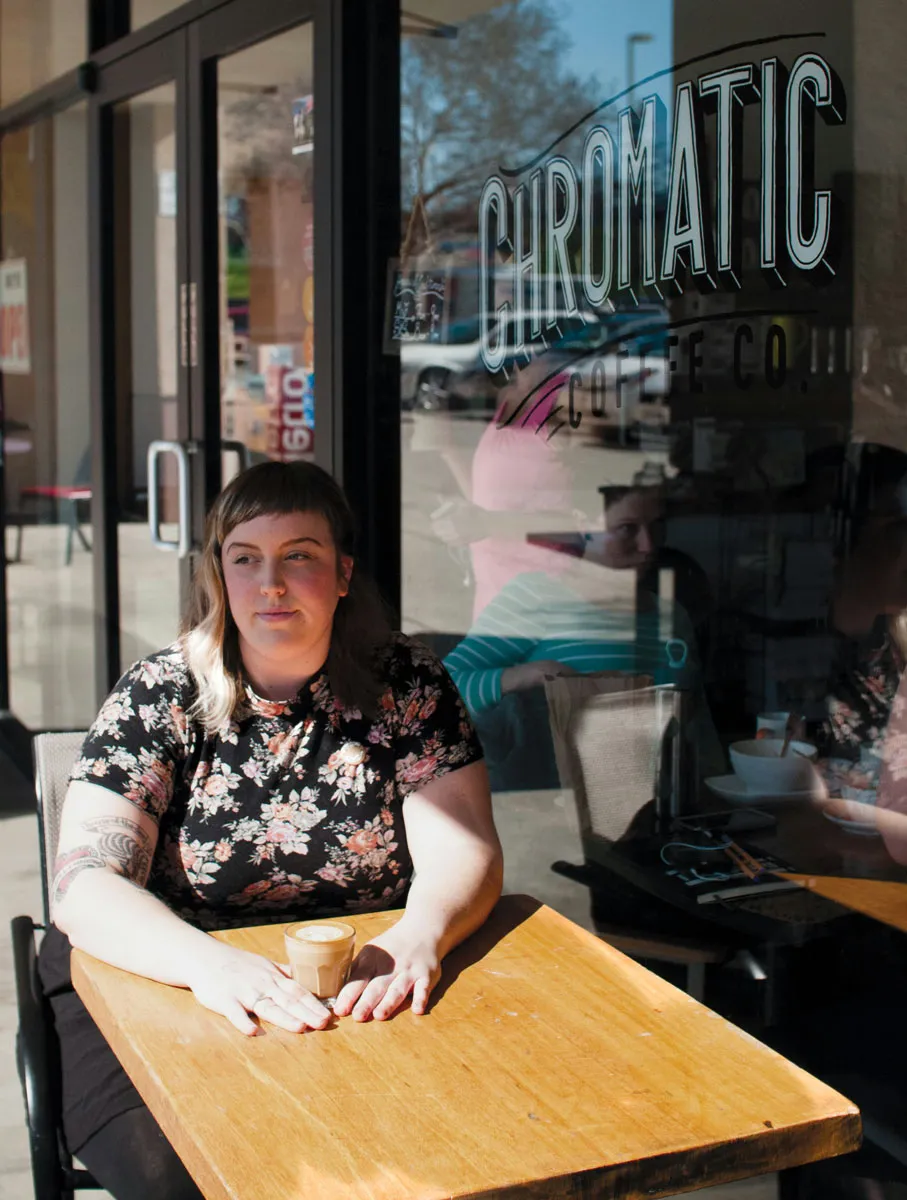
Cafe manager Otessa Crandell.
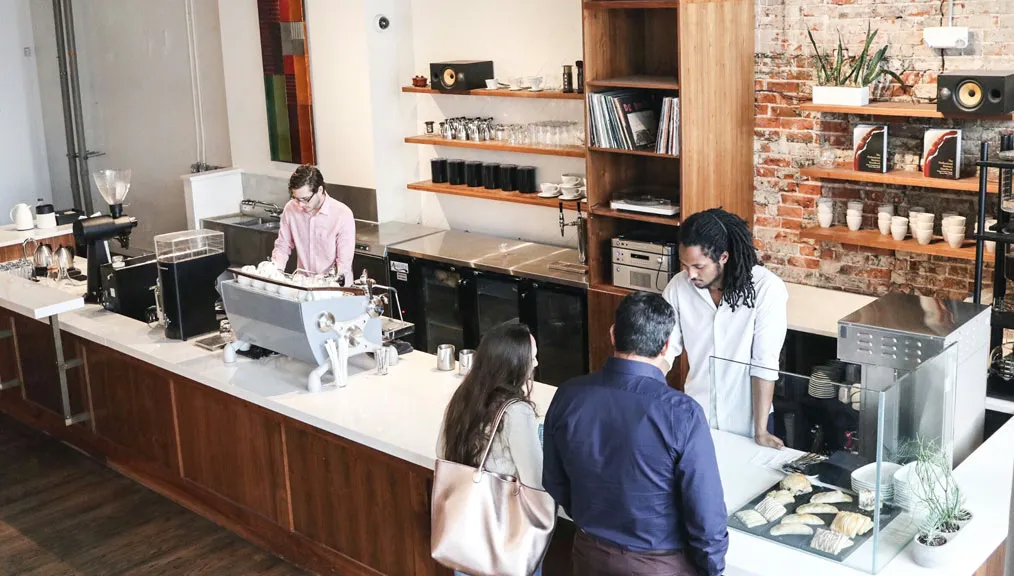
Arriving at this South Bay roastery, you would not immediately sense what makes it special. The shop occupies an unassuming storefront in a strip mall on a boulevard lined with big box stores and restaurant chains. Step inside, though, and a dark-wood-wrapped bar pulls you toward the shop's coffee nerdery, along with long wall shelves holding brewing gear and single-origin beans in black-and-white bags that carry the company's signature hand-drawn, house-stamped labels. Little here shouts for attention—yet as Warren puts it, what matters is on the inside.
"I just like things that are internally bulletproof," he says, a nod to his background as a coffee machine technician. Chromatic's real magic takes place where customers can't see it: in the roasting process and in the mind of roaster and co-owner Hiver van Geenhoven, and inside the shop's La Marzocco Strada, which Warren has carefully modified. Van Geenhoven came up with a roasting project that folds in the science of water quality, and it plays out behind the bar: the three-boiler Strada, plumbed by Warren to multiple water sources, lets baristas showcase coffees by brewing with different waters on the same machine. Understanding how this works doesn't require a scientist—but it does require close attention.
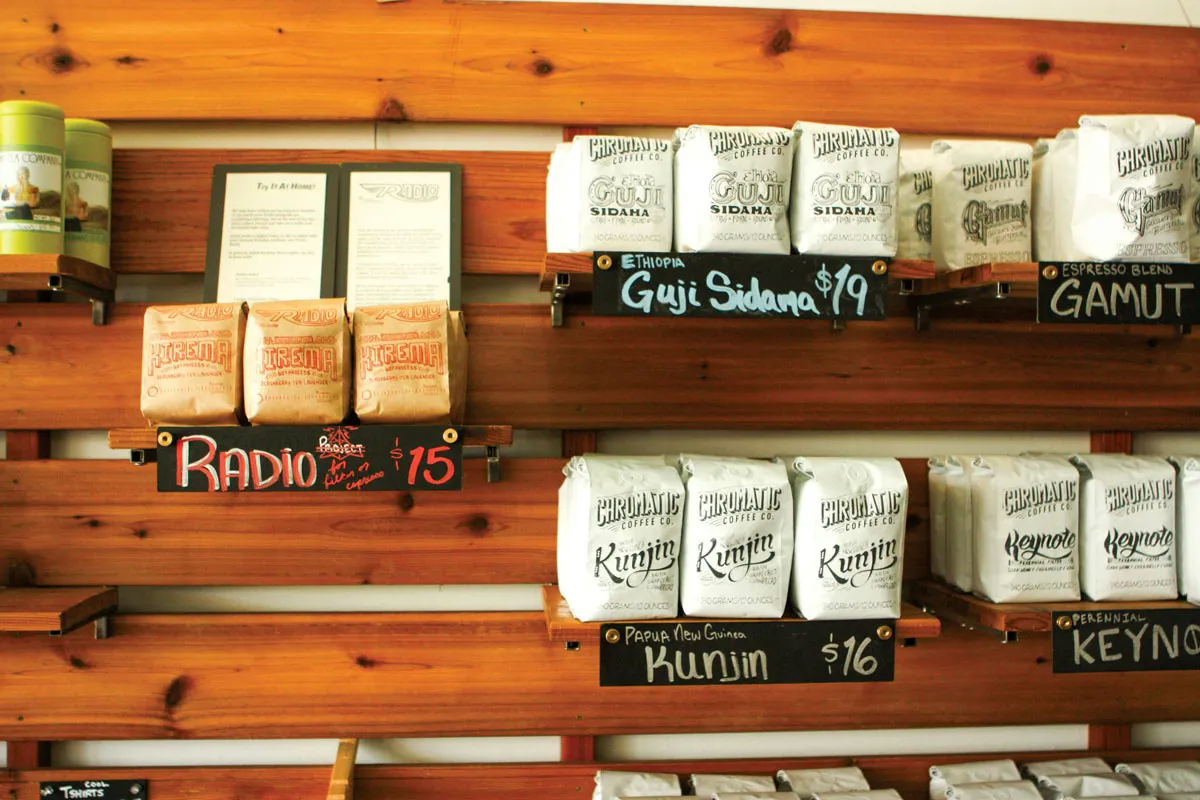
Chromatic's coffees, including the Radio project (left).
The Radio project—named for San Jose's original radio tower and station, built in 1909 and the first of its kind in the country—took shape in van Geenhoven's mind at a Roaster's Guild event several years ago. In conversations with other roasters, he came to see that many, perhaps most, roasted their coffees to complement the water available to them. Hard or soft, the makeup of a region's water weighed heavily on how roasters treated different beans. Thinking further about how different coffees brewed in different waters produce different results, he recalled a home-brewing project of Warren's in which mineral packets were used to replicate the water types associated with particular regional beer styles. Combining the two ideas gave rise to an experiment in water variation, one that pushed a little-appreciated variable to the center of Chromatic's coffee program.
"We realized that of all the variables that we tinker with endlessly—time, temperature, pressure—we were ignoring the craziest and most unknown one of all," says van Geenhoven. "We started messing around with different compositions of water, and we started getting really desirable results."
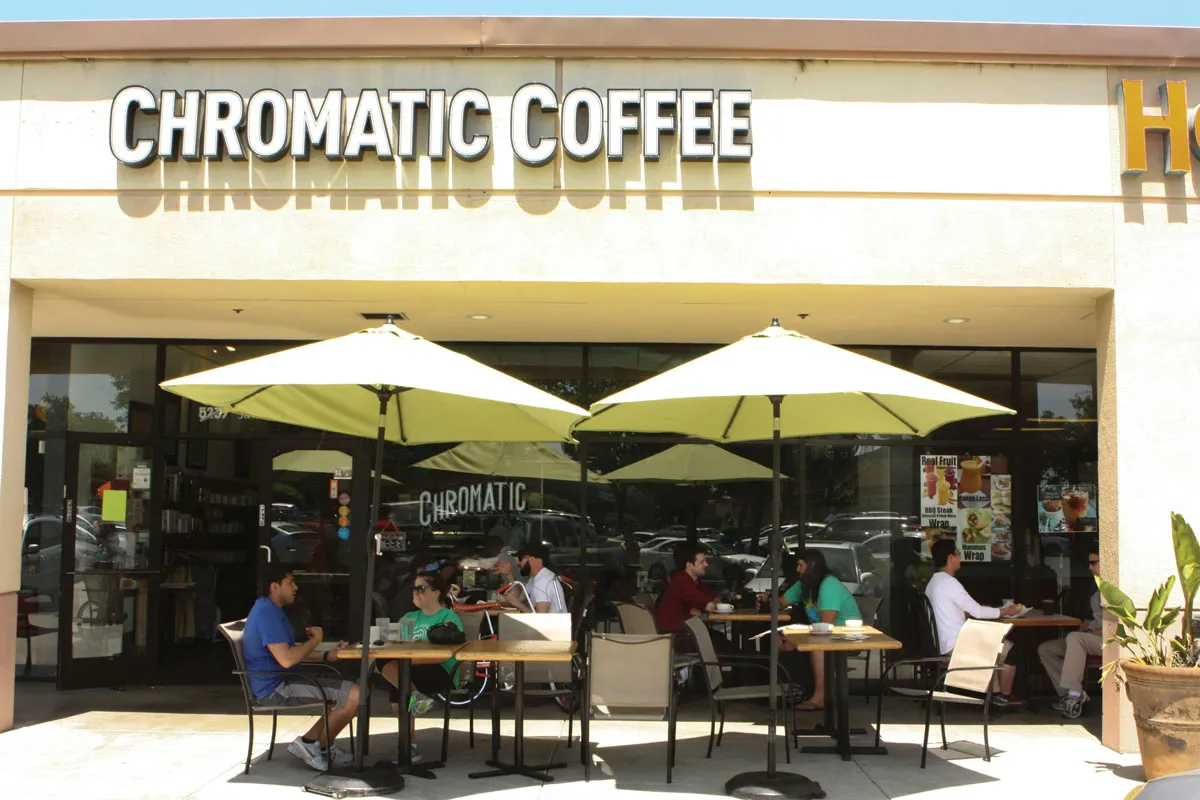
The exterior of the roaster's Santa Clara cafe.
By isolating the Strada's boilers and filtering water to each grouphead, Chromatic can brew with several water types (from twenty to 150 ppm), chosen according to the coffee. The SCAA standard is 150 ppm, itself a notable modification for Chromatic given the area's hard water. Radio coffees are roasted to be brewed on the grouphead connected to "super-low" TDS water, a level more typical of Scandinavian cafés, a region where roasting and water are tightly linked. "Turns out many of the roasts from around the world that we had originally thought to be undesirable, too dark or a little light, were really well developed when brewed with the water composition available to those places," says van Geenhoven.
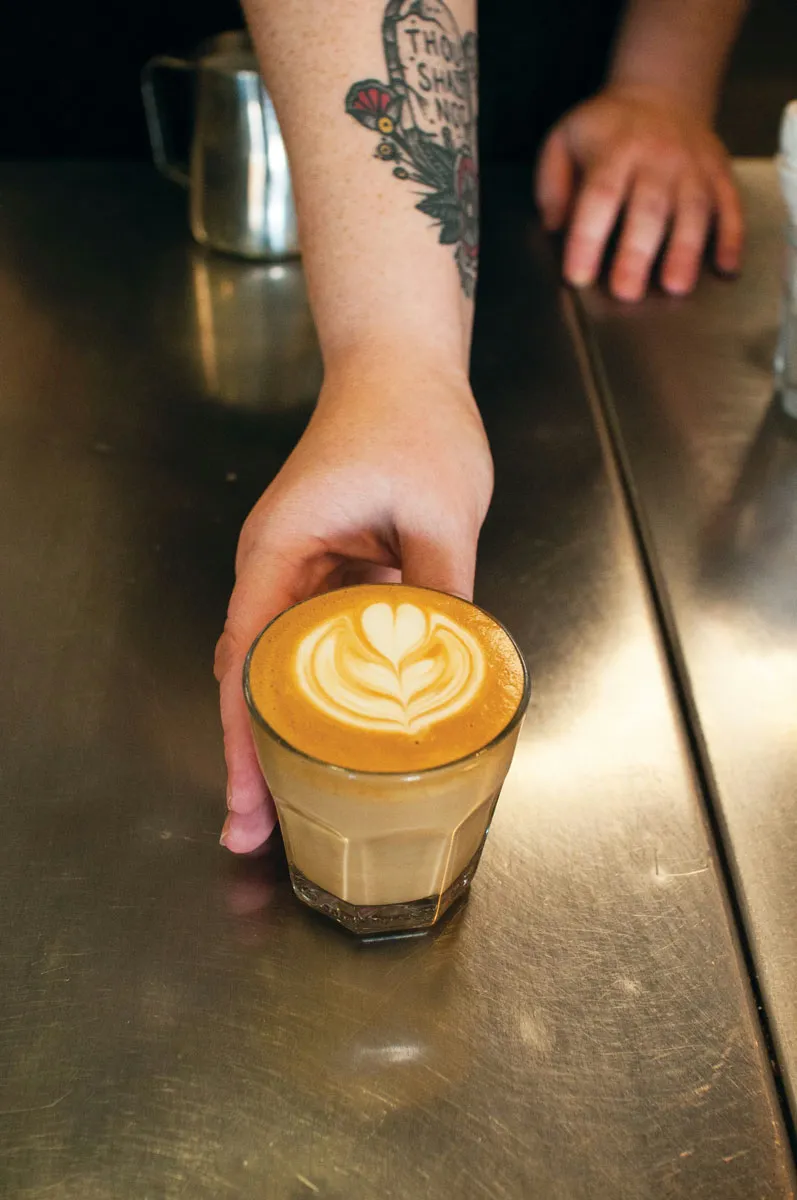 "It's a matter of developing the coffee to the best of your ability with the water you have," says Warren. He is now working to improve water systems in cafés and homes in and around San Jose, where Chromatic has wholesale accounts. The task, he says, is easier and more important than most people realize. Optimizing water quality certainly matters, but in drought-stricken California his primary goal is often eliminating waste.
Chromatic's do-it-yourself ethos—the same impulse that led several employees to leave their jobs and build something new—shows up in nearly everything the company does. It appears in the bag graphics, drawn up and hot-stamped in house and sometimes designed by customers through an Artist Takeover Series; in the intense focus on brewing variables, water included; in equipment that is hand-modified and in some cases hand-built; and in the evident happiness of contented baristas. Chromatic's work—at origin, in roasting, and in the café—is passionate, fair-minded, and inventive. All of it traces back to the company's founding mission: to create a business worth staying at.