The Swedish Coffee Ritual That Turns a Pause Into Belonging
A 2015 Ten Speed Press release pairs recipes with illustrations to explain why a coffee break can carry cultural weight—and the authors argue that life without it is unthinkable.
By Riley Cooper3 min read
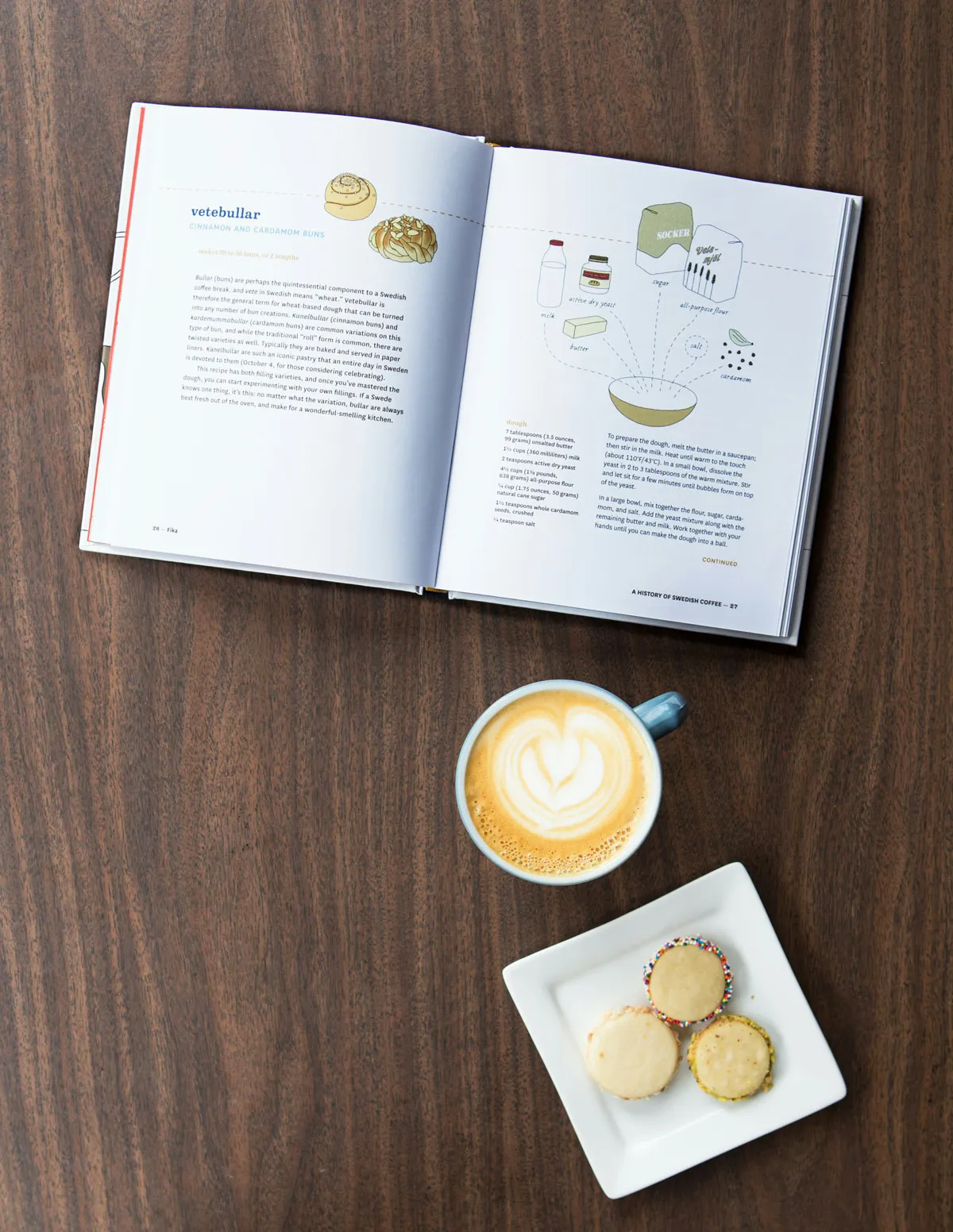
What Exactly Is Fika?
The short answer: coffee accompanied by a snack, whether sweet or a savory bite at lunch. The fuller answer is that the word carries far more than that.
Sweden has a long coffee history, with cups consumed across the day and woven into social habits and the country's food traditions. Fika—say it "fee-ka"—is the interlude that keeps that history alive, a coffee-driven rest shared by colleagues and friends. It is social, restorative, reflective, a little indulgent, and culturally cherished, and echoes of it appear in coffee cultures elsewhere, including the broader specialty scene. Even so, and this may be the saffron cake influencing my judgment, the Swedes carry it off best.
That, at any rate, is the case made in a winsome volume titled Fika: The Art of the Swedish Coffee Break, which Ten Speed Press brought out in April. Writer Anna Brones and illustrator Johanna Kindvall assembled an approachable primer on fika, including chapters of traditional recipes, and the response has been notable. By sharing the custom with a wider audience, they have let people who might once have treated coffee and pastries as a guilty pleasure take part in a cultural ritual of slowing down and taking pleasure in the moment. "I just think that everyone should experience the smell of freshly baked cardamom buns in their kitchen at least once in their lives," Brones writes in an e-mail.
Kindvall's endearing illustrations and Kindvall and Brones's detailed recipes make up a book of Swedish tradition that is hard not to fall in love with.
Kindvall's charming drawings, together with the authors' thorough recipes—within reach of novices as well as practiced bakers—form a book of Swedish custom that is difficult to resist. From neatly braided vetebullar (cinnamon and cardamom buns) to smörgås piled with herring and gravlax, the pages frame fika as a quaint, appetizing, and warming habit. Which it is.
"Life without fika is unthinkable," write the two authors, both of Swedish ancestry.
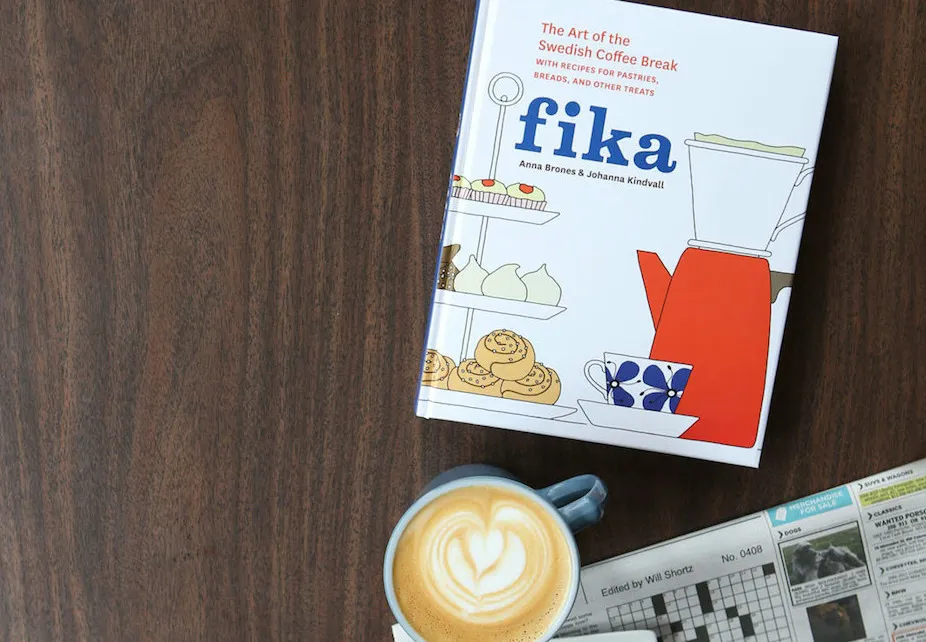
Fika: The Art of the Swedish Coffee Break.
In Sweden, fika breaks are built into employment contracts, connected to holidays and celebrations, and serve as social glue. Fika is the informal get-together, a fine way to make new friends and stay close to old ones.
That coffee matters so much in Swedish culture should come as no surprise. Swedes drink more coffee per person than nearly any other nationality, and the region, together with its neighbors, exceeds all other parts of the world in cups per day. The role coffee plays in Nordic language is telling: the word fika comes from an early Swedish form of coffee—kaffi—whose syllables were at some point reversed. In a pleasing case of language surpassing itself, the term grew from noun into a state of being. In Sweden a person might fikapaus (break for fika), go to the fikarum (a space set aside for fika), and enjoy a fikastund (the moment of fika)—the pattern is clear.
The book stresses the homemade ideal, with traditional recipes that call for organic ingredients and little equipment. That sits comfortably with the spirit of specialty coffee. Indeed, cafés in the fika style have been appearing around the world for some time, in cities such as New York, London, and Paris. "I think the nature of fika fits really well with specialty coffee culture; it's sort of an overall commitment to 'slow life,'" Brones writes. "You take time to source good coffee and brew it, and in turn you want to make time to enjoy it."
Fika the book is a passport into an important side of coffee drinking, one that can slip away when so much attention goes to the technical dimensions—roasting and brewing, and even cultivation. Those aspects deserve care and respect, but it would be a shame to lose sight of coffee as something that can also be about pleasure and letting go. Cinnamon rolls help us remember.