The Hands Behind the Cups: A Ceramicist's Take on Everyday Drinkware
A conversation with ceramicist Sarah Veak about handmade vessels, pour-over sets, and the relationship between maker and user.
By Riley Cooper2 min read
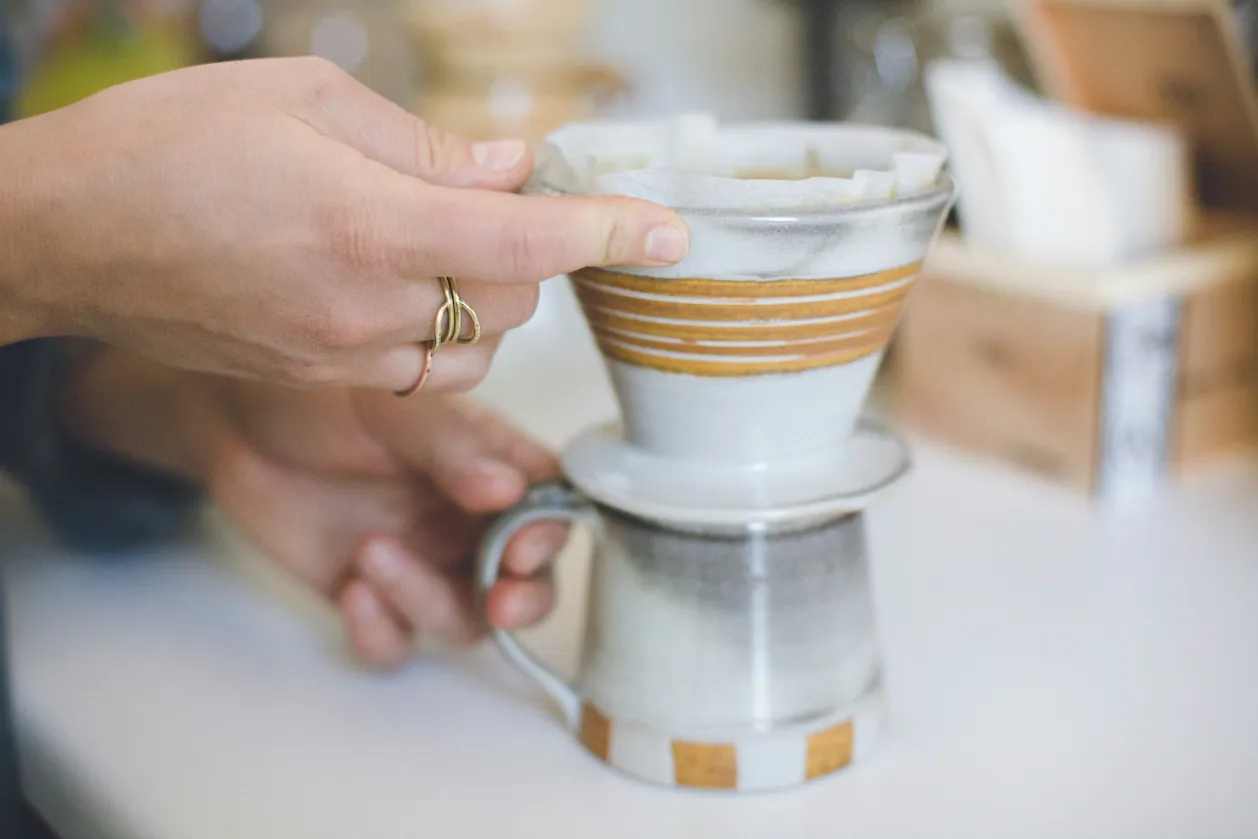
As coffeehouse design leans toward the artisanal, the local, and the made-to-order, studios such as Veak Ceramics are helping shape the look of the modern café—alongside white subway tile, succulents, leather aprons, and custom espresso setups. For those weary of mass-produced chinaware, the shift is a welcome one. Veak's emphasis on pieces that are both handsome and genuinely usable fits neatly with contemporary coffee and tea culture, which places a premium on local, sustainable, and transparent sourcing.
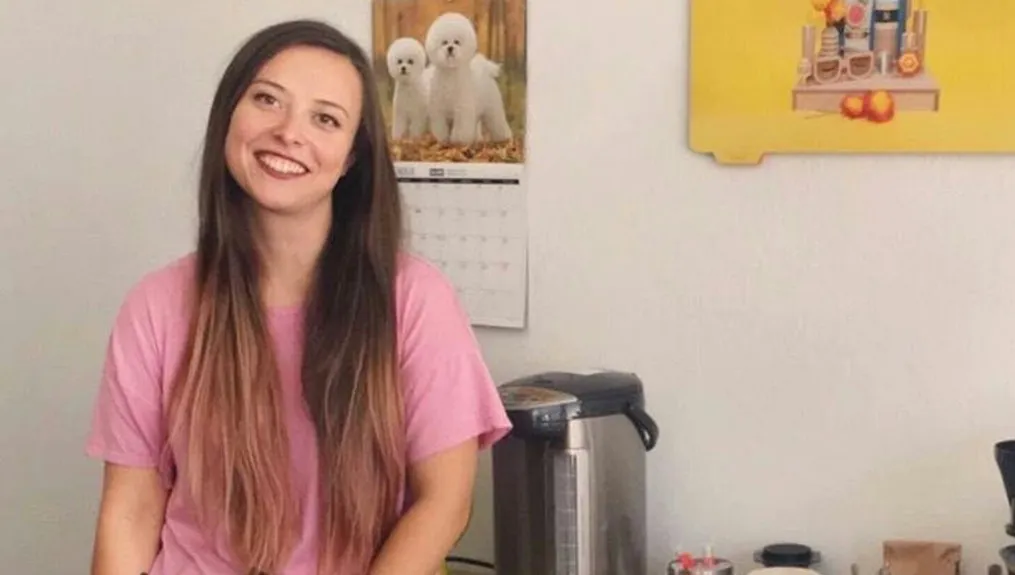
The studio takes its name from its owner, Sarah Veak, who launched it roughly a year and a half ago after years of study and internships in ceramics. Although her training was in fine arts—and despite what she describes as the fact that “functional pottery went out of style years ago”—Veak is drawn to objects that are artful yet made for daily use. “Honestly, one thing I love so much about what I do is being able to talk with the people who use my pieces,” she says. “I love hearing what they put in their bowl every morning, or how they like their coffee mug handles.”
When she first committed to making usable vessels, a friend in Nashville who kept a blog wrote about her work, which helped lift sales; not long after, she relocated to Denver to grow the business. “This city’s been great—lots of coffee shops and connections—and I’m really impressed with the local culture.”
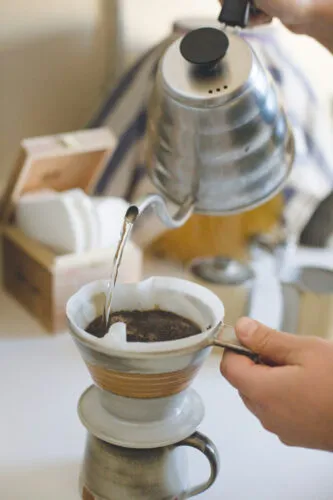
Veak recently developed a pour-over set modeled on the Hario V60, a design that has been drawing attention in the coffee world. “The pour-over uses a standard V60 filter,” she notes. “I wanted to create a piece that was clean in design, yet still had that handcrafted look. I use a carbon trap Shino glaze that tends to look different on every piece, creating a smoky look that complements the clean lines.” The pour-over will soon be sold online, she adds, and is arriving at Hey Rooster in Nashville, Amano in Minneapolis, and a number of shops in Denver. Because each one demands so much labor, however, she has no plans to produce them in large quantities in the near term. “At this point I am making them for the coffee lover who enjoys a good cup of coffee in the morning at home, and wants a delicious visual experience.”
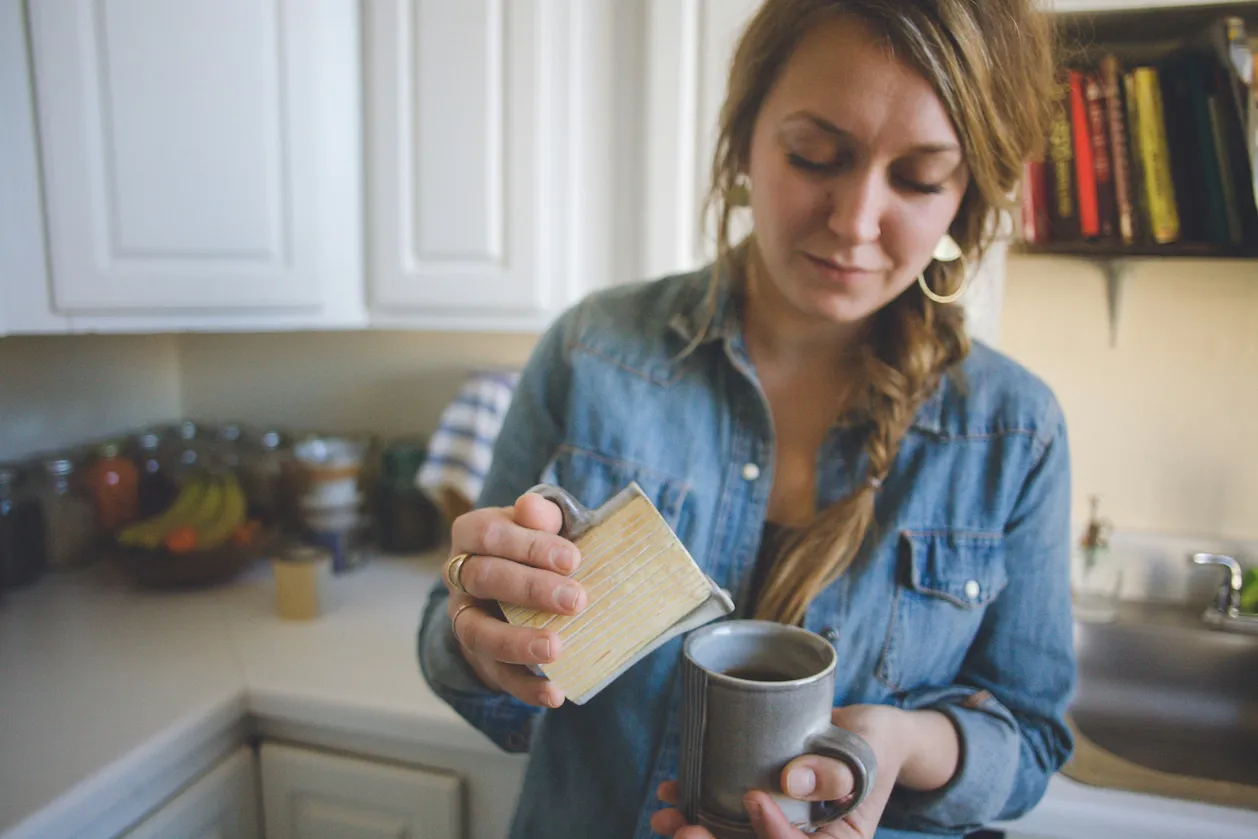
Each piece begins as a sketch. Veak then throws it on the wheel—she can turn out ten to fifteen an hour—and returns the following day to trim it. Decoration is done in the sgraffito style: slips are painted on while the clay is still slightly wet, then carved through to produce her characteristic graphic patterns. Bisque firing, glazing, and a final firing come next. The resulting look is rustic but exact, warm and playful at once. Veak started out in pottery under a wood-fired potter in Ithaca, New York, and later worked for a production potter. Her technique, she explains, is her own, though it rests on tradition.
She hints at future drinkware, including single-serving tea mugs with strainers and additional coffee pieces. For the time being, her capable hands will keep shaping the functional forms she has in mind—and finding pleasure in the work itself.