Q Grader Certification Under New Management: Industry Reacts with Concern and Cautious Optimism
The Specialty Coffee Association's takeover of the Q Grader Program from the Coffee Quality Institute has left many coffee professionals grappling with uncertainty about licensing, costs, and the future of a shared quality language. While some mourn the loss of a familiar standard, others see an opening for a more inclusive system.
By Blake Reed7 min read
A Surprise Announcement Shakes the Coffee World
Just before the coffee industry converged on Houston for the Specialty Coffee Association's (SCA) annual Expo, the SCA revealed it would assume management of the Q Grader Program from the Coffee Quality Institute (CQI). The timing—mere days ahead of the sector's biggest gathering—amplified the shockwaves.
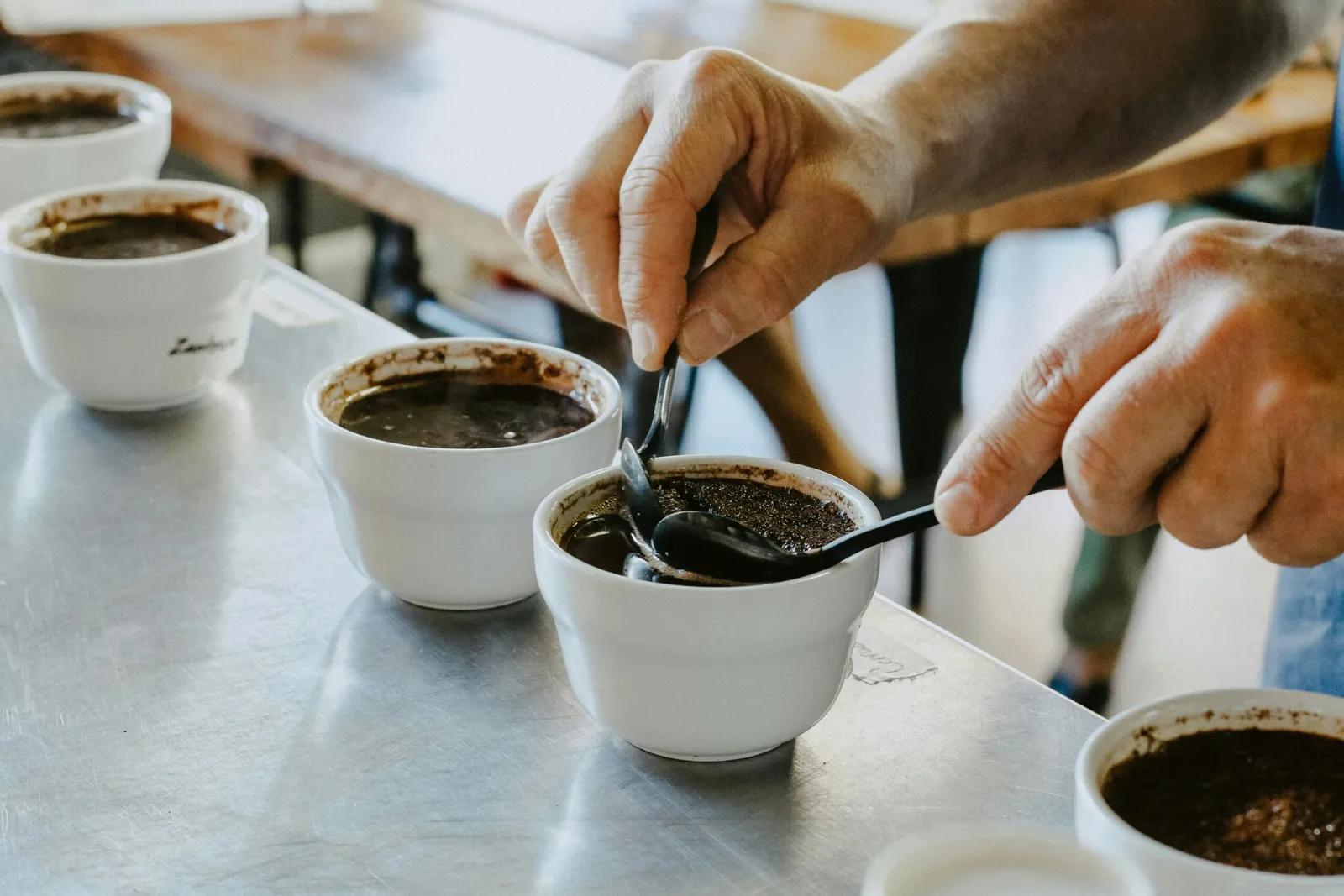
The Q Grader certification is an intensive professional training that equips coffee professionals with the sensory skills needed to assess coffee quality. Known simply as "the Q" in coffee circles, it has long served as a common yardstick, enabling everyone from producers to buyers to discuss quality across languages and borders.
In a press release, the SCA and CQI framed the arrangement as a "historic partnership." The SCA stated it would "evolve the content" of the Q Program to "provide better support and more accessible educational opportunities to the coffee industry." Moving forward, the certification will be anchored in the SCA's Coffee Value Assessment (CVA), which moves beyond the traditional single 100-point score to offer a more nuanced evaluation of coffee.
The news caught many off guard. Thousands of certified Q Graders worldwide learned that once their current licenses lapse, they must pass the new Evolved Q Grader Program exam to retain certification.
Reaction was swift and deeply divided. On the SCA's Instagram post, Q Graders flooded the comments with shock and dismay.
Behind the Deal
Conversations between the SCA and CQI about the Q Program's future had been underway for over two years. As reported by Nick Brown for Daily Coffee News, "competitive tensions" between the two organizations date back to at least 2022. CQI CEO Michael Sheridan told Brown that the two had been working "over the last year to reestablish dialogue and build some goodwill."
According to Brown, the agreement includes a 10-year licensing deal for the Q Program, with the SCA paying an annual fee of $250,000, plus a commitment to donate "5% of its education programming revenue to a fund to support CQI's international development work."
The SCA has been developing the CVA since at least April 2023, when it published a white paper reexamining the role and impact of coffee tasters. That paper argued for a broader understanding of the taster's role, noting that professional cuppers have evolved to both evaluate quality and communicate value to end consumers.
A beta test of the CVA followed, and in November 2024 the SCA formally adopted the standard, replacing the widely used cupping protocol and form from 2004. The old form allowed users to score a coffee out of 100; the CVA seeks a more comprehensive picture of a coffee's value by combining detailed sensory attributes with more subjective elements, such as the taster's personal preferences.
As Brown reported, uptake of the CVA has not been widespread so far. But its role as the foundation of the evolved Q, along with the SCA's recent agreements with the Colombian Coffee Growers Federation (FNC), the Brazil Specialty Coffee Association (BSCA), and the Specialty Coffee Association of Indonesia (SCAI) to integrate the cupping standards, is expected to drive broader adoption across the industry.
The New Q: What Changes for Graders and Instructors
The shift will affect many coffee professionals. More than 100 Q instructors operate worldwide, many of whom earn their living teaching the program. They have trained nearly 10,000 Q Arabica Graders in over 100 countries, from Afghanistan to Zimbabwe.
Becoming a certified Q Grader requires an intensive six-day course with 20 exams across nine modules. The certification can cost thousands of dollars, and failing the first time—which many do—adds further expense.
The SCA says part of its push is to make certification more affordable: "The SCA has created lots of options for Q Graders to integrate CVA into their expertise easily and inexpensively," the organization said in an email response. Last week, the SCA announced a new tiered pricing model, meaning costs for its education programs will vary by country.
Earning the Evolved Q Grader license, as the SCA calls it, will involve learning "practical techniques in sensory evaluation, green coffee defect identification, and quality control in a robust, research-informed curriculum." Existing Q Graders will retain their status until their certificates expire and are eligible for a fast-track course to obtain the Evolved license.
Shock, Loss, and a Glimmer of Hope
The announcement stunned many. "My initial reaction was heartbreak," says Traci Armstrong, a Q instructor based in South Carolina. "Even though I did not have any details around the news, I knew it ultimately meant the end of the Q as we know it. As a newish instructor of only two years, I felt like my prior years of striving for this goal to reach the coveted Q instructor status had been in vain."
Shaun Ong, a consultant and Q instructor in Singapore who works with clients across the supply chain, has been incorporating the new model into his education business. As a CVA Ambassador, Ong was an early adopter of the updated standards and has been gauging reactions from fellow instructors and clients.
"There's a lot of people in the industry that are very shocked right now, but it is important to highlight that there's a spectrum of people," Ong says. "On one end of the spectrum are people that are not affected, and on the other end are people that are terribly, terribly affected. We are talking about career loss."
Ruth Ann Church, a Q Grader and founder of Artisan Coffee Imports in Michigan, believes the Q system in its current form serves the industry well. "I think the rigor of the Q Grader serves a purpose for helping us have some credible language, a language that our industry speaks today," she says.
Nico Herr, COO of exporter Mountain Harvest Coffee in Uganda, echoes that view, emphasizing how vital Q Graders are for communicating coffee's complexity across countries and languages. "Together, we developed a rhythm—a global lexicon of what 'quality' means," she says. "The Q was our common language. It gave us a place to begin. Now that shared language has been taken away."
Church also points to how deeply the 100-point scale has permeated consumer communication: "Even Whole Foods, in their little blurb on the back of the coffee bag, is explaining to consumers that there is a 100-point scale, and assuring them that their coffee is in this specialty coffee range that is above 80. That's how pervasive the Q Grader is."
Now, she says, that has been discarded. "It's biblical proportions, right? This is the Tower of Babel. The SCA is going to, single-handedly, make it so the entire specialty coffee world that could speak a single language can no longer communicate."
Others take a more measured view. "My initial reaction was a mix of confusion and frustration, but also curiosity and reflection," says Camila Khalifé, a coffee quality specialist and CQI instructor based in Ecuador. "I think it's long overdue that we rethink who gets access to knowledge, credentials, and teaching roles in coffee education. So while I have some reservations about how this change is being handled, I also see potential in evolving toward a more inclusive and accessible system."
The SCA, in an email response to questions, said it has received "a tremendous amount of positive response from our announcement, particularly from those who have historically felt excluded from the Q due to its expense and exclusivity. They are excited by the possibility of a more accessible evolved Q, which SCA has committed to deliver. We hope they hold us accountable to this commitment."
What Lies Ahead
Starting October 1, 2025, CQI will no longer be involved in the Q Program, with management passing to the SCA. According to the SCA, this "allows CQI to focus on its core mission—producer-side development—and allows SCA to integrate the Q into our wider education mission."
With the FNC, SCAI, and BSCA having struck deals to incorporate the CVA into their operations, adoption of the Evolved Q is likely to keep expanding. Ong and others are already hosting CVA classes in anticipation of the switch. For Armstrong, who wants to remain in coffee education, the Evolved Q is a means to an end; she says she will take the fast-track course. At the same time, she notes, "I will likely continue to develop my own curriculum that can be offered at an affordable price and explore what the folks in my community want to learn."
Khalifé sees the current moment as a chance to pause and reflect. "While I believe the CVA still has a long way to go, with absolutely needed improvements and considerations, at least it feels like a more accessible system for people from different backgrounds and adaptable to coffees with different characteristics," she says.
"Much of the perceived value of the Q came from how exclusive and difficult it was to access," she continues. "So if the new system can be more inclusive without compromising rigor, and if it includes the perspectives and expertise of professionals from producing regions, I am definitely curious to see where it takes us."