Does the Q Grader Credential Pay Off for Baristas?
The value of pursuing Q certification hinges on your career goals and what you hope to gain from it.
By Finley Green4 min read
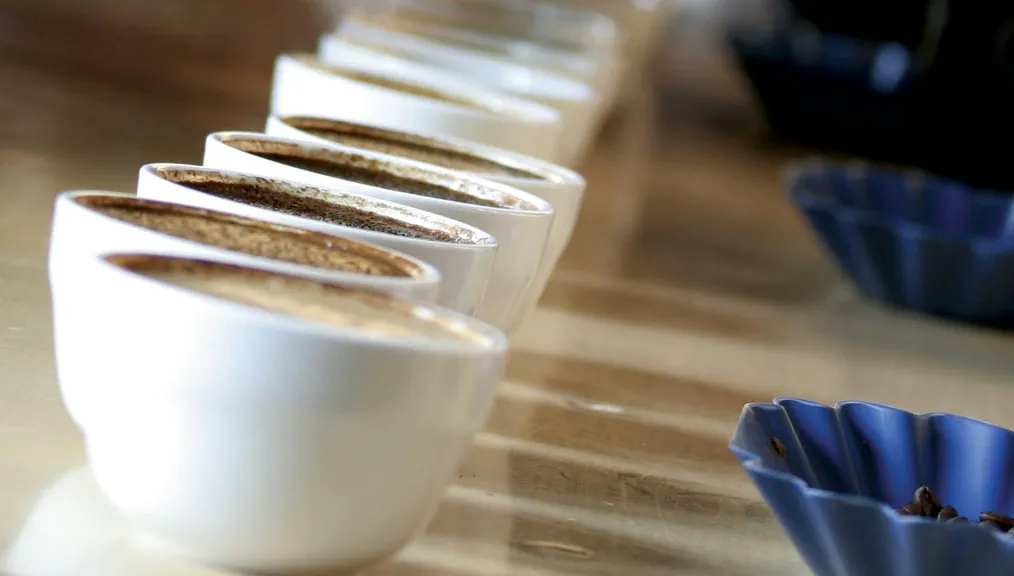
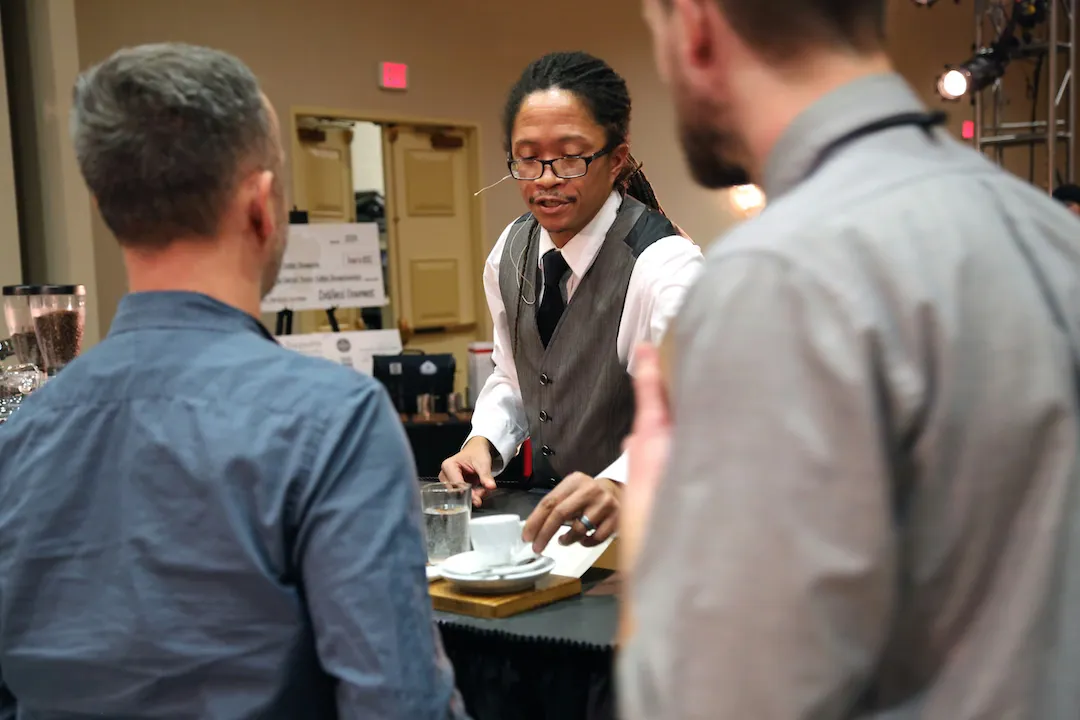
Six triads of cups sit lined up on a table. Within each trio, two cups hold the same coffee and the third holds a different one—and every coffee on the table comes from a single region and was processed the same way. Using only a cupping spoon and their senses, Q grader candidates must correctly identify the odd cup in no fewer than five of the six trios.
That exercise—separating the impostor from its lookalikes—is called triangulation, and triangulation tasting is one of twenty exams required for the Q grader license. More than 4,000 people worldwide hold the credential, which is issued by the Coffee Quality Institute (CQI) and generally regarded as the most authoritative certification in specialty coffee. As the CQI website puts it: “Certified Q Graders are professionals skilled in sensory evaluation of green coffee.” The site adds that “By setting global expectations, CQI helps both buyers and sellers benefit through a shared understanding of quality coffee.”
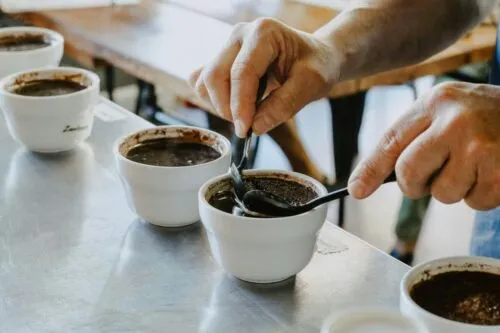
In plain terms, the Q program teaches people in coffee a standardized method for judging and describing what is in the cup. Q graders often use the word “calibrated” to explain what the process gives them—a shared baseline for communicating what they perceive while tasting.
From the moment I first learned about the Q course, I knew I wanted to enroll. My own decision was simple. Baristas weighing whether to add a certification to their résumé, however, have a lot more to think through.
Climbing the Ladder
Salaried positions are scarce in coffee, so plenty of driven, rising professionals have looked to credentials such as the Q license to strengthen their standing and create new options.
“Taking the Q Course can be beneficial to almost everyone in the coffee industry,” says Jodi Wieser, a Q instructor and co-founder of Gather Coffee. Wieser and business partner Marlee Benefield run Q courses at Specialty Coffee Association-certified labs around the world, from Paris to Tulsa. Wieser, who has judged Best of El Salvador, Best of Panama, and the Good Food Awards, gives her Q license credit for advancing her own career.
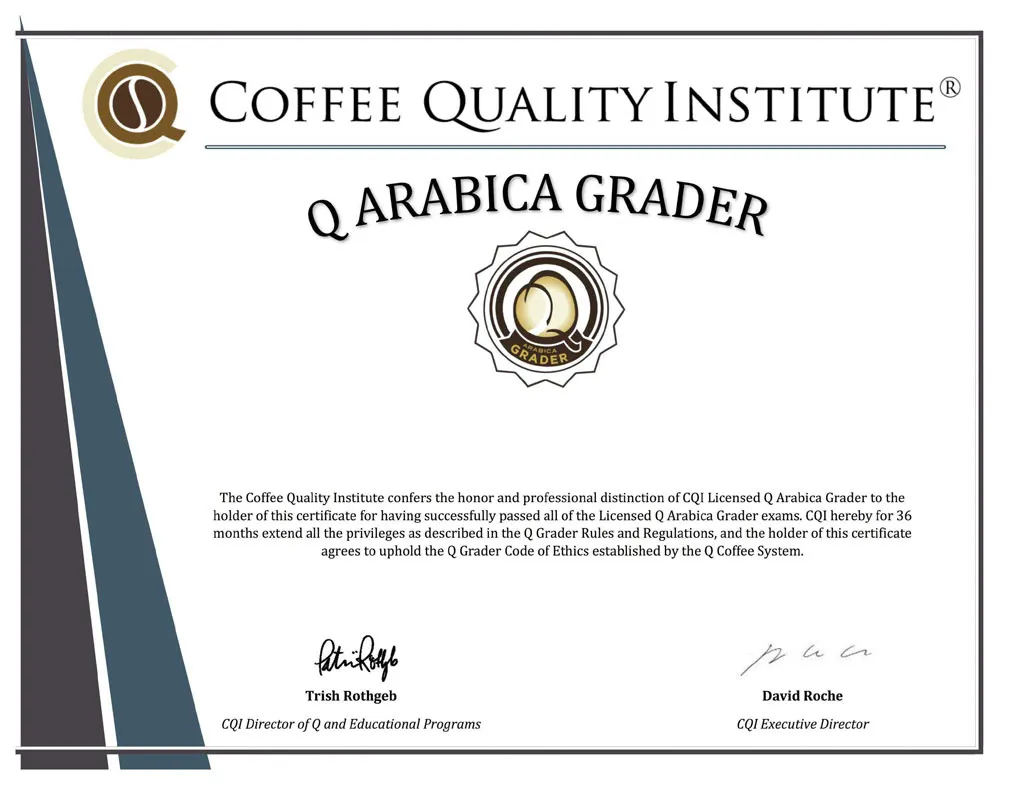
For Wieser, the certification works as a shorthand that signals your coffee background to peers. “If I am conversing with a fellow coffee professional and they mention they’re a Q grader, I immediately understand what they’ve been through to receive the certificate,” she says. “I know they’re not only calibrated with the specialty coffee industry but also familiar with SCA protocols and standards. They understand quality assessment and the importance of conveying an objective analysis about the coffee.”
The Q licensing process has a reputation for difficulty—more than 75 percent of candidates fail on their first try. Wieser argues that the hurdle should not stop young coffee professionals from making the attempt. “Anyone can take the Q course and should do it as early as possible in their career,” she says. “This allows you to be calibrated with the rest of the industry that much sooner.”
Wieser does not treat coffee evaluation as the territory of a small band of super tasters. “I believe most people can learn how to identify what they are smelling and tasting,” she says. That is precisely what the instructional side of the Q course is designed to do.
Between practice exams and teaching sessions, candidates study SCA cupping protocols ahead of the Q grading certification. Whether the topic is the correct Agtron reading for a sample roast or the organic acids present in coffee, even participants who leave without the license come away with a substantial body of coffee knowledge.
Is the Cost Justified?
At a price in the thousands of dollars, a Q course stays out of reach for plenty of baristas. Certified labs are sparse, and travel, lodging, and time away from work become prohibitive obstacles for many aspiring coffee professionals. Some in the industry even question whether the certification is needed at all.
“Most of the skill set happens on the job,” says James Tooill, director of La Colombe Torrefaction’s Workshop line.
Tooill won the 2015 US Cup Tasters Championship—a competition centered on triangulation tasting—without holding any CQI or SCA certification. “Certifications can help you get that job, but I think there are other ways [to get where you want to go], be it competitions, self-funded travel, or just being very engaged at work,” he says.
Tooill acknowledges the value of a Q license and similar programs, but he charted a different route. “I decided it wasn’t the best use of my money,” he says. “If you see a job posting with a required certification, by all means, get that certification if you want that job. We might see more openings that require certifications in a more mature market.”
Wieser, though, sees reasons to pursue the Q that reach past career advancement. “At every level of the value chain, we are assessing quality in one form or another,” she says. “Becoming a licensed Q grader gives one the ability to assess quality with confidence knowing he or she has been trained and is calibrated with the rest of the specialty coffee industry.”
My own career did not change dramatically after I earned the license. Nobody flies me to coffee farms, and nobody pays me large sums for my opinion. If anything, the experience showed me how much I still have to learn. Still, I trust my senses more when I evaluate a coffee, and I folded much of what I studied into the training program at Quills Coffee, where I work.
Will a Q license hand you your dream job? Probably not. Will the course leave you better off? Absolutely.