Crema.co: A Coffee Subscription Built Around Freshness and Farmer Stories
The platform connects drinkers directly with independent roasters and offers three freshness tiers, aiming to make coffee more personal.
By Jordan Hill3 min read

From Costa Rica to a London Café: The Inspiration Behind Crema.co
Tyler Tate’s idea for Crema.co—a subscription service that emphasizes relationships—took shape eight years after he spent a summer in Costa Rica working alongside coffee farmers. Picking coffee, observing processing, and experiencing the value chain from the grower’s perspective gave him a new outlook as a consumer, he says. But the specific concept came later, during a visit to Flat White in London.
“I was at Flat White in London, and I went up to order my coffee. They had a blackboard behind the counter that described their coffee of the week. I think it was a Costa Rica Tarrazu, and the elevation, farmer name, and tasting notes were listed. That’s when I first thought how great it would be if there were an online marketplace where you could go and explore coffees based on those criteria. That’s my inspiration for Crema.co.”
That focus on origin and farmer connection, along with Crema.co’s distinct structure, sets the service apart in a crowded subscription market.
A Background in Design and Technology
Tate’s professional experience lies in design and technology. He specializes in making it easy for people to navigate large amounts of information or products, and he has worked with tech startups over the years—experience that positioned him well to build the Crema.co platform, which was set to launch in Summer 2015.
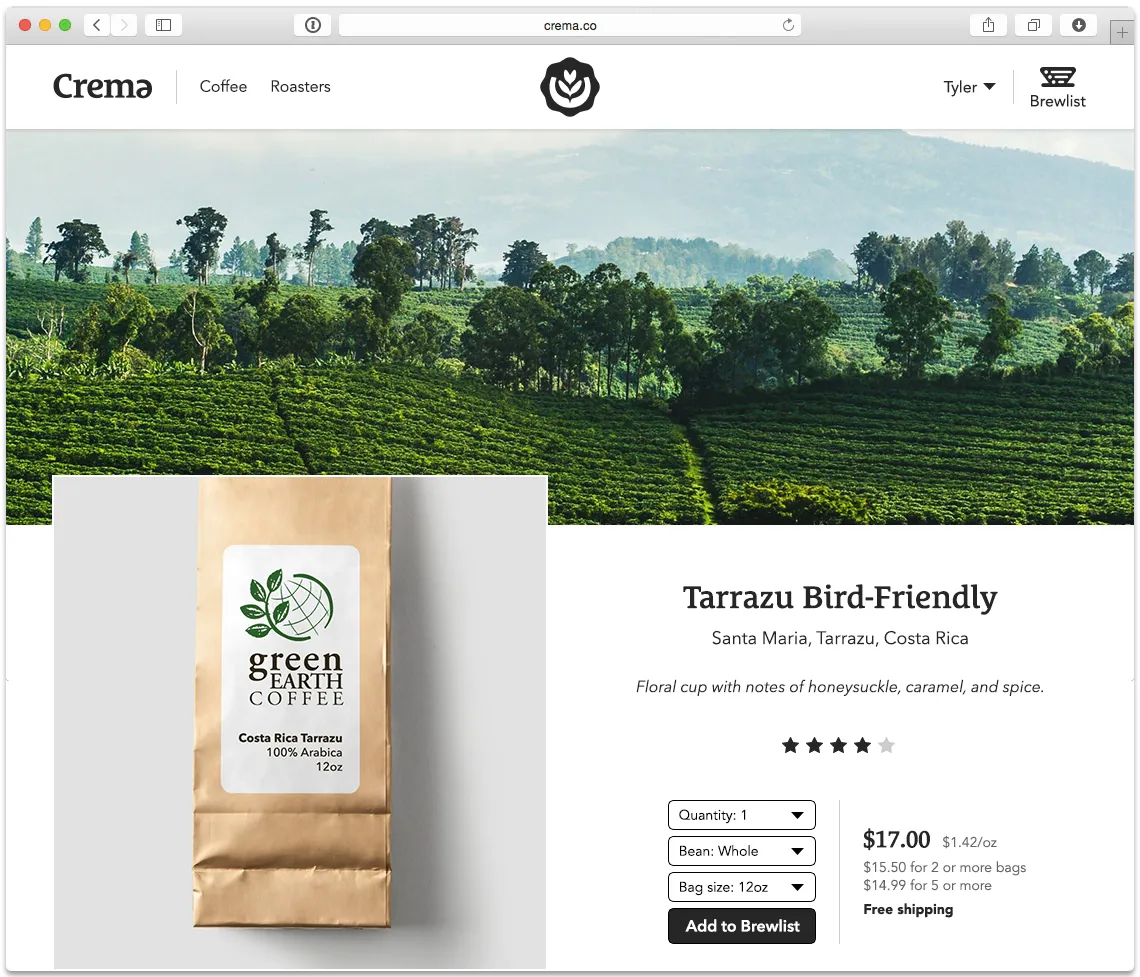
Choosing a coffee on crema.co.
A Direct Marketplace for Roasters and Drinkers
“Crema.co is a place where independent coffee roasters can go to list their coffees for sale, and coffee drinkers can buy their coffees directly from the roaster,” Tate explains. Many subscription services offer only a single coffee, or they buy from roasters, repackage the beans, and ship them to subscribers. For a product like coffee, where freshness is critical, that model has drawbacks—roasted coffee can begin to stale before the customer even starts drinking it.
Tate is still finalizing the standards for accepting roasters (he is working with an unnamed Q grader), but he stresses that subscribers will have three tiers of guaranteed freshness. “Top tier will be the coffee in the consumer’s hand within three days of roasting.” The other two tiers have somewhat more relaxed shipping standards, and customers will be able to choose their preferred freshness level. Another criterion for inclusion will be a focus on direct-trade sourcing and single-origin offerings. Tate plans to keep farmers central to the subscription through storytelling and dynamic content from roasters. He adds, “Another interesting aspect of Crema.co is our goal to engage consumers with the growers, and make coffee much more personal than it’s been for many.”
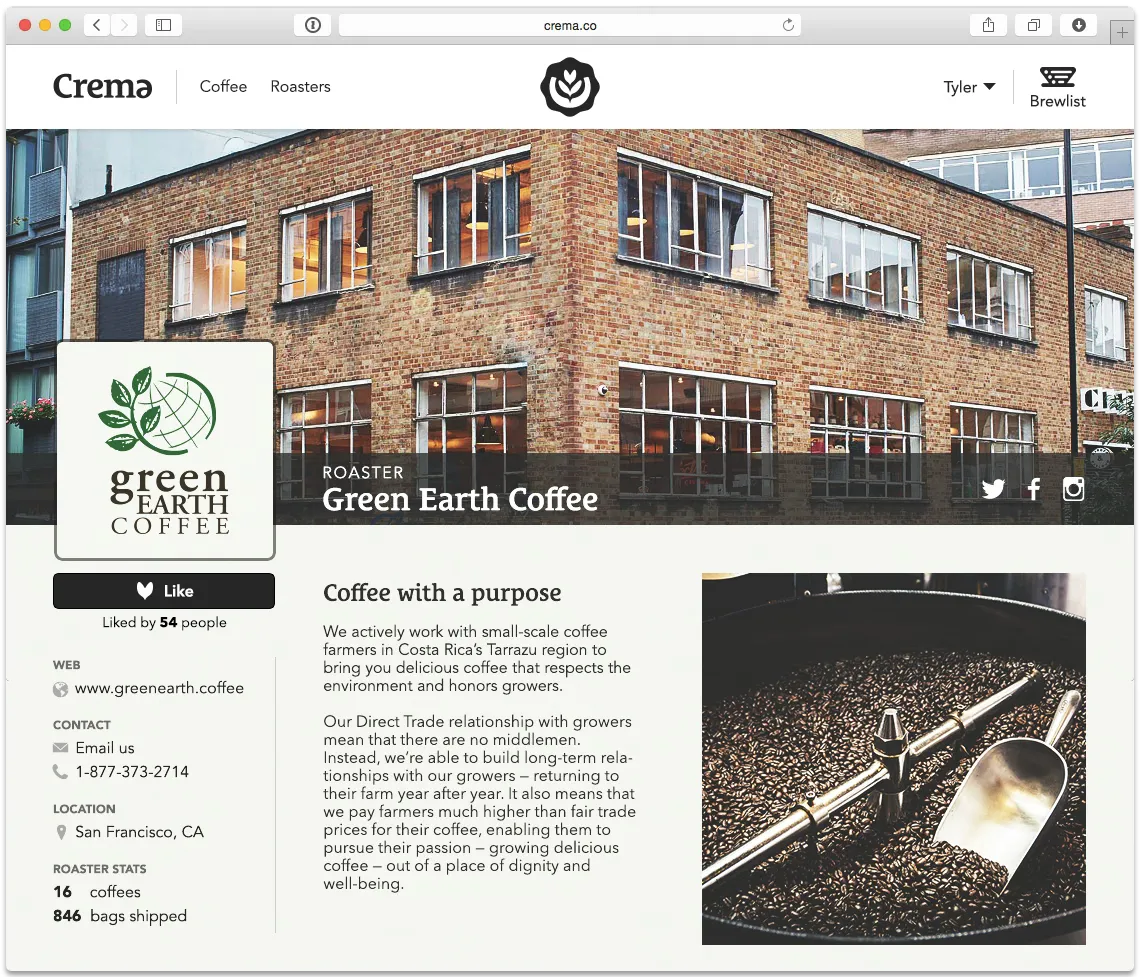
The crema.co Roaster page.
A Brew List and Reviews
Crema.co will include a “Brew List” that works similarly to a Netflix queue: subscribers can select their next coffees based on various criteria, then set how often they want to receive deliveries—whether every three days or every nineteen. They will also be able to leave reviews for roasters and coffees.
Roaster Criteria and a New Sales Channel
Roasters will be selected based on taste, a commitment to freshness, and a willingness to put the grower front and center in storytelling. For many roasters accustomed to selling at wholesale prices, the opportunity to list coffees in a dynamic forum at retail prices—while paying twenty percent of proceeds to Crema.co—offers higher margins and a new sales platform. “Crema.co is basically a new sales channel for roasters to get their coffees in front of coffee consumers,” Tate says.
The timing appears favorable: consumers are increasingly learning about the coffee value chain and taking charge of their coffee choices, and more micro roasters are focusing on quality and direct-trade sourcing. A recent Kickstarter campaign for Crema.co succeeded, with the site chosen as a Kickstarter Staff Pick and featured in Food & Wine and other publications. Crema.co will roll out first in the United States, then the U.K. (Tate has lived in England for six years), and then throughout Europe.