Coffeehouses as Incubators of Revolt: A Historical Overview
From Istanbul to Paris to Boston, the coffeehouse has served as a gathering place where ideas of rebellion and self-determination percolated, sometimes with explosive consequences.
By Rowan Davis5 min read

Revolutions often bring to mind scenes of combat and bloodshed, as depicted in vivid paintings and films. Yet every revolution has a planning phase, a time when people convene to exchange ideas and debate tactics. Hollywood rarely dramatizes this aspect, but such planning must occur somewhere. For centuries, much of it has taken place within the walls of coffeehouses, a warm drink in hand.
Coffee was first brewed in Yemen and later became a popular commercial beverage in the Ottoman Empire. From there, it spread westward across Europe along the same routes that had earlier carried mathematics, surgery, and toothbrushing. Even in its early days, coffee was a communal experience, a trait that only intensified as coffeehouses became a favored way for people to gather in their leisure time.
The caffeine that stimulated the mind soon stimulated seditious conversation. Here are three (and a half) such moments in history.
Coffee's First Revolution: The Ottoman Empire
Coffee's troubles began in the Ottoman Empire. The first modern coffeehouses appeared in Istanbul around 1550. Because practicing Muslims traditionally avoid alcohol, the coffeehouse quickly became a cornerstone of social life, and by 1600 there were an estimated 600 coffeehouses in the city. Men (not women) could gather away from mosques, workplaces, and markets to exchange information and learn from their peers.
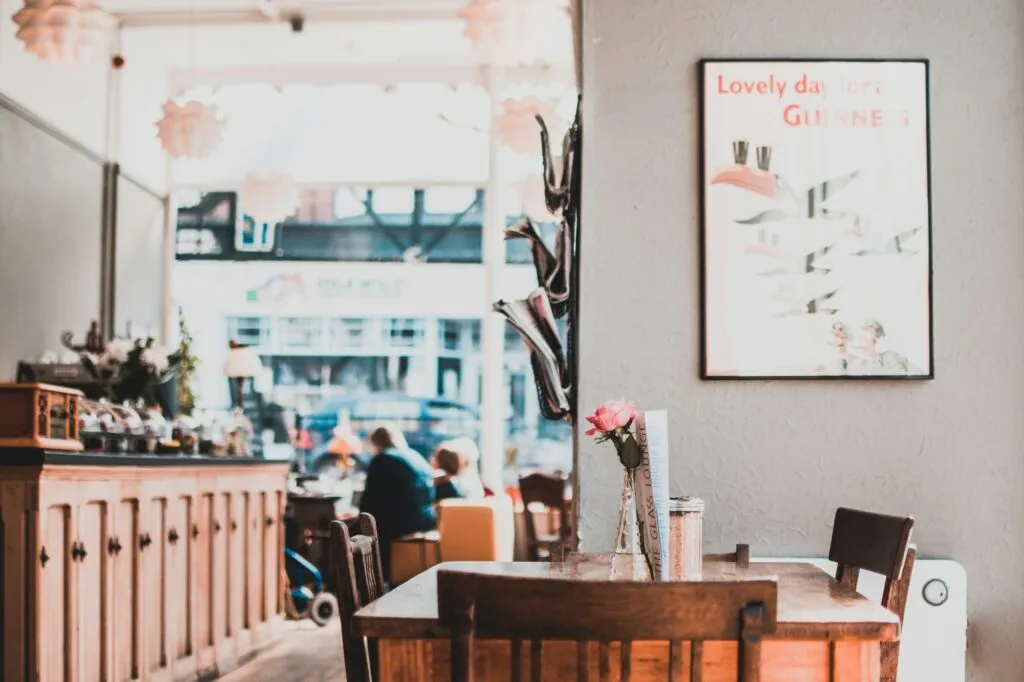
Along with coffee and education came an erosion of social norms. Coffeehouses were an egalitarian space unusual for the time—any man could enter as long as he could afford a beverage. Since coffee was relatively cheap, it allowed for an unprecedented mixing of social classes. Illiterate commoners could learn from literate scholars; members of the court could discuss intrigue with Janissaries, the Sultan's elite infantry units. Brought together in this way, it is unsurprising that socioeconomic groups once pitted against each other for the ruling class's gain suddenly found common ground. Dr. Sarah Jilani wrote in The Economist that coffeehouses introduced many to “rebellion, self-determination and the fallibility of the powerful.”
Sultan Murad IV decreed drinking coffee a capital offense in 1633, just 80 years after the first coffeehouses opened in Istanbul. He was so committed to this law that he was known to disguise himself and prowl the city, beheading people he caught drinking the beverage with his broadsword. Just 11 years earlier, his brother, Sultan Osman II, had been killed by his own Janissaries, an assassination they had planned in a coffeehouse. Osman II had tried to ban the Janissaries from going to coffeehouses, but the Janissaries retaliated by strangling him instead. Murad IV was not about to gamble his life against this beverage.
Subsequent sultans followed his lead. Until the collapse of the Ottoman Empire in 1922, sultans watched coffeehouses carefully, installing spies and issuing occasional bans on coffee whenever they felt that unrest was reaching a critical point.
But they could not cover them all. Jilani traced at least three separate successful revolutions against the Ottomans to coffeehouses: “Nationalist leaders planned their tactics and cemented alliances in the coffee houses of Thessaloniki, Sofia, and Belgrade. Their caffeine-fuelled efforts succeeded with the establishment of an independent Greece in 1821, Serbia in 1835, and Bulgaria in 1878.” Like coffee itself, the egalitarian nature of coffeehouses spread, leading to more equitable forms of governance.
Enlightenment Rebels: The Revolutions Against France
When King Louis XIV welcomed Sultan Mehmet IV's ambassador Suleiman Aga to Paris in 1669, he could never have known that the gift of coffee trees the sultan sent would instigate the downfall of his great-great-grandson, Louis XVI, over a century later.
It was in Café Procope, opened in 1686, where philosophers cut their teeth on Enlightenment ideals. Rousseau, Diderot, and Voltaire were all frequent customers (Voltaire is said to have consumed up to 100 chocolat chauds, or a French version of hot chocolate, a day), and they put together ideas that would threaten European monarchies for centuries.
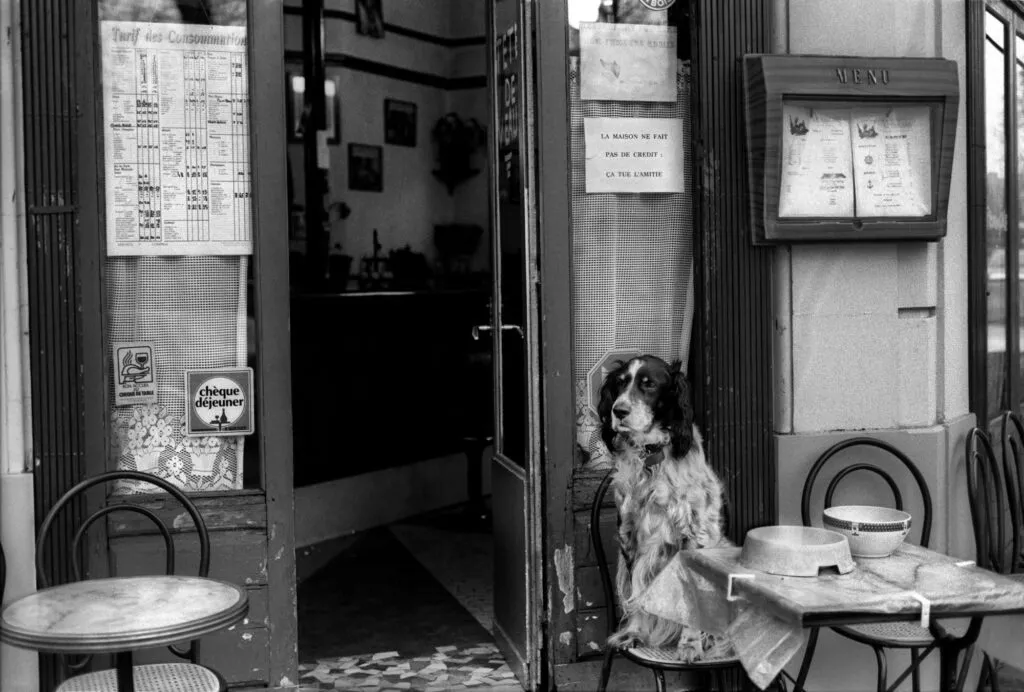
Indeed, about a hundred years later, Parisians acting on Enlightenment theories gathered at Café de Foy on July 14, 1789, before storming the Bastille prison to free seven political prisoners. The successful takeover ignited a powder keg of discontent building in the city without check. The resulting French Revolution transformed France from a monarchy to a democracy. Today, the French still celebrate the anniversary of the storming of the Bastille as the beginning of modern France.
As coffee grew in popularity alongside Enlightenment philosophy in the 18th century, it depended on an economy based on colonial subjugation and slavery. France had to establish coffee plantations within its colonial holdings to keep up with demand. They planted especially across Sainte-Dominique, today known as Haiti.
With colonial power trickled in French Enlightenment ideals. Enslaved people, many of them forced to work on coffee plantations, rose up and demanded their freedom from France. The Haitian Revolution took 13 years but resulted in the first country established by formerly enslaved people.
Coffee and Anti-British Sentiment
When colonial rebels threw tea into Boston Harbor in 1773, as a stand against British policy, which we remember as the Boston Tea Party, revolutionaries in the new America had to find another beverage to consume. Much like when Noah Webster dropped the ‘u’ from American spelling while creating his famous dictionary to symbolize his passion for freedom from the English, coffee became the beverage for forward-thinking revolutionaries. To drink coffee was to be patriotic.
Coffee continued to find itself interweaved with patriotic ideals. Two years before the signing of the Declaration of Independence, Benjamin Franklin is said to have sat in London's Smyrna Coffee House to write his “Open Letter to Lord North,” a satirical letter questioning England's tight-fisted rule of the colonies.
An early draft of the Declaration of Independence was read aloud on the steps of Merchant Coffee House in Philadelphia. Patriots eager to break away from England were known to gather in the Green Dragon, a coffee house and tavern in Boston. The Green Dragon was such a central location for revolutionary activity that it became known as The Headquarters of the Revolution. Some suggest that the Boston Tea Party, which drove the association of coffee with freedom, was planned in Green Dragon's basement.
These are just a few examples. Coffee played a pivotal role in Brazil's 1930 Revolution—partially sparked by the coffee price collapse. Coffee also impacted social revolutions: Scientists gave demonstrations in coffeehouses; poets read their work in coffeehouses and destabilized traditional forms; and Beethoven wrote music in coffeehouses.
Some might argue that the internet has supplanted coffee's role in gathering political dissidents, but the beverage's ability to stimulate thought has not. Somewhere in a café right now, the next great idea might be brewing.