Why Paid Time Off Matters for Hourly Coffee Workers
Baristas and other hourly coffee employees often lack paid time off. We examine the data, the health effects, and what some businesses are doing about it.
By Reese Scott6 min read
During my eight years working behind a coffee bar, I was employed by five different coffee companies. Only two of those five provided paid time off to baristas. In each case, the benefit amounted to three days, with the explanation that our flexible schedules allowed us to arrange any other time off we needed. The notion that I could take time away from work without losing pay felt both novel and uncommon.
Paid time off (PTO) refers to time an employee can spend away from work while still receiving wages. It is distinct from paid sick leave, and most employers maintain separate policies for each. These are also separate from parental leave—time taken when an employee or their partner cares for a new child—and the amount of parental leave varies by company. In research, the three are frequently grouped together as “paid leave” or “unpaid leave,” yet each type carries different conditions.
Despite these distinctions, many hourly workers receive no optional paid time off at all. This can undermine worker wellbeing, hurt productivity, and have negative consequences later in life. It may be time to ask why.
The Current State of Paid Time Off in the US
This article focuses on PTO in the United States, since policies vary widely from one country to another. The situation in the US is grim: it is one of only a few countries worldwide without federally mandated paid time off policies—the others being Monrovia, Sri Lanka, and North Korea. All PTO policies are set at the discretion of individual employers.

As of 2018, according to the US Bureau of Labor Statistics (BLS), “only 66 percent of wage and salary workers had access to paid leave.” Unpaid leave was available to 78% of workers, meaning they could take a limited amount of time off without being fired but would not be paid during that period. COVID-era leave policies caused these percentages to fluctuate in recent years, but they are returning to their pre-COVID norms.
Access to paid time off is uneven across the workforce, and higher-paid employees generally receive more of it. BLS data shows that among the top 25% of earners, 86% had access to paid leave; among the lowest 25%, only 57% did. This is a significant problem because lower-wage workers are less likely to be able to afford unpaid time off.
The same report found that 15% of workers did not take the time away from work they needed because they could not afford the loss of income. The BLS went further and surveyed workers who wanted to take days off but could not, asking why they needed time away. More than half of respondents said they needed to care for their own health or a family member’s health.
In the US, lower socioeconomic status is linked to worse health outcomes. The high stress of low wages can create health problems that would benefit from rest, but current conditions prevent the people who most need time off from comfortably stepping away. This is where coffee shops come in.
How Could Paid Leave Help Hourly Coffee Workers?
Many hourly coffee positions are notoriously hard on the body: baristas, dishwashers, bakers, production assistants, and others must stand for long hours and perform repetitive motions. Prolonged standing (defined in this study as two hours or longer) can lead to dangerous health problems, including back pain, leg pain, cardiovascular issues, low birth weights, and miscarriages—and the risks persist long after the job ends. Hundreds of repetitive stress injuries can affect workers’ bodies long after they leave a manual labor job.

Shift work disorder is a sleep disorder caused by working hours that fall during typical sleeping times, or “any shift that falls outside the hours of 6 am and 7 pm.” Many coffee jobs take place outside this window, and coffee workers also deal with changing shift times—for example, a barista might open one day and close the next, forcing frequent adjustments to sleep patterns. Shift work disorder causes insomnia and unrestful sleep; the average person with the disorder loses 1–4 hours of sleep per night. Lack of sleep leads to numerous health problems and lower productivity at work.
Vacation time, however, is known to improve cardiovascular health and reduce stress, and it is also known to reset sleep patterns and help people catch up on sleep debt. Paid time off allows employees to recover from daily stress and prevents burnout, which is extremely high among hospitality workers. In fact, during the Great Resignation, 6% of all hospitality workers quit their jobs, compared with an average of just 2.9% across all industries. The pressures of hourly coffee jobs—considered ‘frontline work’ during the pandemic—have grown as workers navigated inflation and mask mandates without paid time off to recuperate. Hundreds of thousands left their jobs as a result.
Businesses are suffering because of this. 10% of hospitality jobs remain unfilled, meaning productivity is down, shifts are being cut, and current workers are under stress to make up for missing team members. It is time for coffee businesses to consider better benefits to retain employees.
Benefits In Practice
Paige Brown, a barista at La Colombe in Los Angeles, spoke about the benefits of the company’s paid time off policies for hourly workers: “I have used [PTO] to visit family… in places like LA and New York, a lot of baristas are not from that area, so it’s nice that they can go home” without risking financial insecurity.
Baristas without paid time off often have to make considerable sacrifices to see family, particularly if they must travel. The PTO policy at La Colombe is determined and accrued based on hours worked, and Brown describes how it feels at jobs where baristas don’t have PTO: “You think about it, dream about it, cry about it, but you can’t have it.” Most baristas already earn wages that put them right at the poverty line; missing a day of work means losing money, which can be an unacceptable trade-off.
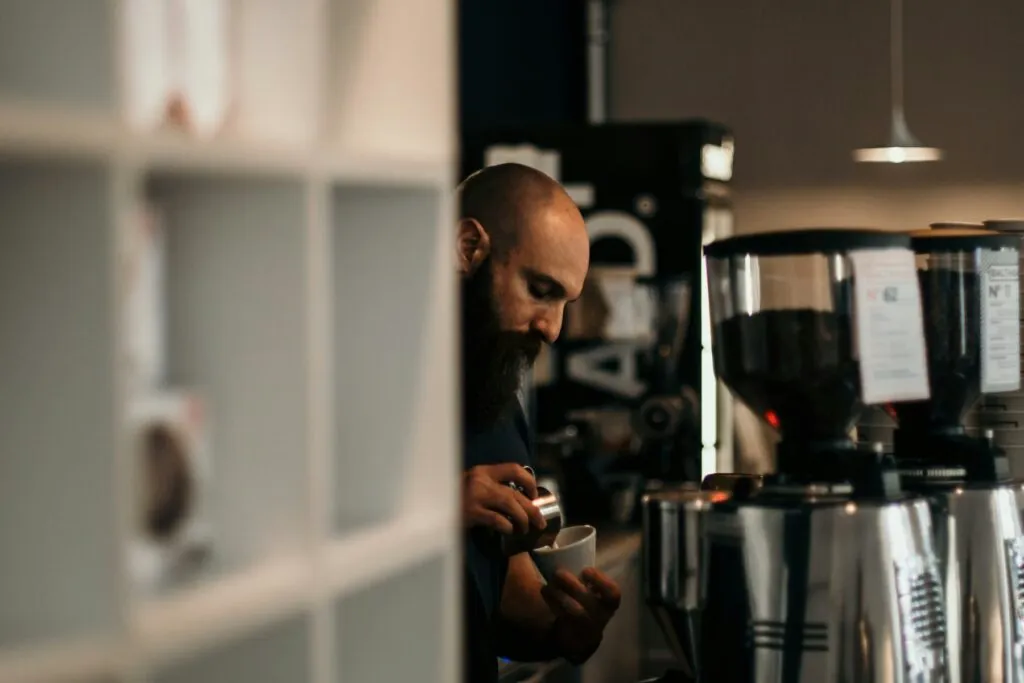
“I love my job but need recovery time. Being a barista is exhausting,” Brown says. “Maybe we don’t have 50-hour weeks most of the time, but it’s a physically and emotionally demanding job. It’s been helpful to take [a day] for me when I need it.”
Loving a job shouldn’t require suffering or giving up everything else. Paid time off can empower baristas to continue a job they love without sacrificing relationships and mental wellbeing.
The PTO Bottom Line
Business owners tend to worry about how paid time off affects the bottom line. But numerous studies show that paid leave benefits both businesses and workers.
California’s statewide Paid Family Leave policy requires that workers receive paid time off to help a sick family member or to bond with a new child. Employees can take up to eight weeks off and earn between 60–70% of their wages.
Before the law was enacted in 2002, employers “vigorously opposed the legislation” because they worried about bankruptcy or seeing productivity dip (or both). But in 2014, President Obama’s Council of Economic Advisors surveyed 253 employers in California and found that “the vast majority – over ninety percent – reported either positive or no noticeable effect on profitability, turnover, and morale” due to the leave.
Additionally, companies that offer health insurance but not paid leave might be shooting themselves in the foot. When employees take paid leave, their healthcare costs go down. This is probably because paid leave is directly related to higher socioeconomic status and more time to decompress from the day-to-day stresses of work, which helps workers avoid health problems in the first place. Employers can save on healthcare costs by encouraging employees to take time off.
Extended time off makes people better workers. PTO boosts brain power, reduces stress, and increases job satisfaction. Employers with paid leave policies see higher retention rates and more productive employees. Currently, depressed wages and an absence of paid leave policies contribute to instability and high turnover throughout the coffee industry. Hospitality workers cannot afford to take unpaid leave: 43% already live below the poverty line. Losing a week of wages can risk everything.
Cover photo by Daniel Norris