Beyond the Mug: How Coffee and Tea Shops Turn Brand Love into Shelf Space
Three shops on two continents show how pins, candles, and playful slogans can extend a cafe's identity past the cup—and why small, useful souvenirs often outperform the obvious standbys.
By Finley Campbell4 min read
When customers love a coffee or tea brand enough to seek out its logo goods, those products can double as marketing and lift the average transaction value. Logo mugs and tees are the default, yet some operators have branched into pins, candles infused with tea, and other less predictable items.
Below are three distinct merchandising models from coffee and tea shops in different parts of the world.
Spill the Beans
San Diego, California
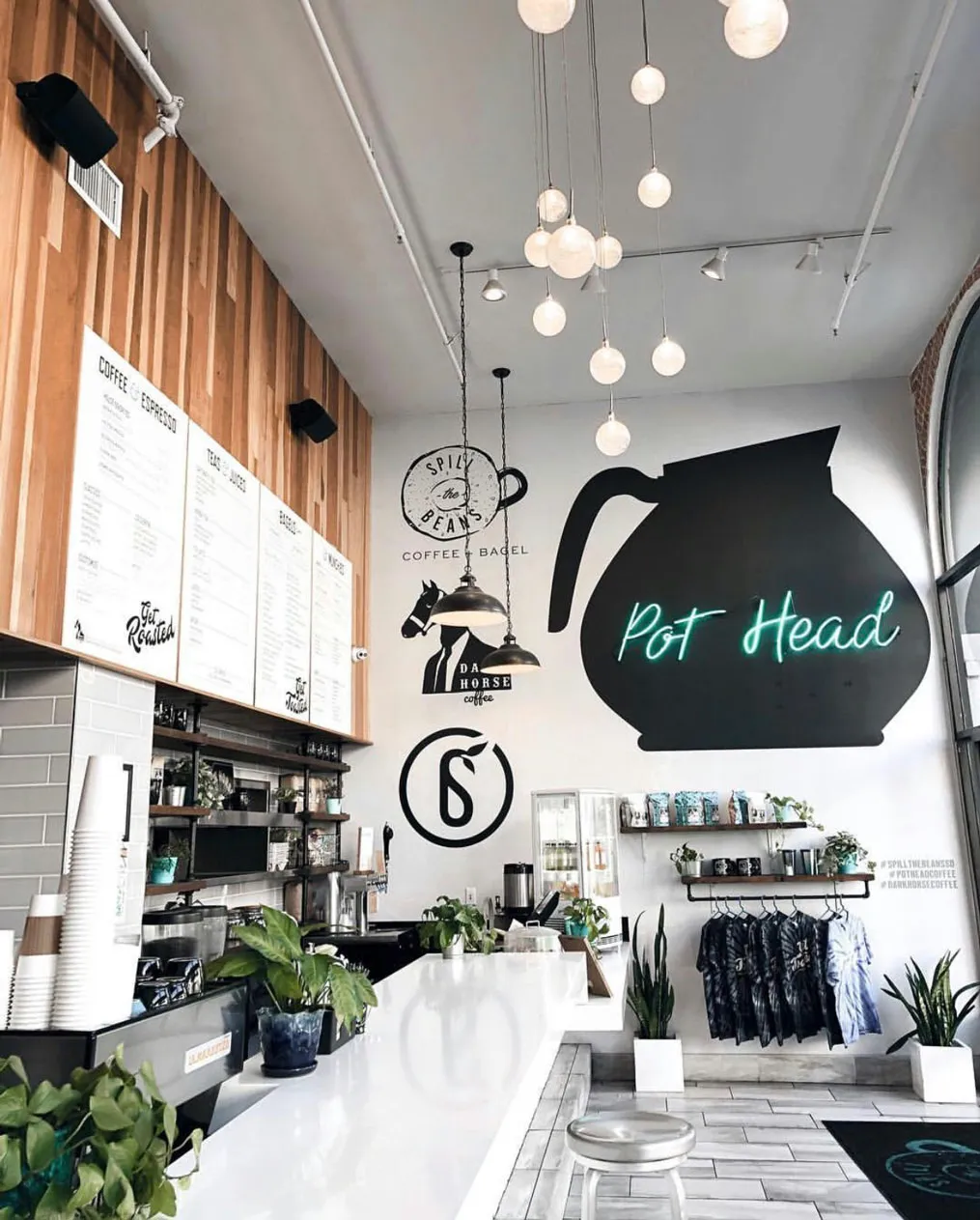
A neon “pot head” sign glows above a large black coffee pot on the wall behind the counter at Spill the Beans, greeting customers as they approach to order.
Spill the Beans
“People come in and think, ‘Is this a dispensary? Is this a CBD store?’” says manager Connor Nerat. “They come in and realize it’s an awesome coffee pun. It resonates really well with our customers.”
Much of the shop’s merchandise builds on that playful sign. Floating shelves beneath it hold mugs and T-shirts printed with the “pot head” graphic on one side and the shop’s bagel-and-coffee logo on the other. A second T-shirt reads “Get Toasted.”
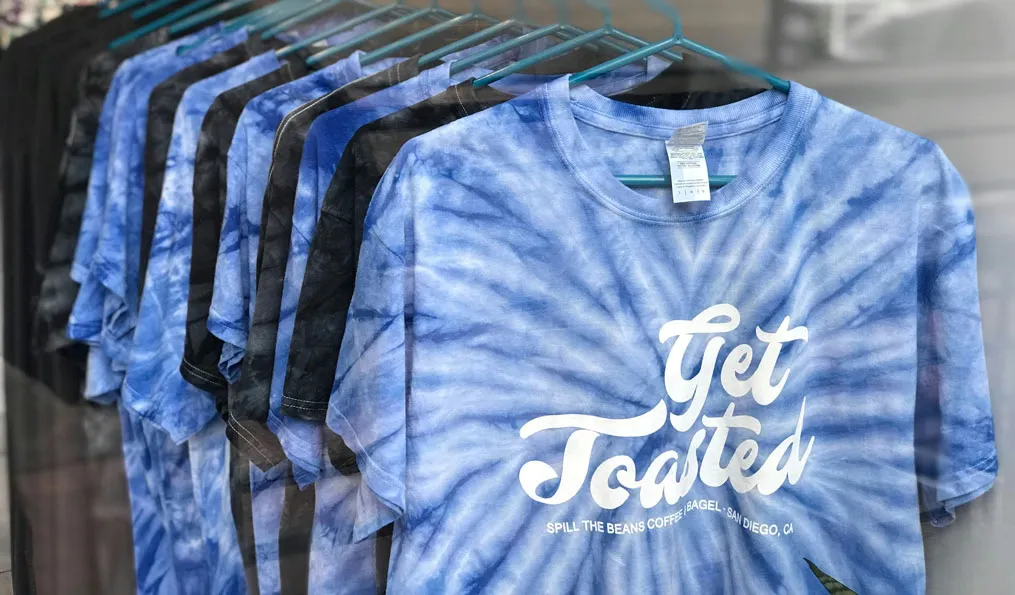
“Get Toasted” T-shirts at Spill the Beans
Another strong seller: “pot head” popsockets, the plastic discs that attach to the back of a phone.
“[They] can grab it if they’re leaving San Diego and don’t want to haul around a mug,” Nerat says. “That’s been one of the runaway successful merchandise.”
At a dollar apiece, Nerat acknowledges the popsockets do not carry much margin. Still, he argues they are useful and fit more naturally into daily life than a postcard.
“It definitely does put the name out there, which we like,” he says. “It’s something people can utilize every day. I have a ton of ceramic coffee mugs. How many of these mugs can I possibly store?”
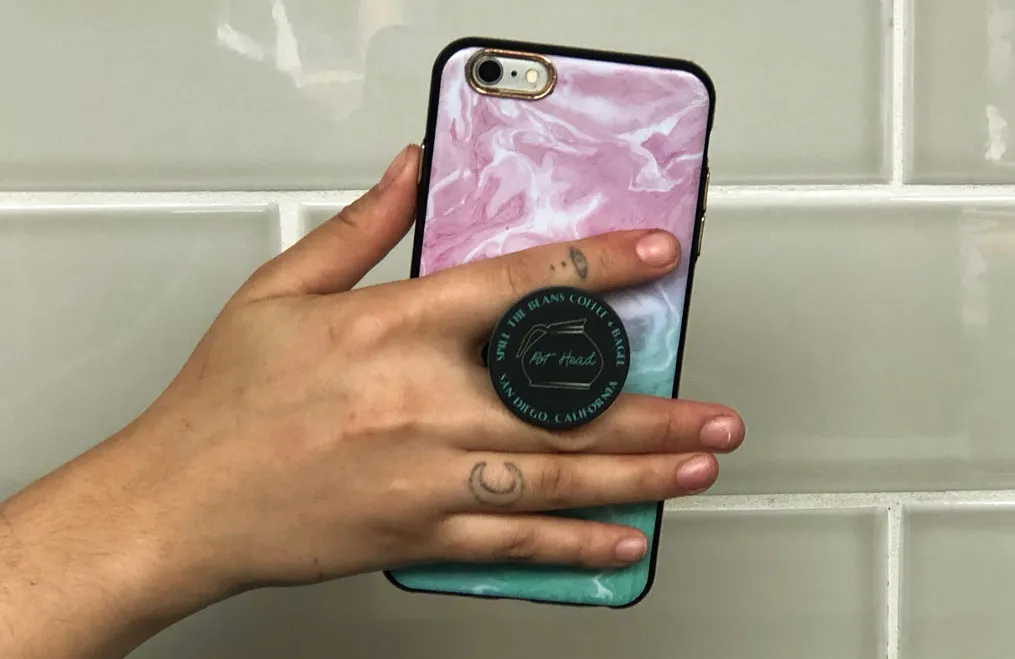
Popsockets at Spill the Beans
In Nerat’s view, merchandise benefits coffee shops of any size.
“Food and coffee are things that people remember the taste,” he says. “You want something to be able to remember that in the physical aspect and…have a nice little souvenir to take home with them.”
eteaket
Edinburgh, Scotland
Since opening in 2008, the Scottish tea company eteaket has offered merchandise tied to tea.
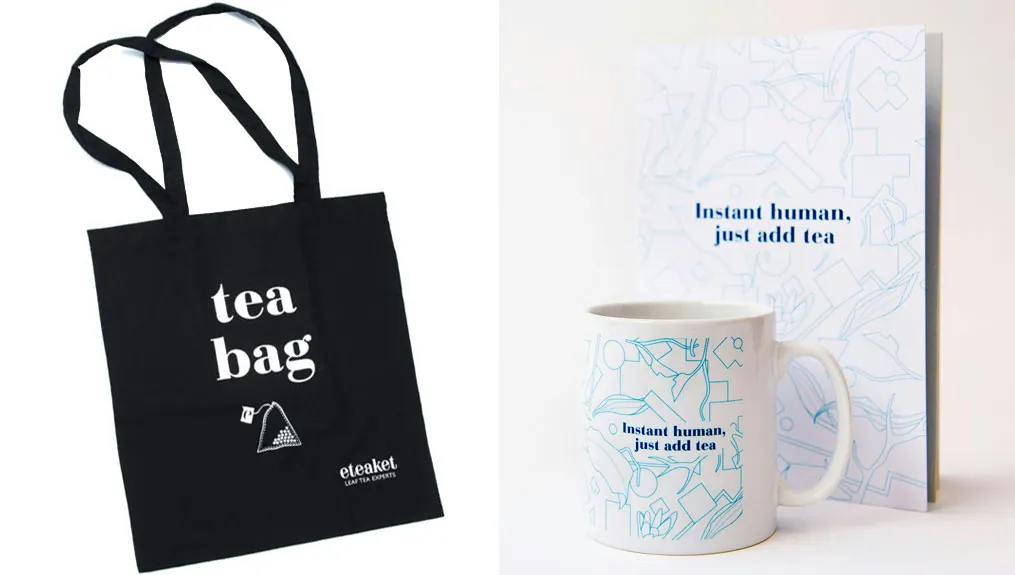
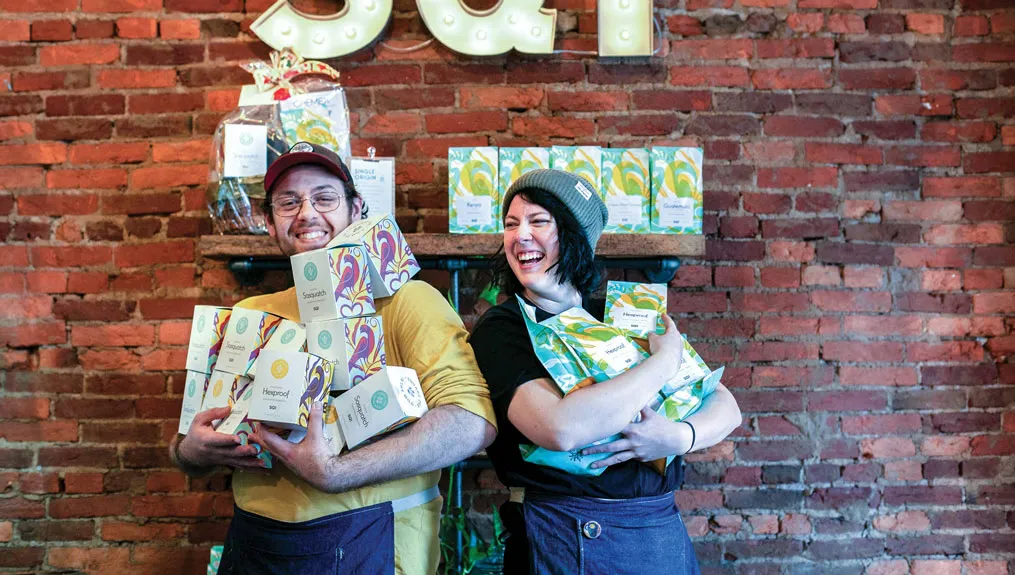
Tea merchandise at eteaket
“It was always about the tea so we wanted people to be able to have the experience at home as well,” says founder and managing director Erica Moore.
The business wholesales teas sourced from around the world and runs both a tea room and a retail shop in central Edinburgh.
“For about eight years, we just had the tea room and we did find it quite hard [balancing serving tea and selling merchandise],” Moore says. “You want to be able to spend lots of time with the customers, show them how to make tea lattes and cold brews.”
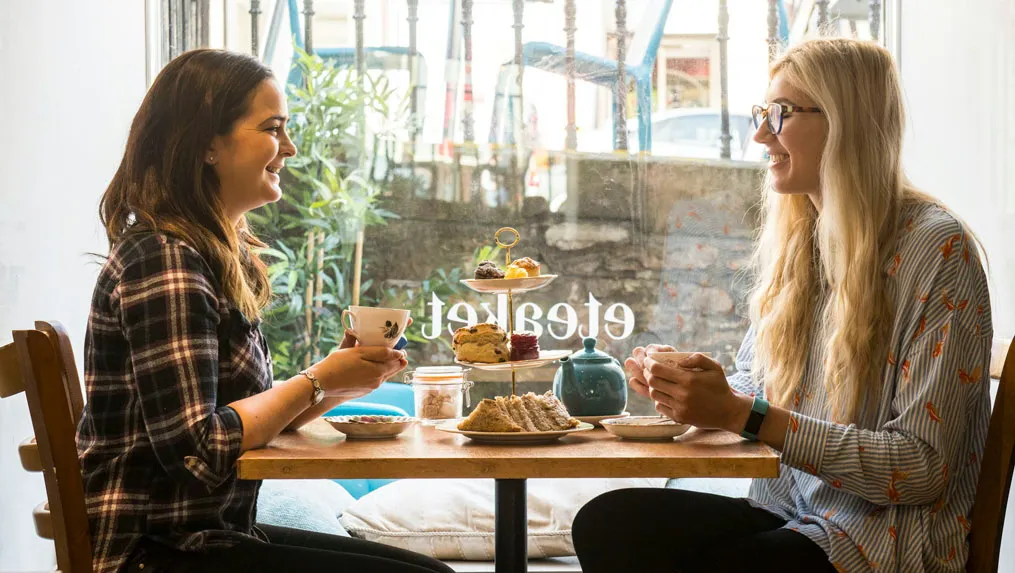
eteaket’s tea room
The retail shop, opened in 2016, addressed that tension. There, eteaket hosts tea flights and “meet the maker” events, and assembles tea collections for occasions such as Mother’s Day. Beyond mugs, infusers, and teapots, the lineup has included “tea bag” tote bags, notebooks bearing lines like “But first, tea,” candles scented with tea, and organic lip butter made from tea.
A number of the retail products come from partnerships with other businesses. With a local potter, for example, eteaket designed a hybrid of pot and teacup dubbed the “bubble cup,” a name Moore ties to losing yourself in the moment.
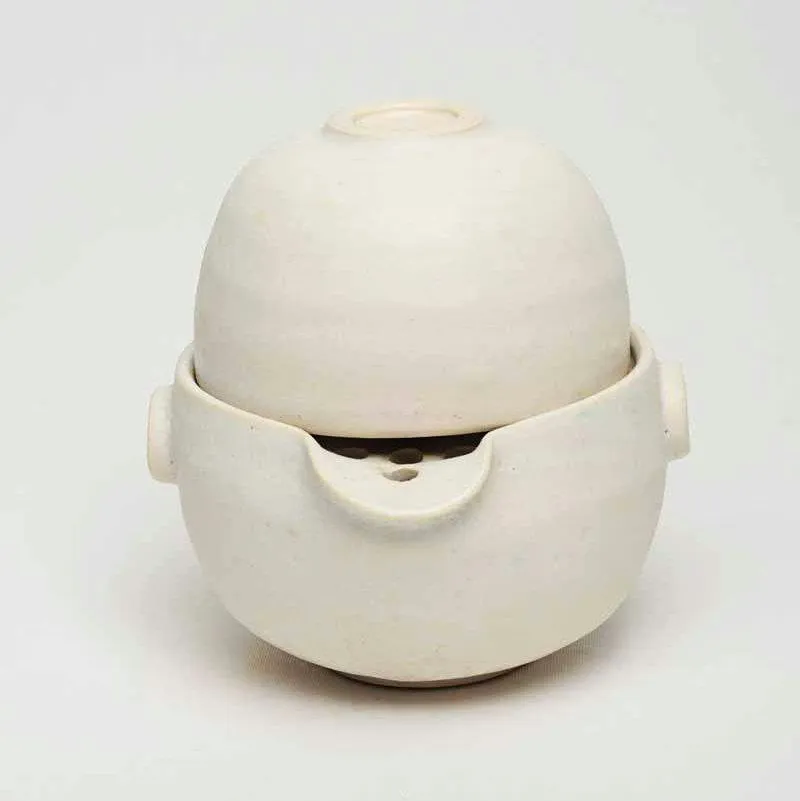
The bubble cup
A brewery collaboration produced a beer infused with tea.
“We’re not short of ideas but it’s getting the time to implement them,” Moore says. “It does take a long time to get it right, but it’s worth it when you get something special.”
Knowing eteaket’s values clearly helps Moore evaluate prospective partners before developing new items.
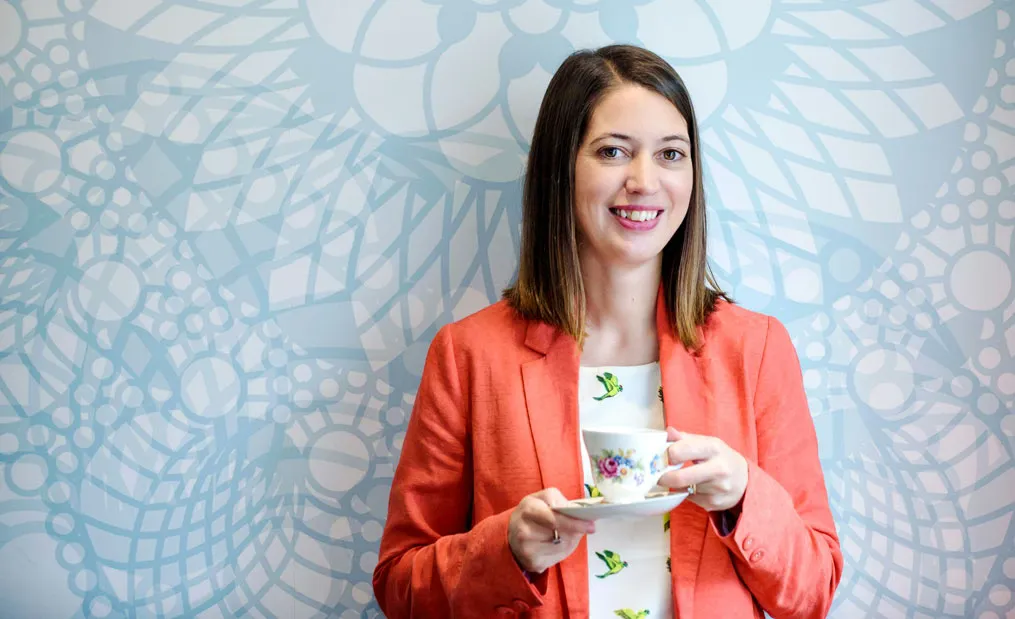
Erica Moore
“It’s all about networking and collaborations,” she explains. “It should work for both parties and help grow both parties.”
Even for a shop of her size, Moore advises stocking tea alongside trinkets and other branded goods, since they “help to increase the average spend and makes the customer happy. You don’t need a lot of space to make it work.”
Intelligentsia Coffee
Multiple locations, U.S.
Every Intelligentsia outpost—Chicago, New York, Los Angeles, and Austin, which was about to open—takes its cues from the surrounding neighborhood, according to marketing manager Britt Berg. The merchandise mix shifts with the vibe of each location.
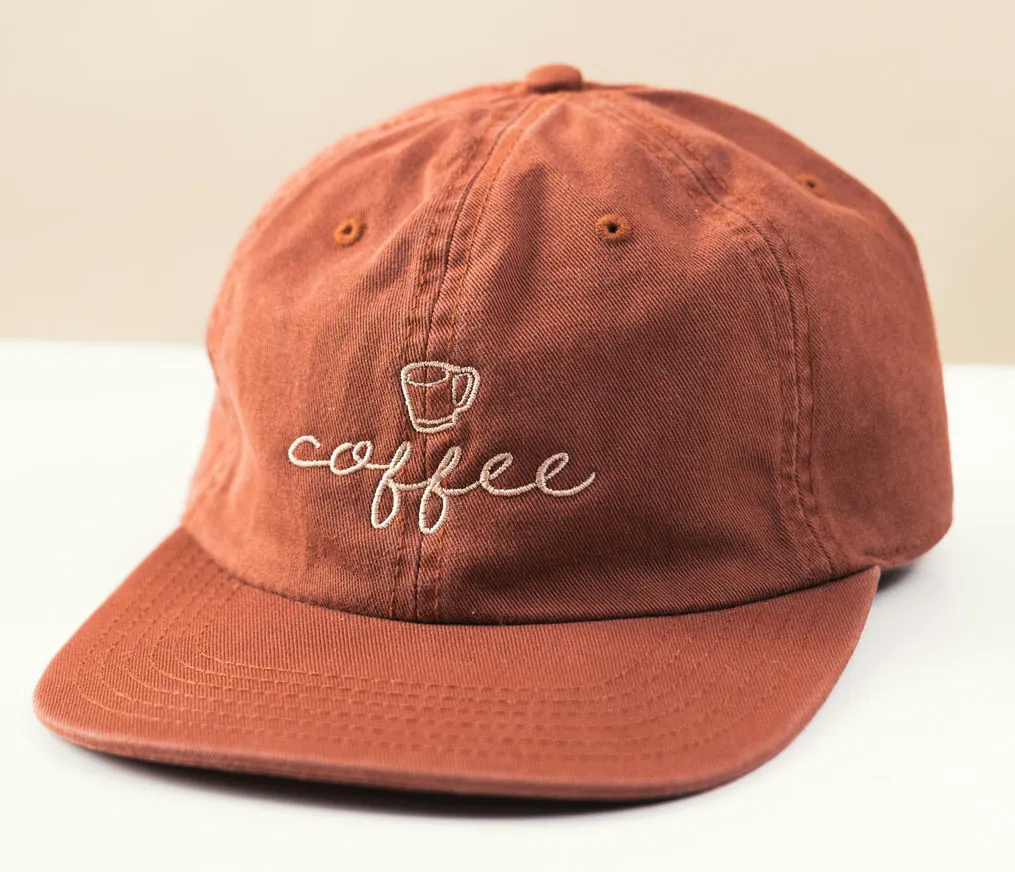
Embroidered dad hat from Intelligentsia Coffee
Intelligentsia’s signature filter mug is available everywhere, but the local team chooses the remaining goods for its own store.
“Baristas and managers pick what goes on the menu every day,” Berg says. “The same goes into merchandise. We send them what we have available. If it’s location specific, usually they’re already involved in the design process.”
At each location, a pin represents that specific store.
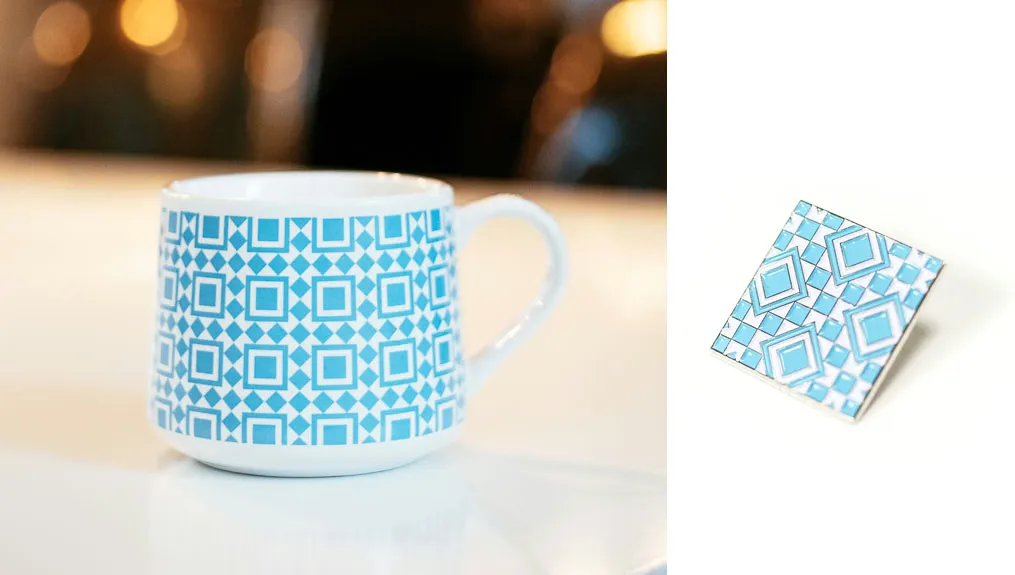
Silver Lake locale’s mug and pin
“Things that are low-ticket items but nice little souvenirs work really well by the register,” Berg adds.
The blue-and-white tile at Intelligentsia’s Silver Lake shop in L.A. has drawn attention on Instagram, prompting several Los Angeles locations to stock goods featuring the pattern. Customers outside L.A. are not shut out either: Intelligentsia sells online, so a shopper can order a specific item their local store does not carry.
“We’ll do different mugs, different pins, sometimes bandanas or coasters,” Berg says. “We try and come up with different things that aren’t mug and T-shirts.”
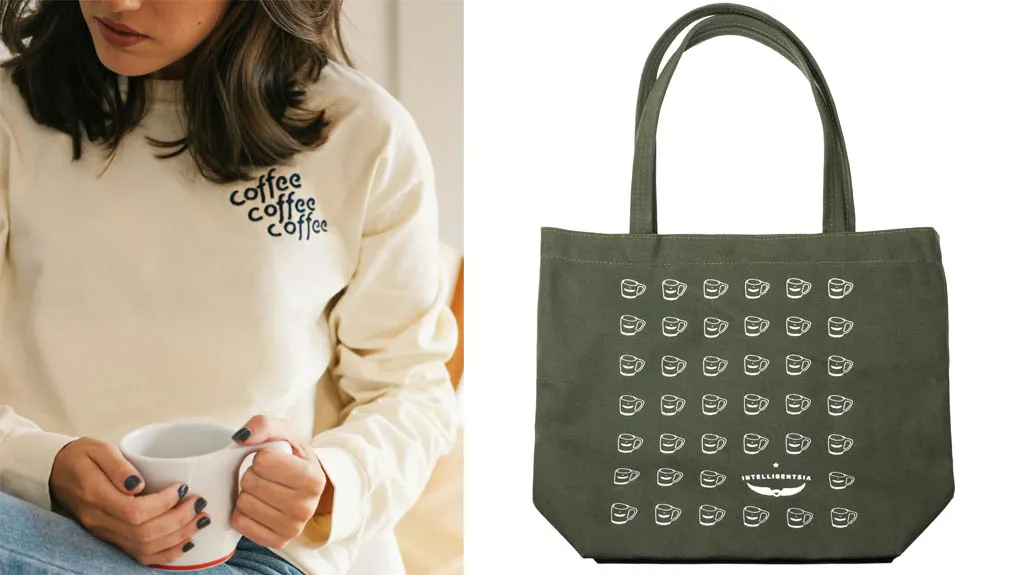
Sweatshirt and tote bag
Even so, branded mugs remain strong sellers, particularly at downtown stores with heavy tourist traffic.
“Locals and tourists alike love to take something back that reflects the city that they were in,” Berg says.
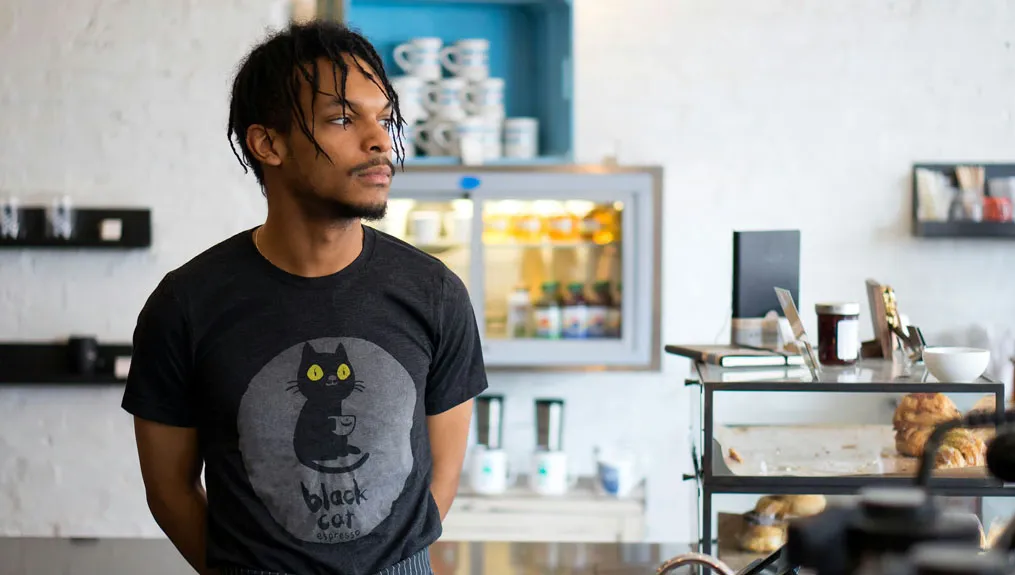
Another favorite is Intelligentsia’s black cat T-shirt, a nod to its black cat espresso.
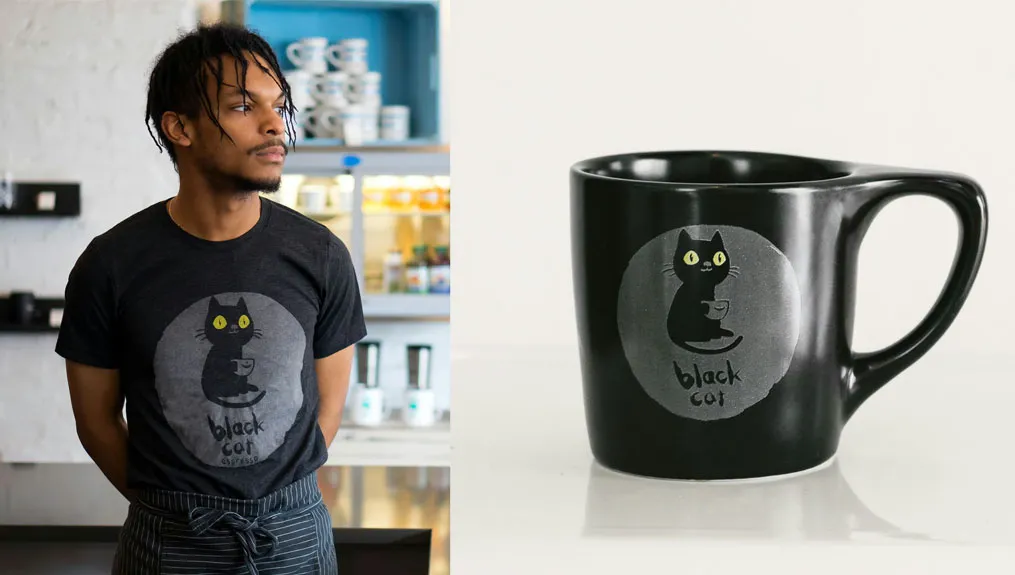
Black Cat merch
“It’s an item that we will never get rid of because people love it,” Berg says.
For operators weighing whether to sell merchandise, Berg suggests “being thoughtful about your selection [and] seeing what resonates with your customer and building from there.”